
Lili/Lilin/Lilim
Lilin are plural night spirits in Jewish mythology, serving as the male equivalent of Lilith and often conceived as her children with Adam or other mortal men. They are notable for their appearances in early rabbinic literature, such as the Babylonian Talmud and Midrash, and in Aramaic incantation bowls, where they are invoked or bound. Their origins are linked to ancient Akkadian wind demons, and they are depicted as having human form with wings or distinctive hair patterns.
Key Facts
- ›Lilin are plural night spirits in Jewish mythology, the male counterpart to Lilith.
- ›They are described as being her children, conceived with Adam or other mortal men.
- ›First appearing in 2 Baruch, they are also found in Aramaic incantation bowls and rabbinic texts like the Babylonian Talmud and Midrash.
- ›Their origins are traced back to Akkadian LILû wind demons.
- ›Descriptions of their appearance include human form with wings, or baldness with hair covering the rest of their bodies.
- ›They are associated with involuntary night emissions and are sometimes invoked or bound in incantation bowls.
Lilin, Lilis, Male Liliths, Ruhin, Shedim
Night, Demonic Offspring
Can Appear To Mortals and Couple With Them, Can Generate Demonic Offspring, Can Be Bound By Incantations
2 Baruch, Aramaic Incantation Bowls, Babylonian Talmud, Midrash, Targum Jonathan, Targum Pseudo-Jonathan, Targum Sheni, Midrash Abkir, Emeq Hamelekh
Lilith, Adam, Ashmedai, Samael
Involuntary Emissions, Sin, Night Terrors
- Aramaic Incantation Bowls Were Used To Trap Lilin and Liliths Within Magical Inscriptions.
- Divorce Formulas Were Sometimes Applied To Liliths and Lilin To Annul Their Status.
- Amulets Invoke God and Archangels To Protect Against Lilin.
- Kabbalistic Rites and Prayers Adjure Lilin Not To Follow Or Injure the Dead.
Yahweh, Michael, Gabriel, Methuselah
- Derived From Akkadian Lilû Wind Demons.
- Connected To Mesopotamian Goddess LamašTu, Particularly Their Female Counterparts.
About Lili/Lilin/Lilim
What are Lilin?
Lilin (Hebrew: לִילֵי, לִילִין) are plural night spirits prominent in Jewish mythology. They are often understood as the male counterparts to Lilith and, in many traditions, as her children who were born from unions with Adam or other mortal men. Their existence is not found in the Hebrew Bible but rather in rabbinic literature, including the Babylonian Talmud and various Midrashim, as well as in Aramaic incantation bowls.
Origins and Associations
The concept of the Lilin is believed to stem from ancient Akkadian wind demons known as lilû. Their female counterparts, the Liliths, are linked to lilītu and ardat-lilî demons. There are also connections drawn to the Mesopotamian goddess Lamaštu. The Lilin are frequently associated with the sin of Adam, particularly in later mystical texts, which posit that Adam's transgression enabled Lilith to overcome him and bear these demonic offspring from his involuntary emissions.
Attestations and Depictions
Lilin first appear in the 2nd-century text 2 Baruch, where they are invoked alongside other supernatural beings. Hundreds of Aramaic incantation bowls from the Sasanian Empire survive, containing spells designed to trap demons, including male Liliths (lilis) and their female counterparts. These bowls often feature formulas to annul their influence. The Babylonian Talmud mentions Lilin in contexts related to Adam's expulsion from Eden and the builders of the Tower of Babel. Targumic translations also refer to them, such as in Targum Jonathan on Isaiah 34:14 and Targum Pseudo-Jonathan on Numbers 6.
Kabbalistic texts like Emeq haMelekh describe the Lilin as sorrowful beings dwelling in lower earth-layers, born from Adam's emissions and Lilith's unions. They are depicted as having human form, sometimes with wings, or as bald with hair covering their faces and bodies. Protective amulets and prayers from various traditions invoke divine aid to ward off the malign influence of Lilin.
Source: Wikipedia ↗
Frequently Asked Questions
What are Lilin in Jewish mythology?
Lilin are plural night spirits in Jewish mythology. They are considered the male equivalent of Lilith and are often depicted as her offspring.
Where do Lilin first appear?
The first recorded appearance of Lilin is in the 2nd-century text 2 Baruch. They are also mentioned in Aramaic incantation bowls and later rabbinic literature.
What is the origin of the Lilin?
The Lilin are believed to be derived from the Akkadian lilû, which were wind demons or ghosts. Their origins are linked to ancient Mesopotamian mythology.
How are Lilin depicted in terms of appearance?
Descriptions of Lilin suggest they have a human form, sometimes with wings. Other accounts describe them as bald but with hair covering their faces and bodies.
What role do Lilin play in incantation bowls?
In Aramaic incantation bowls, Lilin, along with Liliths, are often mentioned and are the subject of binding spells. These bowls were designed to trap and imprison them within magical inscriptions.
Are Lilin connected to Adam?
Yes, a common motif in later mystical literature suggests that Lilin were born from Adam's involuntary night emissions after his sin, with Lilith coupling with him.
Related Demons

Shedim
Shedim are spirits or demons in Jewish mythology and the Tanakh, distinct from the Christian concept of purely evil entities. They were often viewed not as inherently malevolent, but as the gods of foreign peoples, or as beings with a more morally ambiguous nature, sometimes even capable of living according to the Torah. Their origins are varied, with legends attributing them to serpents, Lilith, unfinished divine creations, or the builders of the Tower of Babel.
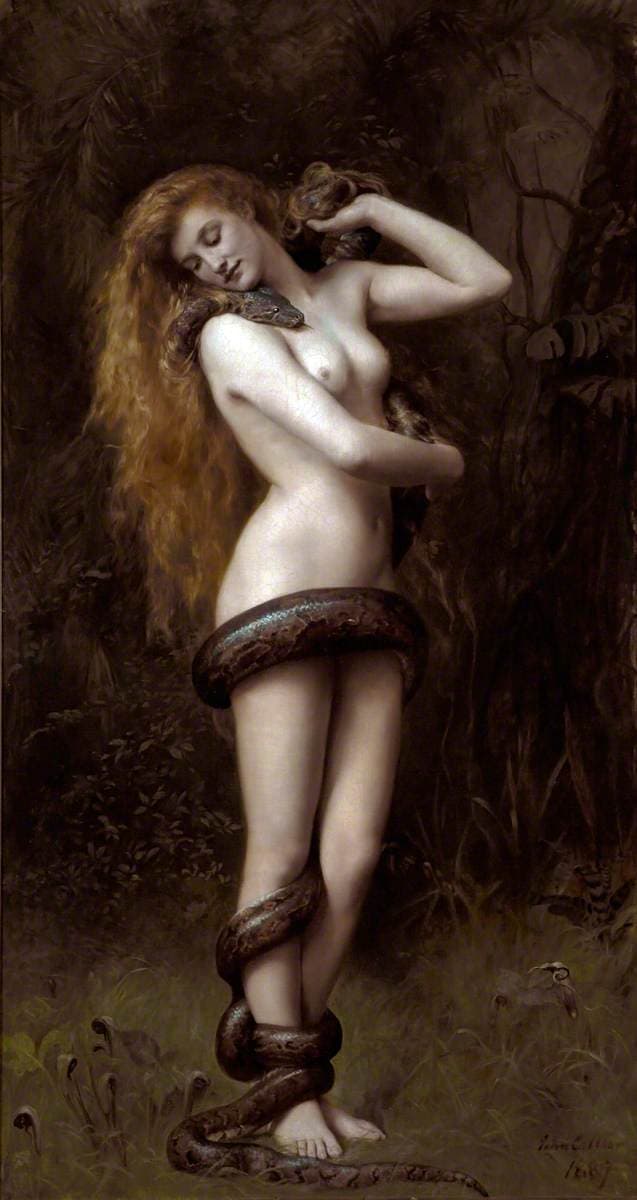
Lilith
Lilith is a prominent figure in Jewish mythology, primarily known as Adam's first wife who refused to be subservient and fled the Garden of Eden. Her legend developed significantly in medieval Jewish folklore, mysticism, and texts like the Zohar, where she is often depicted as a dangerous night demon. Lilith is notable for her origins as a potentially composite figure drawing from Mesopotamian demonology and her enduring presence in folklore and theological discussions.
Agrat bat Mahlat
Agrat bat Mahlat is a demon from Jewish mythology, often referred to as "Agrat, daughter of Mahlat." She is notable as one of the four wives of the archdemon Samael, and is associated with magic, prostitution, and the "angels of destruction." Her most prominent appearances are in Talmudic literature and Kabbalistic texts, where she is depicted as a powerful and dangerous demonic figure.