
Lamia
Ancient Greek mythology·Mythology·Ancient Greece·Monster, Spirit, Daimon, Phantom, Seductress
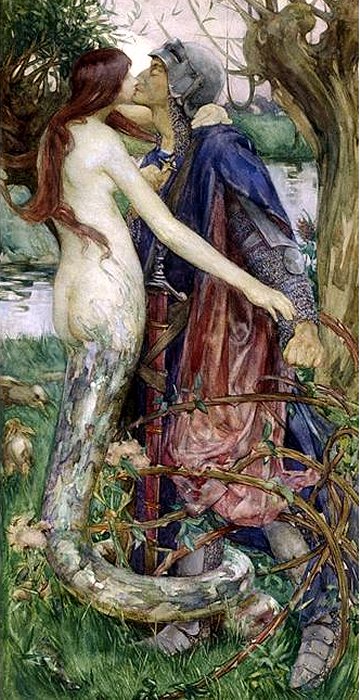
Lamia is a figure from ancient Greek mythology, initially a queen of Libya who, after losing her children to Hera, transformed into a child-eating monster. Later traditions depict her as a seductive night-haunting spirit or a type of phantom, often associated with serpentine features and a voracious appetite for human flesh, particularly of young men and children. She is notable for her transformation from a beautiful queen to a monstrous being and her enduring presence in folklore and literature as a bogeyman and a seductive demon.
Key Facts
- ›Originally a beautiful queen of Libya who had children with Zeus.
- ›Hera, Zeus's wife, took Lamia's children, driving her to madness and cannibalism.
- ›Transformed into a monstrous, child-eating being, and later evolved into a seductive night-haunting spirit.
- ›Often depicted with serpentine or snake-like qualities.
- ›Used as a bogeyman figure in ancient Greece to frighten children.
- ›In later traditions, equated with empusai, seducing young men and feeding on their flesh.
LáMia
Childhood Fears, Seduction, Night, Cannibalism
Prophecy, Removable Eyes, Shapeshifting, Illusion Creation, Seduction, Devouring Flesh/Blood
- Apollonius of Tyana's Life of Apollonius of Tyana
- Aristotle's Nicomachean Ethics
- Dio Chrysostom's Writings
- Diodorus Siculus's Writings
- Heraclitus Paradoxographus's Writings
- Horace's Ars Poetica
- Suda Lexicon
- Theocritus Scholia
- Apuleius's the Golden Ass
- John Keats's Poem 'Lamia'
Zeus, Hera, Apollonius of Tyana, Menippus of Lycia, Ceto, Echidna, Medusa, Chimera, Hecate
Grief, Maternal Rage, Cannibalism, Hypocrisy, Heresy, Meddlesome Busybodies
- Used As A Bogeyman To Frighten Children Into Obedience.
Apollonius of Tyana
- In the Vulgate Translation of Isaiah 34:14, 'Lamia' Is Used To Translate the Hebrew 'Lilith'.
- Some Commentators Suggest A Mesopotamian Origin From the Demoness Lamashtu.
- In Modern Greek Folk Tradition, She Retains Attributes of Blood Thirst, Uncleanliness, Gluttony, and Stupidity.
Serpent, Snake, Removable Eyes
About Lamia
Lamia is a complex and multifaceted figure originating in ancient Greek mythology, primarily known for her transformation from a beautiful queen into a monstrous, child-devouring entity. Her myth begins with her affair with Zeus, which leads to the loss of her children at the hands of Zeus's jealous wife, Hera. This tragic loss drove Lamia to madness, transforming her into a terrifying being that preyed on the children of others.
Evolution in Myth and Folklore
Over time, Lamia's depiction evolved. While early myths focused on her grief and monstrous nature, later classical periods saw her conceptualized as a seductive night-haunting spirit or a phantom. She became associated with the empusai, female demons who would lure young men with their beauty, only to consume their flesh. Her serpentine qualities became increasingly prominent, leading some scholars to suggest connections with dragon or serpent-goddess figures.
Rationalizations and Symbolism
Ancient writers offered rationalized interpretations of Lamia's myth. Some depicted her as a Libyan queen who ordered children killed, while others explained her removable eyes as a divine gift to alleviate constant grief or a curse of insomnia. Lamia also served as a potent bogeyman figure in ancient Greece, used to instill fear and obedience in children.
Later Interpretations and Adaptations
In the Middle Ages, Lamia was sometimes glossed as a general term for a class of beings that snatched and tore apart babies, and was even used in the Vulgate translation to render the Hebrew 'Lilith'. Christian writers warned against their seductive potential. In modern times, Lamia has been widely adapted in literature, poetry, opera, and film, often retaining her characteristics as a seductive, serpentine, or monstrous figure. Her story has been reinterpreted in various contexts, from horror films to fantasy novels, demonstrating her enduring power as a mythological archetype.
Source: Wikipedia ↗
Frequently Asked Questions
What was Lamia's original story in Greek mythology?
In the earliest myths, Lamia was a beautiful queen of Libya who had an affair with Zeus and bore his children. However, Zeus's wife Hera took Lamia's children, either by killing them or causing Lamia to kill them, which drove her to madness.
How did Lamia become a monster?
After the loss of her children, Lamia was driven to insanity and began to hunt and devour other people's children. This anguish or her cannibalistic acts led to her transformation into a horrific creature.
What are Lamia's typical characteristics?
Lamia is often described as a child-eating monster, a night-haunting spirit, or a seductive phantom. She is frequently associated with serpentine features and is known for her ability to transform and sometimes to remove her eyes.
What is Lamia's connection to seduction?
In later classical periods, Lamia evolved into a figure who seduces young men, often to feed on their flesh or blood. This aspect is particularly prominent in tales where she is equated with empusai.
What role did Lamia play in folklore?
In ancient Greece, Lamia was used as a bogeyman to frighten children into good behavior. Later traditions also depicted her as a folkloric monster akin to vampires and succubi, preying on young men.
Are there any rationalized accounts of Lamia?
Yes, some ancient writers like Diodorus Siculus and Heraclitus Paradoxographus offered rationalized or euhemerized accounts. Diodorus described her as a queen who ordered children to be killed, and Heraclitus suggested Hera gouged out her eyes.
Related Demons

Gorgon
The Gorgons are monstrous sisters from Greek mythology, identified as Stheno, Euryale, and Medusa. They are known for their terrifying gaze, which could turn onlookers to stone, and their association with the goddess Athena, whose aegis bore a Gorgon head for protection and to instill fear. While two sisters were immortal, Medusa was famously slain by the hero Perseus.
Achlys
Achlys is a figure from ancient Greek literature, primarily known as the personification of sorrow or a deathly mist. While first appearing in Homer as a mist that clouds the eyes of the dying, she is later depicted in Hesiod's "Shield of Heracles" as a fearsome, gaunt entity. Her Roman equivalent, Caligo, is associated with the primordial origins of the cosmos.
Alastor
Alastor is a multifaceted figure in Greek mythology, primarily known as an "avenging spirit" or a personification of a curse, particularly associated with familial bloodshed. He is also identified as an epithet of Zeus, symbolizing his role as an avenger of evil deeds. Beyond his divine associations, "Alastor" also refers to several mortal figures and even a daemon that punishes the guilty.