
Achlys
Ancient Greek mythology and literature·Mythology·Ancient Greece·Personification
Achlys is a figure from ancient Greek literature, primarily known as the personification of sorrow or a deathly mist. While first appearing in Homer as a mist that clouds the eyes of the dying, she is later depicted in Hesiod's "Shield of Heracles" as a fearsome, gaunt entity. Her Roman equivalent, Caligo, is associated with the primordial origins of the cosmos.
Key Facts
- ›In Homeric texts, achlys refers to a mist that blinds the eyes of mortals, particularly during death.
- ›Hesiod's "Shield of Heracles" portrays Achlys as a personification of sorrow, a dreadfully gaunt and hungry figure.
- ›The Roman counterpart, Caligo, is described as the mother of Chaos, Night, Day, Darkness, and Ether in some cosmologies.
- ›In Nonnus's "Dionysiaca," Achlys appears as a witch who uses treacherous flowers and magical ointments.
- ›Achlys is depicted with physical attributes of suffering, including flowing mucus and blood, and a grin.
Death-Mist
Sorrow, Death, Blinding Mist, Witchcraft
- To Shed A Mist That Blinds Mortal Eyes
- To Inflict Sorrow and Dread
- To Be Used In Magical Enchantments and Transformations
Hesiod's Shield of Heracles, Homer's Iliad, Homer's Odyssey, Nonnus's Dionysiaca, Hyginus's Fabulae
Heracles, Moirai, Keres, Caligo, Chaos, Night, Day, Darkness, Ether, Hera, Dionysus
Sorrow, Grief, Death, Mortal Suffering, Mist/Obscurity
- the Concept of 'Achlys' As A Deathly Mist In Homer Is Distinct From the Personified Figure In Hesiod.
Mist, Tears, Dust
About Achlys
Achlys (Ancient Greek: Ἀχλύς), a term meaning "mist," originates in ancient Greek literature and mythology, primarily functioning as both a literal description and a personified entity associated with death, sorrow, and obscurity.
Homeric Usage
In the epic poems attributed to Homer, the "Iliad" and the "Odyssey," the word "achlys" describes the mist that descends upon the eyes of dying mortals. This is depicted as a physical phenomenon that clouds vision during the final moments of life, or following severe injury, obscuring the world from the fading consciousness.
Personification in Hesiod
The figure of Achlys takes on a more defined, personified form in the archaic Greek epic "Shield of Heracles," often attributed to Hesiod. Here, Achlys is presented as a dreadful being depicted on Heracles' shield, embodying the personification of sorrow and grief. Her appearance is stark and terrifying, characterized by pallor, hunger, gauntness, long claws, and physical manifestations of suffering such as mucus and blood flowing from her features.
Roman and Later Interpretations
In Roman tradition, Achlys finds a counterpart in Caligo, meaning "dark fog." The Roman mythographer Hyginus places Caligo as a primordial mother figure, credited with the birth of Chaos, Night, Day, Darkness, and Ether, suggesting an early cosmological role. Later, in the 5th-century AD "Dionysiaca" by Nonnus, Achlys appears to be depicted as a witch. In this context, she is instrumental in Hera's plot against the guardians of Dionysus, employing treacherous flowers and magical ointments to transform them into Centaurs.
Significance
Across these varied appearances, Achlys embodies themes of mortal vulnerability, the obscuring nature of death, and the profound weight of sorrow. Her transition from a descriptive term to a personified entity highlights the ancient Greek tendency to give form to abstract concepts and the powers that shape human experience.
Source: Wikipedia ↗
Frequently Asked Questions
What does the name Achlys mean?
The name Achlys comes from the Ancient Greek word Ἀχλύς (achlús), which translates to 'mist'.
How is Achlys depicted in Homer's works?
In Homer's "Iliad" and "Odyssey," achlys is not a personified being but a literal mist that descends upon the eyes of dying or grievously wounded individuals, obscuring their vision.
What is Achlys's role in Hesiod's 'Shield of Heracles'?
In this poem, Achlys is a personified figure depicted on Heracles' shield. She represents sorrow and is described as a pallid, hungry, and dread-inducing entity with physical signs of suffering.
Does Achlys have a Roman equivalent?
Yes, the Roman counterpart to Achlys is Caligo, meaning 'dark fog.' Caligo is mythologically significant as the mother of Chaos, from whom primordial entities like Night and Day emerged.
Is Achlys considered a powerful demon?
While not consistently depicted as a demon in the modern sense, Achlys is associated with death, sorrow, and in later texts like Nonnus's "Dionysiaca," with witchcraft and the manipulation of form through magical means.
Related Demons

Gorgon
The Gorgons are monstrous sisters from Greek mythology, identified as Stheno, Euryale, and Medusa. They are known for their terrifying gaze, which could turn onlookers to stone, and their association with the goddess Athena, whose aegis bore a Gorgon head for protection and to instill fear. While two sisters were immortal, Medusa was famously slain by the hero Perseus.
Lamia
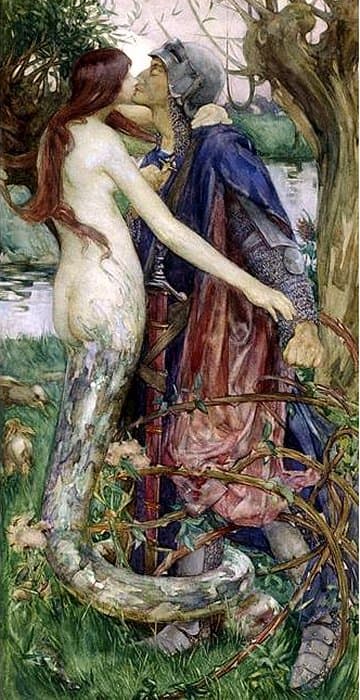
Lamia is a figure from ancient Greek mythology, initially a queen of Libya who, after losing her children to Hera, transformed into a child-eating monster. Later traditions depict her as a seductive night-haunting spirit or a type of phantom, often associated with serpentine features and a voracious appetite for human flesh, particularly of young men and children. She is notable for her transformation from a beautiful queen to a monstrous being and her enduring presence in folklore and literature as a bogeyman and a seductive demon.
Alastor
Alastor is a multifaceted figure in Greek mythology, primarily known as an "avenging spirit" or a personification of a curse, particularly associated with familial bloodshed. He is also identified as an epithet of Zeus, symbolizing his role as an avenger of evil deeds. Beyond his divine associations, "Alastor" also refers to several mortal figures and even a daemon that punishes the guilty.