
Charun
Etruscan mythology·Mythology·Etruscan civilization·Psychopomp
Charun is an Etruscan underworld psychopomp, distinct from the god of the underworld, Aita. He is primarily depicted as a menacing figure tasked with escorting the dead, often portrayed with a hammer and apotropaic features to ward off evil. His name is derived from the Greek Charon, and his imagery has influenced later depictions of underworld figures.
Key Facts
- ›Charun served as a psychopomp in Etruscan mythology, guiding the dead to the underworld.
- ›His appearance is often grotesque, featuring pointed ears, snakes, a hooked nose, tusks, and discolored skin, symbolizing death and decay.
- ›He is frequently depicted with a hammer, which could be used to threaten the dead, protect them from serpents, or as a symbol of his office.
- ›While primarily an escort, some depictions show Charun in a menacing role, threatening figures with his hammer.
- ›His name originates from the Greek Charon, though his Etruscan depiction differs significantly from his Greek counterpart.
- ›Charun is often shown with Vanth, another Etruscan underworld figure.

Charu, Karun, Xarun, Xaru
Underworld, Death, Passage of Souls
Escorting Souls, Threatening With A Hammer, Protecting the Dead From Serpents
- Etruscan Art
- Classical Literature Referencing Etruscan Beliefs
Vanth, Aita, Tuchulcha, Charun Chunchules, Charun Huths, Charun Lufe, Mantus, Mania, Thanatos, Erinyes, Keres, Ajax, Achilles, Theseus, Peirithous
Death, Decay, the Unknown, Protection of the Tomb, Grotesque Imagery
- Depicted In Funerary Art, Suggesting A Connection To Burial Rites.
- His Grotesque Appearance May Have Served An Apotropaic Function In Tombs.
Vanth, Serpents
- Derived From Greek Charon, But With Distinct Etruscan Characteristics.
- Later Interpretations By Authors Like Virgil Depict A More Cruel, Torturing Figure, Potentially Influenced By Christian Views of Hell.
Hammer, Snakes, Wings, Boar Tusks
About Charun
Charun: Etruscan Psychopomp of the Underworld
Charun is a significant figure in Etruscan mythology, recognized as one of the psychopompoi, or escorts of the dead, to the underworld. Unlike the god of the underworld, known as Aita, Charun's role was to guide souls on their final journey. His name is believed to be derived from the Greek Charon, the ferryman of the dead, though the Etruscan depiction of Charun is fundamentally different and more menacing.
Appearance and Symbolism
Charun's appearance is consistently portrayed as grotesque and fearsome, intended to symbolize the decay and horror of death. He is often depicted with pointed ears, snakes coiled around his arms, and a blueish or discolored skin tone. Additional features can include a vulture-like hooked nose, large tusks reminiscent of a boar, heavy brow ridges, fiery eyes, and sometimes enormous wings. His primary religious symbol and attribute is a hammer, which features prominently in various depictions.
Function and Role
While Charun's main duty was to escort the dead, his portrayals are not always benign. Many scenes show him with his hammer threatening figures, suggesting a role beyond mere guidance. Some scholars propose that his grotesque nature and violent imagery served an apotropaic function, meant to ward off evil spirits from tombs and sanctify the burial site, a practice akin to the use of monstrous iconography by the Greeks. The hammer could also be used defensively, to protect the deceased from attacking serpents.
Associations and Legacy
Charun is frequently depicted alongside Vanth, a winged female figure also associated with the underworld. Later interpretations, particularly in Roman literature like Virgil's Aeneid, sometimes portray a more cruel and torturing version of Charon, which some scholars believe may reflect continuity with pre-Christian Etruscan beliefs about Charun. He is thought to have worked with other underworld figures, and multiple Charuns have been depicted in tomb frescoes, sometimes with sub-names, suggesting that 'Charun' might also refer to a type of demon rather than a singular entity.
Source: Wikipedia ↗
Frequently Asked Questions
What was Charun's role in Etruscan mythology?
Charun was an Etruscan psychopomp, meaning he was responsible for escorting the souls of the deceased to the underworld. He was not the ruler of the underworld itself, but rather a guardian and guide at its entrance.
How was Charun typically depicted?
Charun was often depicted with a fearsome and grotesque appearance. Common features include pointed ears, snakes around his arms, a blueish or discolored complexion, a hooked nose, tusks, and fiery eyes, all symbolizing death and decay.
What is Charun known for carrying?
Charun is most frequently depicted carrying a hammer. This religious symbol could be used in menacing ways, to protect the deceased, or simply as part of his iconography.
Is Charun related to the Greek Charon?
Yes, Charun's name is imported from the Greek Charon, the ferryman of the underworld. However, their roles and appearances differ, with Charun being more of a menacing guardian and escort than a simple ferryman.
What was the purpose of Charun's frightening appearance?
Charun's grotesque features were likely apotropaic, meaning they were intended to ward off evil spirits from tombs and sanctify the burial site. This practice was similar to the use of monstrous imagery by the neighboring Greeks.
Did Charun have any companions or assistants?
Charun was often portrayed alongside Vanth, a winged underworld figure. Other entities, such as Tuchulcha and various named Charuns like Charun Chunchules, are also associated with him as assistants or fellow demons.
Related Demons

Tuchulcha
Tuchulcha is a chthonic daemon from Etruscan mythology, primarily depicted in the Tomb of Orcus II. Notable for its hybrid appearance, including snake hair and a beak, Tuchulcha resides in the Etruscan underworld, Aita. Scholarly debate exists regarding its gender, with evidence suggesting it is likely female despite some masculine features.
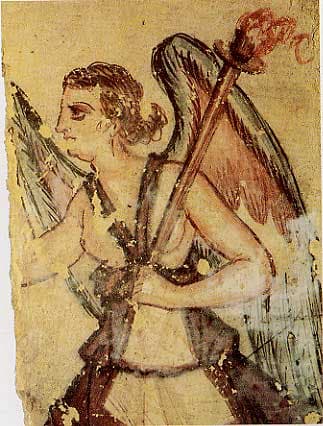
Vanth
Vanth is a female chthonic figure in Etruscan mythology, primarily depicted in funerary art such as tomb paintings and sarcophagi from around 400 BC onwards. She is notable for her role as a benevolent psychopomp, guiding the deceased to the underworld, and is often depicted with attributes like a torch and a key.
Achlys
Achlys is a figure from ancient Greek literature, primarily known as the personification of sorrow or a deathly mist. While first appearing in Homer as a mist that clouds the eyes of the dying, she is later depicted in Hesiod's "Shield of Heracles" as a fearsome, gaunt entity. Her Roman equivalent, Caligo, is associated with the primordial origins of the cosmos.