
Baal/Bael
Bael is a demon prominently featured in demonological grimoires such as The Lesser Key of Solomon and the Pseudomonarchia Daemonum. He is depicted as a king who can grant invisibility and influence others, often described with a hoarse voice and a composite appearance. Bael is notable for his appearance in various occult texts and his recurring presence in modern popular culture.
Key Facts
- ›Bael is described in demonological grimoires like the Lesser Key of Solomon, Pseudomonarchia Daemonum, and the Dictionnaire Infernal.
- ›He is depicted as a king, often with a hoarse voice, who can grant invisibility.
- ›Bael is said to rule over legions of demons, with numbers varying from six to sixty-six or even two hundred fifty.
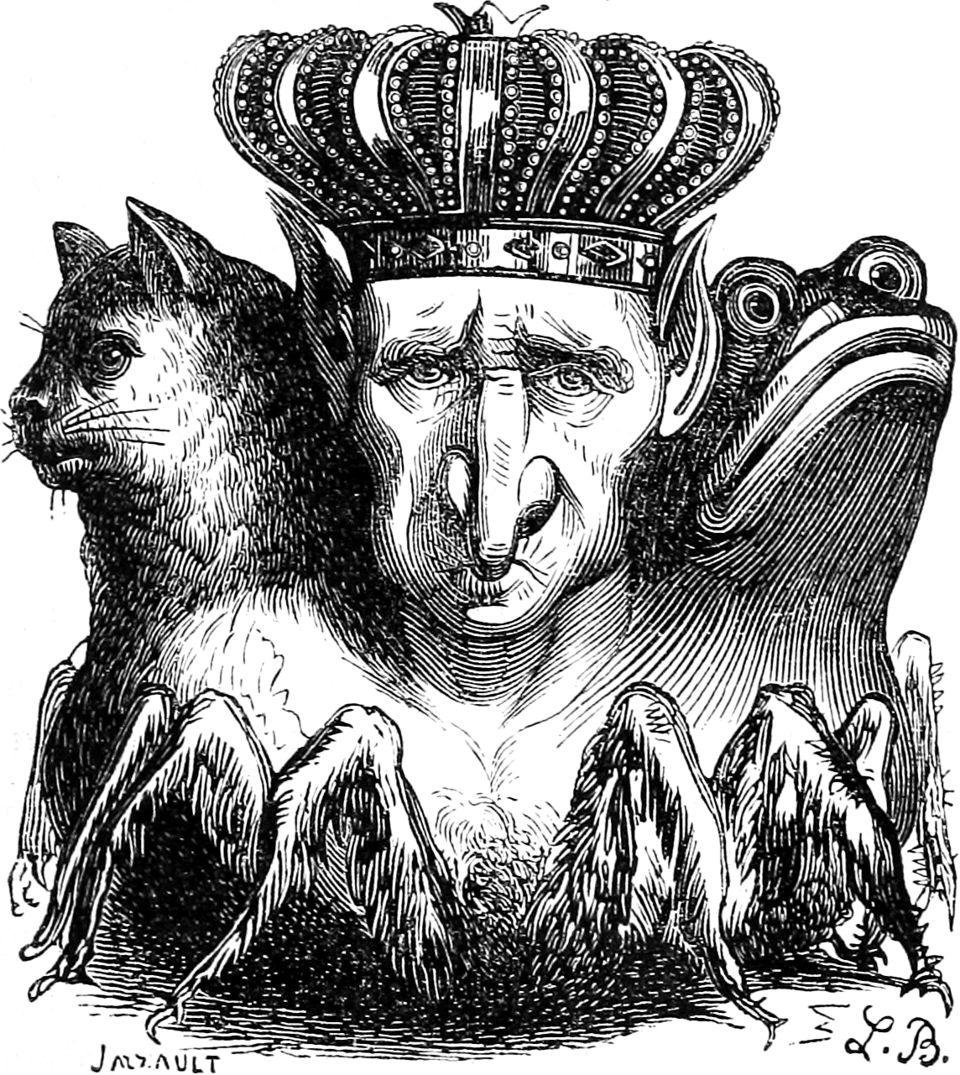
- ›His appearance is described as a combination of a cat, toad, and human heads, or other diverse shapes.
- ›Some texts suggest Bael can also provide the favor of others and teach sciences.
- ›He is opposed by the Shem Hamephorash angel Vehuiah in some traditions.
Ba’Al, Baal, Beal, Baall, Boal, Boall
Invisibility, Favor of Others, Sciences, Love, Terror
Granting Invisibility, Gaining the Favor of Others, Teaching Sciences, Teaching Love
the Lesser Key of Solomon, Pseudomonarchia Daemonum, Dictionnaire Infernal, Livre Des Esperitz, Liber Officiorum Spirituum, Sloane Ms 3824, the Grimoire of Pope Honorius, Grand Grimoire
Oriens, Lucifuge Rofocale, Vehuiah, Astaroth, Eurynome, Amducias, Father Lucas Trevant, Makoto, Gundam Bael
- Ruled By Oriens In Some Accounts.
- Listed As A Subordinate of Lucifuge Rofocale In the Grand Grimoire.
- Appears As A Prince Under Astaroth In Later Editions of the Grimoire of Pope Honorius.
Vehuiah
- Assumed By Some To Be the Same As the Canaanite Deity Baal.
About Baal/Bael
Bael
Bael is a demon primarily documented in Western demonological grimoires, notably appearing in "The Lesser Key of Solomon" and the "Pseudomonarchia Daemonum," where he is often listed as the first spirit. He is consistently depicted as a powerful king with a hoarse voice, possessing the ability to grant invisibility to those who can summon him. The number of demonic legions under his command varies across texts, ranging from six to sixty-six, and in one instance, two hundred fifty.
Appearance and Attributes
The visual representation of Bael is multifaceted. "The Lesser Key of Solomon" describes him as appearing in a variety of forms, including a cat, a toad, a human, or a combination thereof. More specific descriptions in the "Pseudomonarchia Daemonum" and the "Dictionnaire Infernal" detail his appearance with the heads of a cat, toad, and human simultaneously. Beyond invisibility, Bael is also attributed with the power to garner the favor of others and to impart knowledge of sciences and love in some traditions.
Historical and Textual Context
The demonological figure of Bael has been speculated to be related to the ancient Canaanite deity also known as Baal. His presence is noted in various grimoires and occult texts, including "Livre des Esperitz," "Liber Officiorum Spirituum," and "The Grimoire of Pope Honorius." In some later traditions, Bael is depicted as ruling under other demonic entities, such as Oriens or Lucifuge Rofocale, and is noted to be opposed by the angel Vehuiah.
Modern Presence
Bael has found significant representation in contemporary popular culture. He appears as a recurring antagonist in the "Geisterjäger John Sinclair" series, is the namesake of a prominent mobile suit in "Mobile Suit Gundam: Iron-Blooded Orphans," and is a character in the video game "Genshin Impact." Bael has also been featured as a primary antagonist in "Diablo II: Lord of Destruction," a possessed entity in the film "The Rite," a high-ranking demon in "Welcome to Demon School! Iruma-kun," and a recurring superboss in the "Disgaea" video game series.
Source: Wikipedia ↗
Frequently Asked Questions
What is Bael's primary role in demonological texts?
Bael is primarily known as a kingly demon who holds dominion over legions of other demons. He is often depicted as a powerful entity capable of granting significant abilities to those who can summon him.
How is Bael typically described in appearance?
Descriptions of Bael's appearance vary but often include a composite form. He is commonly depicted with the heads of a cat, a toad, and a human, or as appearing in a combination of these or other diverse shapes.
What powers are attributed to Bael?
Bael is most frequently credited with the power to make individuals invisible. Additionally, some texts attribute to him the ability to garner the favor of others and to teach various sciences.
Which demonological texts mention Bael?
Bael is a notable figure in several key demonological grimoires, including The Lesser Key of Solomon, the Pseudomonarchia Daemonum, and the Dictionnaire Infernal. He also appears in later editions of The Grimoire of Pope Honorius and the Grand Grimoire.
Is Bael associated with any specific angelic opposition?
According to Thomas Rudd, Bael is opposed by the Shem HaMephorash angel Vehuiah. This suggests a traditional adversarial relationship within certain theological frameworks.
Does Bael have any connection to ancient deities?
Jacques Collin de Plancy speculated on a possible connection between the demon Bael and the ancient Canaanite deity also named Baal. This is considered a reasonable assumption by some scholars.
Related Demons

Furcas/Forcas
Furcas, also known as Forcas, is a demon in demonology who holds the unique rank of Knight of Hell and commands twenty legions of demons. He is notable for teaching various philosophical and divinatory arts, including logic, rhetoric, astronomy, and chiromancy.

Gremory/Gomory
Gremory, also known as Gomory, is a demon described in various demonological grimoires, notably as a beautiful woman wearing a duchess's crown and riding a camel. She is attributed with the power to reveal hidden treasures and provide knowledge of the past, present, and future, as well as the ability to procure love. Gremory is often depicted as a duke ruling over numerous legions of spirits.
Orobas
Orobas is a Great Prince of Hell documented in demonological texts like the Ars Goetia and Johann Weyer's Pseudomonarchia daemonum. He is notable for his comparatively favorable portrayal as a truthful and faithful spirit, often regarded as dependable among the goetic hierarchy.