
Furcas/Forcas
Furcas, also known as Forcas, is a demon in demonology who holds the unique rank of Knight of Hell and commands twenty legions of demons. He is notable for teaching various philosophical and divinatory arts, including logic, rhetoric, astronomy, and chiromancy.
Key Facts
- ›Furcas is identified as a Knight of Hell, a rank unique to him.
- ›He rules over 20 legions of demons.
- ›Furcas teaches philosophy, astronomy, rhetoric, logic, chiromancy, and pyromancy.
- ›He is depicted as an old man with white hair and beard, riding a pale horse and holding a sharp weapon, often described as a pitchfork.
- ›The name Furcas may derive from the Latin word "furca" (fork) or a Greco-Roman term for sepulchre.
- ›Some early demonological texts suggest an alias or connection to the demon Foras, though later editions distinguish them.

Forcas, Ren Vacca
Philosophy, Astronomy, Astrology, Rhetoric, Logic, Chiromancy, Pyromancy
Teaches Philosophy, Teaches Astronomy, Teaches Rhetoric, Teaches Logic, Teaches Chiromancy, Teaches Pyromancy
- Pseudomonarchia Daemonum
- the Goetia: the Lesser Key of Solomon the King
Pitchfork
About Furcas/Forcas
Furcas
In the realm of demonology, Furcas, also known by the variant spelling Forcas, is a distinctly ranked demonic entity. He is uniquely identified as a Knight of Hell and presides over a formidable retinue of twenty legions of demons. His primary notoriety stems from his tutelage in various intellectual and divinatory arts, making him a figure of interest in occult traditions.
Teachings and Domains
Furcas is credited with imparting knowledge in a wide array of subjects considered practical and esoteric. These include philosophy, astronomy (sometimes referred to as astrology), rhetoric, logic, chiromancy (palmistry), and pyromancy (divination by fire). His role as a teacher suggests an influence over the development of understanding and practice within these fields among those who invoke or study him.
Appearance and Etymology
Descriptions of Furcas typically portray him as an aged figure, characterized by white hair and a long white beard. He is depicted as riding a pale horse, a common motif in demonological imagery, and is often shown wielding a sharp weapon, frequently identified as a pitchfork. The name "Furcas" itself is thought to derive from the Latin word "furca," meaning "fork," directly relating to his iconographic representation. An alternative etymological connection posits a derivation from a Greco-Roman term that also signifies a sepulchre or tomb.
Historical Context and Variations
Furcas is documented in significant demonological texts, such as the "Pseudomonarchia Daemonum." Early editions of this work, including the 1563 edition, sometimes presented Forcas as an alias for the demon Foras. However, by the 1583 edition, Forcas was established as a distinct entity separate from Foras. His presence in "The Goetia: The Lesser Key of Solomon the King" further solidifies his place within the canon of Western occultism. While primarily a figure of demonology, Furcas has seen representation in modern popular culture, notably in "Welcome to Demon School! Iruma-kun," where he is portrayed differently as a female teacher with extensive magical knowledge.
Source: Wikipedia ↗
Frequently Asked Questions
What is Furcas's rank in Hell?
Furcas holds the unique rank of a Knight of Hell. This position is singular to him within the hierarchy of demons as described in demonological texts.
What does Furcas teach?
Furcas is known for teaching practical philosophy, rhetoric, logic, astronomy, chiromancy, and pyromancy. He imparts knowledge in these areas and their constituent parts.
How is Furcas typically depicted?
Furcas is described as a strong old man with white hair and a long white beard. He is often shown riding a pale horse and carrying a sharp weapon, commonly interpreted as a pitchfork.
How many demons does Furcas command?
Furcas commands twenty legions of demons. This indicates a significant position of authority within the infernal hierarchy.
What is the possible origin of Furcas's name?
The name Furcas may be derived from the Latin word "furca," meaning "fork." Another possible etymology connects it to a Greco-Roman term also meaning "sepulchre" or "tomb."
Related Demons
Pruflas
Pruflas is a demon listed in the Pseudomonarchia Daemonum, an appendix to Johann Weyer's 1577 work De praestigiis daemonum. Unlike later demonological texts such as the Ars Goetia, Pruflas is unique to the Pseudomonarchia and is not assigned any specific sigil.

Buer
Buer is a Great President of Hell, commanding fifty legions of demons, as described in the 16th-century grimoire Pseudomonarchia Daemonum. He is notable for his teachings on philosophy, logic, and herbalism, as well as his ability to heal and bestow familiars. Buer's appearance is often depicted as a wheel with multiple legs or a lion's head with goat legs.
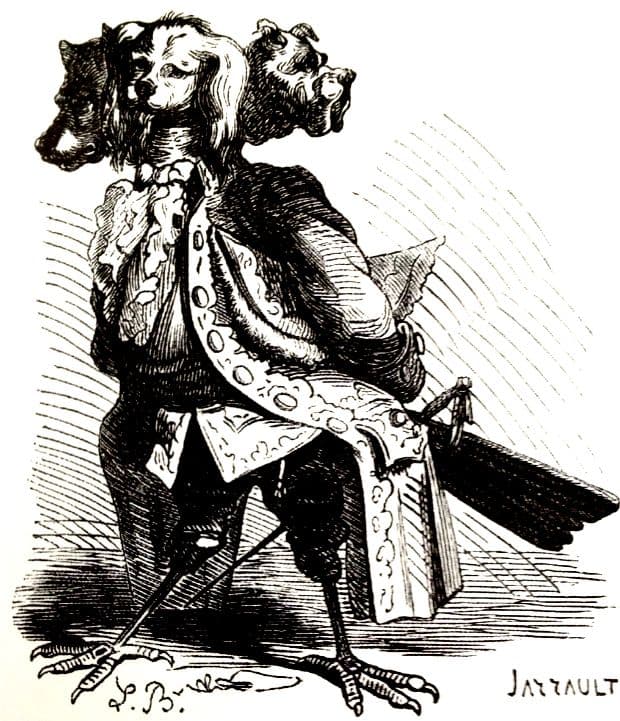
Naberius/Cerbere/Naberus
Naberius, also known as Cerberus or Naberus, is a demon prominently featured in 16th-century demonology, particularly in the works of Johann Weyer. He is described as a valiant Marquess of Hell commanding nineteen legions of demons. Naberius is notable for his ability to bestow cunning in arts and sciences, especially rhetoric, and for his dual role in either restoring or causing the loss of dignities and honors.