
Asmodai/Asmodeus
Jewish Folklore, Christian Apocrypha, Zoroastrianism·Demonology, Mythology, Folklore, Religious Texts·Middle Eastern (Jewish, Christian, Islamic)·Demon King
Asmodeus is a prominent demon king primarily known from Jewish folklore and Christian apocryphal texts, particularly the Book of Tobit and the Talmudic legends of Solomon. He is often depicted as the demon of lust and a disruptive force in human relationships, notably interfering with the marriages of Sarah in Tobit and tricking King Solomon in Talmudic tales. His name is believed to derive from the Avestan word for wrath, linking him to Zoroastrian demonology.
Key Facts
- ›Asmodeus is a king of demons, prominent in legends of King Solomon and the construction of his Temple.
- ›In the Book of Tobit, he is the antagonist who slays Sarah's seven husbands, driven by a desire for her.
- ›Talmudic stories portray him as a powerful but sometimes humorous figure, notably tricking Solomon and even displacing him for a time.
- ›He is often associated with the sin of lust, classified as the 'demon of lust' by Peter Binsfeld.
- ›His name is thought to originate from the Avestan 'aēšma-daēva', meaning 'demon of wrath'.
- ›In Islamic tradition, he is known as Sakhr and is depicted as an antagonist to Solomon, sometimes imprisoned in a rock.
Asmodai, Ashmedai, Asmodee, AsmodéE, Osmodeus, Osmodai, Hashmedai, Hashmodai, Hasmodai, Khashmodai, Khasmodai, Hammadai, Khammadai, Shamdon, Shidonai, Sakhr
Lust, Disruption of Marriages, Temptation, Wrath
Slaying Husbands On Wedding Nights, Impeding Marriage Consummation, Causing Fear and Fleeing, Displacing Humans, Revealing Secrets, Commanding Legions of Demons
Book of Tobit, Talmud, Testament of Solomon, Malleus Maleficarum, Dictionnaire Infernal, Lesser Key of Solomon, the Magus, Quran, Thousand and One Nights
King Solomon, Sarah, Tobias, Raphael, Lucifer, Lilith, Samael, Agrat Bat Mahlat, King David, Gabriel
Lust, Carnal Desire, Jealousy, Vengeance, Gambling, Greed
- Fumigation With Fish Heart and Liver Causes Him To Flee Or Be Bound.
- His Voice Can Be Rendered Inoperative By Such Fumigation.
- Vulnerable To the Liver and Gall of the Assyrian Sheatfish .
Angel Raphael, Tobias, St. John, Prayer, Holy Verses
- In Zoroastrianism, AēšMa Is the Demon of Wrath.
- In Islamic Texts, He Is Known As Sakhr and Associated With Jinn and Imprisonment.
- Talmudic Depictions Are Less Malign Than In the Book of Tobit.
- Later Christian Thought Consistently Associates Him With Lust.
Fish, Lion, Dragon, Serpent, Rooster, Fire, Gold
About Asmodai/Asmodeus
Asmodeus: King of Demons and Demon of Lust
Asmodeus, also known as Asmodai or Ashmedai, is a powerful demon king deeply embedded in Jewish folklore, Christian apocryphal texts, and later demonological traditions. He is most famously recognized as the demon of lust, a role solidified by Christian thinkers like Peter Binsfeld. His name is believed to derive from the Avestan term 'aēšma-daēva', meaning 'demon of wrath,' linking him to ancient Zoroastrian beliefs.
Early Attestations and Roles
In the deuterocanonical Book of Tobit, Asmodeus is a primary antagonist who harbors a destructive obsession with Sarah, the daughter of Raguel. He tragically kills her seven successive husbands on their wedding nights, preventing the consummation of their marriages. However, the text also notes that Asmodeus is in love with Sarah and does not harm her directly. The demon is ultimately defeated by Tobias, guided by the angel Raphael, who uses a ritualistic fumigation of a fish's heart and liver to drive Asmodeus away and bind him.
Talmudic literature presents a different portrayal of Asmodeus, often depicting him as a formidable but at times humorous and even cooperative figure. He plays a significant role in legends surrounding King Solomon, including assisting in the construction of the Temple and, in one dramatic account, displacing Solomon from his throne for a period. These narratives highlight his immense power and cunning.
Later Demonological Associations
Asmodeus's association with lust became a defining characteristic in later Christian demonology. He is consistently identified as the personification of this sin, earning titles such as the 'demon of lust' and the 'Prince of Lechery.' His influence is noted in texts like the Malleus Maleficarum and the Lanterne of Light. Various demonological systems assigned him specific ranks and domains; for instance, he is listed as a king in Hell with seventy-two legions of demons under his command in the Ars Goetia, part of the Lesser Key of Solomon.
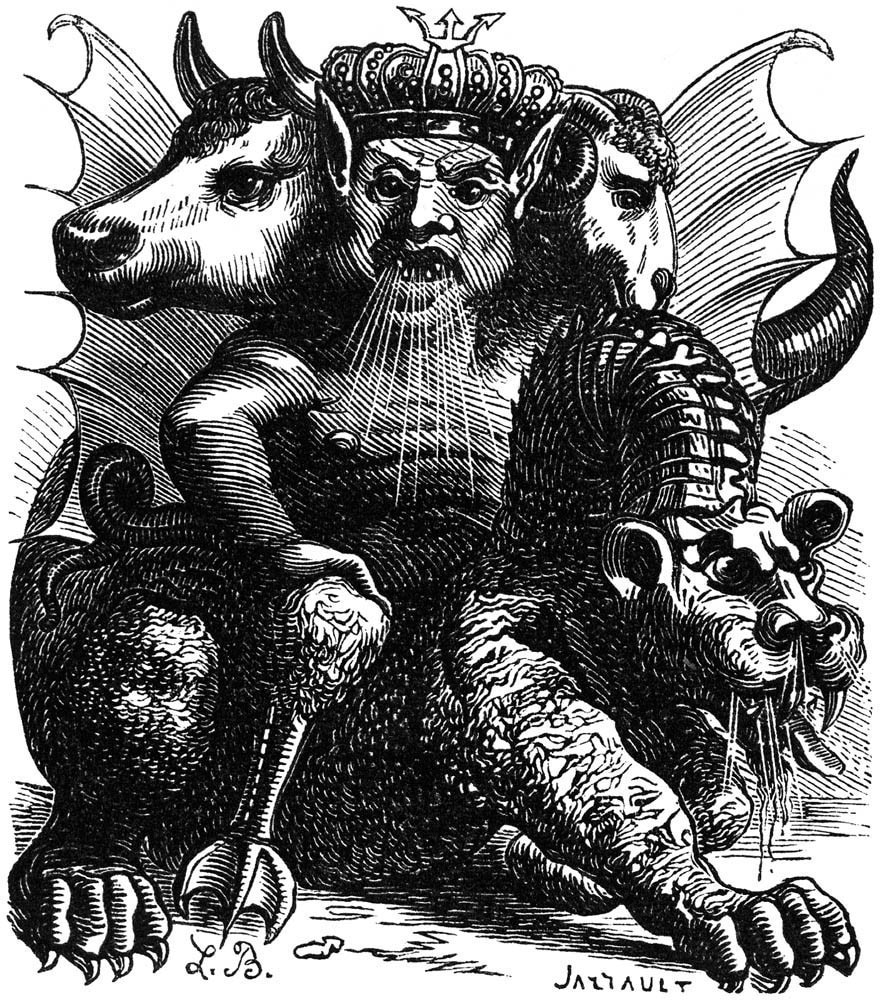
Descriptions of Asmodeus's appearance vary but often include monstrous features: multiple heads (bull, man, ram/goat), a serpent's tail, and the ability to breathe fire. He is sometimes depicted riding a lion or dragon, and later traditions note him walking with a limp, leading to the moniker 'The Devil on Two Sticks.'
Islamic and Kabbalistic Perspectives
In Islamic tradition, Asmodeus is known as Sakhr, a demon who acts as an antagonist to Prophet Solomon. Quranic exegesis elaborates on the story of Solomon's temporary downfall, attributing it to a demon (Sakhr) who usurped his throne. This demon is often described as being imprisoned in a rock after Solomon reclaims his kingdom. Kabbalistic traditions also feature Asmodeus, sometimes as a subordinate of Samael and associated with Lilith, with specific influences noted on certain days.
Asmodeus remains a significant figure in demonology and folklore, embodying destructive desires and challenging divine order through his power and influence.
Source: Wikipedia ↗
Frequently Asked Questions
Who is Asmodeus?
Asmodeus is a powerful demon king, most notably appearing in Jewish folklore and Christian apocryphal texts. He is often depicted as the demon of lust and a significant figure in the legends surrounding King Solomon.
What is Asmodeus known for in the Book of Tobit?
In the Book of Tobit, Asmodeus is the primary antagonist who becomes enamored with Sarah and kills her seven successive husbands on their wedding nights. He is ultimately defeated by Tobias, who uses the smoke from a fish's heart and liver.
How is Asmodeus depicted in Talmudic stories?
In the Talmud, Asmodeus is portrayed with a less malign character, sometimes as a good-natured and humorous figure. He is involved in legends where he assists King Solomon in building the Temple and, in one instance, displaces Solomon for a period.
What is Asmodeus's association with lust?
Asmodeus is widely recognized as the demon of lust. Peter Binsfeld classified him as such, and later demonologists and texts like the Malleus Maleficarum and the Lanterne of Light associated him with this deadly sin and lechery.
What is the origin of Asmodeus's name?
The name Asmodeus is believed to derive from the Avestan compound 'aēšma-daēva', meaning 'demon of wrath'. 'Aēšma' signifies wrath, and 'daēva' means demon, linking him to Zoroastrian demonology.
How is Asmodeus represented in Islamic tradition?
In Islamic culture, Asmodeus is known as Sakhr, a demon who served as an antagonist to Prophet Solomon. He is sometimes depicted as being imprisoned within a rock after his defeat by Solomon.
Related Demons

Ifrit
The Ifrit is a powerful class of demon originating in Islamic tradition, often associated with the underworld and the spirits of the dead. These beings are typically depicted as formidable, chthonic entities formed from smoke and fire, capable of great harm but also sometimes bound to serve divine or human will. They are notable for their presence in Islamic scriptures, folklore, and later literary and popular culture.
Corson
Corson is a prominent demon in the demonological tradition of the Lesser Key of Solomon, identified as one of the four principal kings ruling over the seventy-two demons allegedly bound by King Solomon. His conjuration is reserved for significant occasions. Corson is notable for his varying attributions as a cardinal king of the west or south, depending on the specific translation of the text.
Ziminiar
Ziminiar, also known as Zymymar, is a significant figure in demonology, particularly within the context of the Lesser Key of Solomon. He is identified as one of the four principal kings who govern the seventy-two demons supposedly bound by King Solomon, holding dominion over the northern cardinal direction. Ziminiar is considered a powerful entity, not to be summoned except on important occasions.