
Ziminiar
Demonology·Demonology·Western European (primarily attributed to grimoires)·Demon King
Ziminiar, also known as Zymymar, is a significant figure in demonology, particularly within the context of the Lesser Key of Solomon. He is identified as one of the four principal kings who govern the seventy-two demons supposedly bound by King Solomon, holding dominion over the northern cardinal direction. Ziminiar is considered a powerful entity, not to be summoned except on important occasions.
Key Facts
- ›Ziminiar is one of the four principal kings of the seventy-two demons listed in the Lesser Key of Solomon.
- ›He is identified as the king of the north in both the Lesser Key of Solomon and Pseudomonarchia Daemonum.
- ›His alternate name is Zymymar.
- ›He is not to be conjured except on great occasions, indicating his power and significance.
- ›The other three principal kings are often cited as Amaymon, Corson, and Gaap, though variations exist.
Zymymar
North
- Governs Seventy-Two Demons
- Holds Significant Power Not To Be Conjured Except On Great Occasions
Lesser Key of Solomon, Pseudomonarchia Daemonum
King Solomon, Amaymon, Corson, Gaap, Belial, Beleth, Asmodai
Not To Be Conjured Except On Great Occasions
About Ziminiar
In the realm of demonology, Ziminiar, also referred to by the variant spelling Zymymar, is recognized as a significant demonic entity. He is primarily documented within the context of the grimoire known as the Lesser Key of Solomon, a foundational text in ceremonial magic. Ziminiar's importance stems from his position as one of the four principal kings who are said to command the seventy-two demons purportedly bound by the biblical King Solomon.
Cardinal King of the North
Ziminiar holds a specific territorial and hierarchical designation: he is identified as the king of the north. This cardinal direction is consistently attributed to him in both the Lesser Key of Solomon and the Pseudomonarchia Daemonum, another influential demonological catalog. This placement suggests a structured hierarchy within the demonic realm, with Ziminiar overseeing a particular quadrant of influence.
The texts emphasize Ziminiar's considerable power, stating that he is not to be conjured or summoned except on "great occasions." This cautionary note implies that his intervention is reserved for matters of extreme importance, underscoring his formidable nature and the potential consequences of his invocation. While the Lesser Key of Solomon lists him alongside fellow kings Amaymon, Corson, and Gaap, some textual variations note different constellations of these principal rulers.
Source: Wikipedia ↗
Frequently Asked Questions
Who is Ziminiar in demonology?
Ziminiar, also known as Zymymar, is a demon described as one of the four principal kings in the demonological text, the Lesser Key of Solomon. He is said to have authority over a portion of the seventy-two demons bound by King Solomon.
What is Ziminiar's domain or direction?
According to the Lesser Key of Solomon and Pseudomonarchia Daemonum, Ziminiar is the king of the north. This designation places him as a cardinal ruler among the demonic hierarchy.
When should Ziminiar be conjured?
Ziminiar is not to be summoned or conjured except on great occasions. This suggests he is a powerful entity whose invocation is reserved for matters of significant importance or urgency.
What are Ziminiar's alternate names?
Ziminiar is also referred to by the variant spelling Zymymar in some demonological texts. These names are used interchangeably to identify the same demonic king.
Who are the other principal demon kings associated with Ziminiar?
The Lesser Key of Solomon typically lists Amaymon, Corson, and Gaap as the other three principal kings alongside Ziminiar. However, some textual variations have been noted, with others like Belial, Beleth, and Asmodai sometimes appearing in their place.
Related Demons
Corson
Corson is a prominent demon in the demonological tradition of the Lesser Key of Solomon, identified as one of the four principal kings ruling over the seventy-two demons allegedly bound by King Solomon. His conjuration is reserved for significant occasions. Corson is notable for his varying attributions as a cardinal king of the west or south, depending on the specific translation of the text.
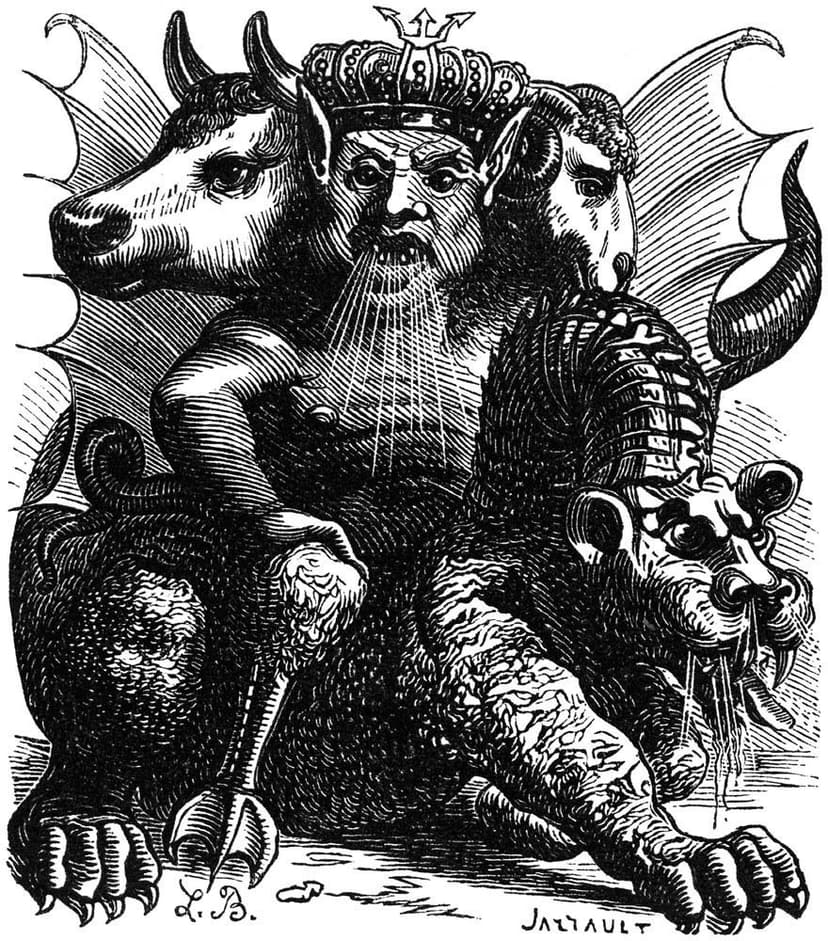
Asmodai/Asmodeus
Asmodeus is a prominent demon king primarily known from Jewish folklore and Christian apocryphal texts, particularly the Book of Tobit and the Talmudic legends of Solomon. He is often depicted as the demon of lust and a disruptive force in human relationships, notably interfering with the marriages of Sarah in Tobit and tricking King Solomon in Talmudic tales. His name is believed to derive from the Avestan word for wrath, linking him to Zoroastrian demonology.
Aamon/Amon
Aamon, also known as Amon, is a Grand Marquis of Hell in demonology, commanding 40 infernal legions according to the Ars Goetia. He is notable for his knowledge of the past and future, his ability to reconcile friends and foes, and his association with life and reproduction. His origins are linked to ancient Libyan and Punic deities.