
Ifrit
Islamic·Demonology, Mythology, Folklore, Religious Texts·Arabian, Islamic world·Demon, Jinn
The Ifrit is a powerful class of demon originating in Islamic tradition, often associated with the underworld and the spirits of the dead. These beings are typically depicted as formidable, chthonic entities formed from smoke and fire, capable of great harm but also sometimes bound to serve divine or human will. They are notable for their presence in Islamic scriptures, folklore, and later literary and popular culture.
Key Facts
- ›Ifrit are powerful demons in Islamic culture, often associated with the underworld and spirits of the dead.
- ›The term 'ifrit' appears in the Quran as an epithet for a powerful spirit among the jinn.
- ›In Islamic folklore, Ifrit are often depicted as chthonic spirits formed from smoke and fire, inhabiting the lower realms.
- ›Egyptian folklore connects Ifrit to the souls of the dead, particularly those who died violently.
- ›Moroccan beliefs describe Ifrit as powerful demons with monstrous deformities and shapeshifting abilities.
- ›The Ifrit features in classic Arabian tales like one Thousand and one Nights and has appeared in modern fiction, including video games.

Efreet, Afrit, Afreet, ʿIfrīT, ʿAfāRīT
Underworld, Spirits of the Dead, Desolate Places, Fire, Smoke
Carrying Heavy Objects, Shapeshifting, Threatening With Fiery Presence, Causing Torment, Possession, Wreaking Destruction
Quran, Hadith of Muhammad Al-Bukhari, Mi'Raj Narrations, Malik Ibn Anas's Narratives, TafsīR of Surah Al-Anbiya, Mustatraf By Al-IbshīHī, Haft Peykar By Nizami Ganjavi, Works of Al-MaʿArri, One Thousand and One Nights
Jinn, Shaytan, Iblis, Bilqis, King Solomon, Muhammad, Archangel Gabriel, Prophet Job, Ali, Mahan
Slyness, Malice, Wickedness, Cunning, God's Wrath, Moral Transgression, Guardians of Moral Order
- In Egyptian Belief, Driving An Unused Nail Into the Blood of A Violently Killed Person Is Supposed To Stop the Formation of A Dangerous Ifrit.
- In Moroccan Belief, A Magical Ring Might Be Used To Force Afarit To Perform Certain Orders.
- In Shabak Belief, Ali Chained An Ifrit For His Wickedness, and He Was Later Released By Muhammad Under the Condition of Surrendering To God's Will.
Archangel Gabriel, Prophets, Ali, Muhammad, Fisherman, Rooster
- In Islamic Egypt, Afarit Are Often Identified With the Spirits of the Dead, Arising From Those Who Died Violently.
- In Moroccan Belief, Afarit Are A More Powerful Type of Demon With Monstrous Appearances and Limited Shapeshifting Abilities Compared To Jinn.
- In Shabakism, An Ifrit Is Described As Having Angered Ali Before the Creation of Adam.
Fire, Smoke, Dust, Seven Heads
About Ifrit
The Ifrit (Arabic: عفريت, romanized: ʿifrīt; plural: عفاريت, ʿafārīt) is a powerful and fearsome class of demon within Islamic culture. Often associated with the underworld and identified with the spirits of the dead, Ifrit are typically depicted as formidable, chthonic entities formed from smoke and fire, dwelling in desolate places or the nether realms.
Origins and Etymology
The term 'ifrit' appears in the Quran, notably in Surah an-Naml, where an ifrit is described as a being of great power capable of transporting the throne of the Queen of Sheba for King Solomon. While the Quran uses 'ifrit' as an epithet for a powerful spirit among the jinn, its precise nature and relation to other jinn remain somewhat ambiguous due to the broad meaning of the term 'jinn' itself. Traditional Arab philologists suggest the word derives from the Arabic root 'afara,' meaning 'to rub with dust,' implying sly and cunning characteristics. Some Western scholars have proposed a foreign origin, possibly from Zoroastrian terminology.
Characteristics and Folklore
In Islamic folklore, Ifrit are commonly portrayed as ruthless and wicked spirits, generally inhabiting the seven earths or the underworld. They are believed to be formed from smoke and fire, and despite their malevolent associations, they are not fundamentally considered evil on a moral plane. They can be bound by divine will or compelled by sorcerers, sometimes carrying out obligations such as blood vengeance. In Egyptian belief, Ifrit are often linked to the spirits of the dead, particularly those who met violent ends, and are thought to haunt places frequented by the deceased.
Moroccan traditions describe Ifrit as more powerful demons with significant scale and capacity, often depicted with monstrous deformities such as flaming eyes or multiple heads. They are also believed to possess individuals, granting them strength and bravery but risking madness. Their shapeshifting abilities are considered inferior to those of jinn.
Literary and Popular Culture
The Ifrit has featured in classical Arabic literature, including the tales of One Thousand and One Nights, where they are sometimes depicted as powerful beings trapped in containers, capable of granting wishes or causing mischief. Nizami Ganjavi's Haft Peykar includes a narrative where an Ifrit serves as a moral instance, representing the consequence of moral transgression. In modern popular culture, Ifrit are frequently depicted in video games, often as fiery elemental enemies, and have appeared in television series and novels, sometimes embodying vengeful spirits or seeking to adapt to the human world.
Source: Wikipedia ↗
Frequently Asked Questions
What is an Ifrit?
An Ifrit is a powerful class of demon in Islamic culture, often associated with the underworld and the spirits of the dead. They are typically depicted as formidable, chthonic entities formed from smoke and fire.
Where are Ifrit mentioned in Islamic scriptures?
The term 'ifrit' appears in the Quran, notably in Surah an-Naml, where an ifrit offers to bring the throne of the Queen of Sheba to King Solomon. They are also mentioned in hadith and other Islamic narratives as powerful or malicious spirits.
What is the origin of the word 'Ifrit'?
Traditionally, Arab philologists trace the derivation of 'ifrit' to the Arabic word 'afara,' meaning 'to rub with dust' or 'to roll into dust,' implying sly or cunning characteristics. Some Western scholars suggest a foreign origin from Middle Persian.
How are Ifrit depicted in Islamic folklore?
In folklore, Ifrit are often described as ruthless and wicked chthonic spirits inhabiting the lower realms, formed from smoke and fire. Despite their negative depictions, they are not considered fundamentally evil and can sometimes carry out God's purpose or be compelled by sorcerers.
Are Ifrit depicted in popular culture?
Yes, Ifrit frequently appear in modern fiction, including video games like Final Fantasy, where they are often portrayed as fire spirits. They have also been featured in television series and novels, sometimes as vengeful spirits or disguised entities.
Related Demons
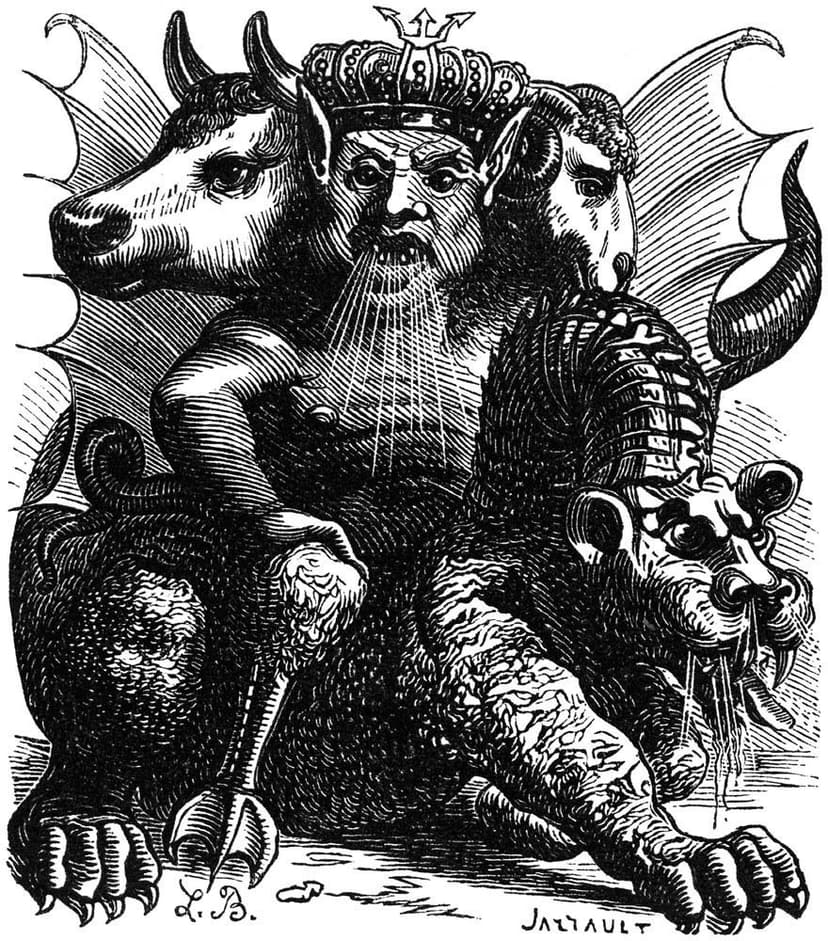
Asmodai/Asmodeus
Asmodeus is a prominent demon king primarily known from Jewish folklore and Christian apocryphal texts, particularly the Book of Tobit and the Talmudic legends of Solomon. He is often depicted as the demon of lust and a disruptive force in human relationships, notably interfering with the marriages of Sarah in Tobit and tricking King Solomon in Talmudic tales. His name is believed to derive from the Avestan word for wrath, linking him to Zoroastrian demonology.

Marid
A marid is a type of devil (shayṭān) in Islamic tradition, characterized by its rebellious nature. The term, derived from an Arabic root meaning "rebellious," is applied to powerful chthonic demons, often associated with attempting to eavesdrop on heavenly pronouncements or causing destruction. They are considered more malevolent than ordinary devils but less powerful than ʿifrīts, yet susceptible to manipulation.
Zabaniyya
The Zabaniyya are the "Wardens of Hell" in Islamic tradition, a group of nineteen angels tasked with torturing sinners and carrying away the souls of the wicked. They are also identified as the "Angels of Punishment" and "Guardians of Hell." Despite their fearsome appearance and actions, they are considered ultimately subordinate to God, and their punishments are seen as just within Islamic theology.