
Amalanhig
Amalanhig are monstrous beings from Visayan mythology, particularly known among Hiligaynon speakers. They are a type of Aswang that rises from the grave and hunts humans, often by biting their necks or by terrifying them to death through tickling. These creatures are notable as a distinct variant of the vampire in Philippine folklore.
Key Facts
- ›Amalanhig are creatures from Visayan mythology, primarily associated with Hiligaynon-speaking groups.
- ›They are described as Aswangs who have risen from their graves.
- ›Their primary method of killing humans is by biting their necks.
- ›An alternate legend states they chase and tickle victims to death.
- ›Amalanhig are said to have stiff bodies, forcing them to walk in straight lines.
- ›They are depicted as externally human but with enlarged upper canine teeth.
'Maranhig, 'Amaranhig
Death, Terror, Hunting Humans
Rising From Graves, Hunting Living Humans, Biting Necks, Tickling Victims To Death, Walking In Straight Lines
Aswang
Running In Zigzag, Climbing Trees, High Platforms, Lakes, Rivers
About Amalanhig
What is known about Amalanhig
Amalanhig are figures from the rich tapestry of Visayan mythology, especially prominent among the Hiligaynon-speaking communities of the Philippines. These beings are a terrifying manifestation of the Aswang, a class of shapeshifting monsters in Philippine folklore. Specifically, Amalanhig are often depicted as deceased individuals who have risen from their graves, driven by a monstrous hunger to prey upon the living.
Their methods of attack are varied and chilling. The most commonly cited means of dispatch involves a predatory bite to the neck, a clear parallel to vampire lore. However, an alternative, and perhaps more psychologically disturbing, account describes Amalanhig as creatures that chase down their victims, not to kill with brute force, but to tickle them relentlessly until they succumb to a mixture of terror and uncontrollable laughter. This duality in their predatory nature highlights the diverse and often unsettling imagination present in regional folklore.
Physically, Amalanhig are described as appearing outwardly human, making them difficult to identify until it is too late. Their monstrous nature is subtly revealed through an enlargement of their upper canine teeth. Their movement is also characterized by a peculiar stiffness, forcing them to walk in straight lines, a vulnerability that offers a potential, albeit difficult, escape strategy for their intended prey. Additionally, they are known to possess an aversion to deep bodies of water, such as lakes and rivers, providing another means of avoidance. These characteristics solidify the Amalanhig's place as a distinct and memorable entity within Philippine demonic and folkloric traditions.
Source: Wikipedia ↗
Frequently Asked Questions
What are Amalanhig?
Amalanhig are monstrous creatures from Visayan mythology, considered a type of Aswang that rises from their graves. They are known for hunting and killing humans.
How do Amalanhig kill humans?
Amalanhig typically kill humans by biting their necks. Another legend suggests they chase victims and tickle them to death out of terror and laughter.
What are the weaknesses or ways to escape Amalanhig?
To escape Amalanhig, one can run in a zigzag direction as they can only walk straight due to their stiff bodies. Climbing trees or high platforms is also effective, as is running into lakes and rivers, which they fear.
What do Amalanhig look like?
Amalanhig are described as externally identical to humans. A distinguishing feature is the enlargement of their upper canine teeth.
Where are Amalanhig from?
Amalanhig originate from Visayan mythology, particularly among the Hiligaynon-speaking populations in the Philippines.
Related Demons
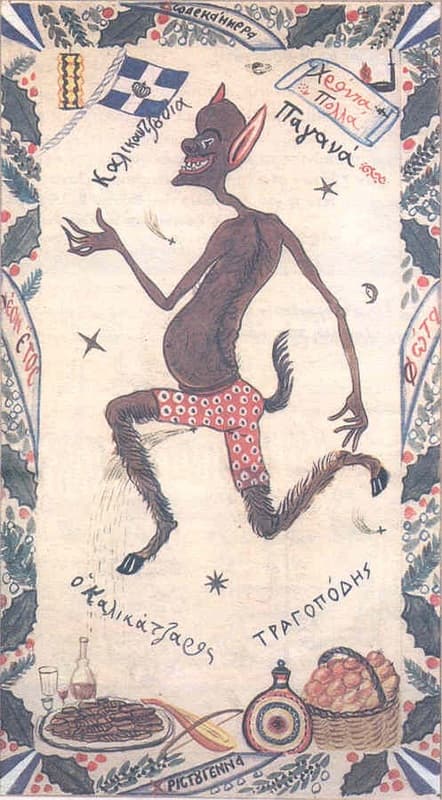
Kallikantzaros
The Kallikantzaros is a malevolent creature from modern Greek folklore, believed to dwell underground and attempt to saw down the tree supporting the earth. They emerge to the surface during the twelve days of Christmas, from December 25th to January 6th, to torment humans with pranks and mischief before returning underground to resume their work. Equivalents appear in Bulgarian, Serbian, Bosnian, Albanian, Cypriot, and Turkish folklore, often associated with the same Yuletide period.
Achlys
Achlys is a figure from ancient Greek literature, primarily known as the personification of sorrow or a deathly mist. While first appearing in Homer as a mist that clouds the eyes of the dying, she is later depicted in Hesiod's "Shield of Heracles" as a fearsome, gaunt entity. Her Roman equivalent, Caligo, is associated with the primordial origins of the cosmos.
Anaye
The Anaye were a race of malevolent beings or monsters from Navajo mythology, believed to have been born from women's sexual intercourse with inanimate objects after a societal dispute. They were ultimately exterminated by the heroic figure Nayenezgani, with their remains transforming into natural elements of the landscape.