
Kallikantzaros
The Kallikantzaros is a malevolent creature from modern Greek folklore, believed to dwell underground and attempt to saw down the tree supporting the earth. They emerge to the surface during the twelve days of Christmas, from December 25th to January 6th, to torment humans with pranks and mischief before returning underground to resume their work. Equivalents appear in Bulgarian, Serbian, Bosnian, Albanian, Cypriot, and Turkish folklore, often associated with the same Yuletide period.
Key Facts
- ›Kallikantzaroi emerge from underground during the twelve days of Christmas (December 25 - January 6) to cause trouble for humans.
- ›They spend the rest of the year attempting to saw down the giant tree that supports the Earth.
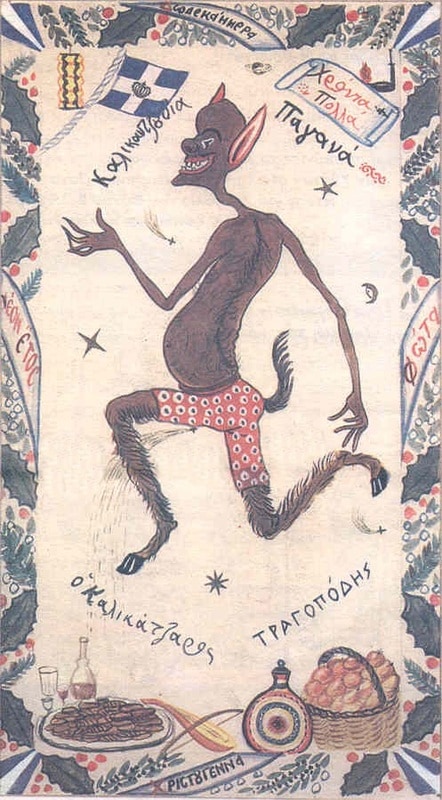
- ›Their appearance is not standardized, but common descriptions include being black and hairy, with red eyes, goat or donkey ears, and beastly limbs.
- ›Methods to ward them off include leaving out a sieve for them to count, burning a Yule log, marking doors with a black cross, or hanging a pig's jaw.
- ›They are often associated with or considered similar to ancient Greek satyrs and sileni, particularly those associated with Dionysus.
- ›Similar creatures, such as the karakondžula, appear in Serbian and Bulgarian folklore, also active during the 'unbaptized days' around Christmas.
KalikáNtzaros, Kallikantzaros, SkalikáNtzaros, KalkáNtaros, KalikáTtaros, KalikáNtaros, KalikáNzaros, Skalicanzaro, KarakondžUl, KarakondžUla, Karkanxholl, Karakoncolos
Mischief, Pranks, Torment, Trouble, Chaos
Causing Mischief and Pranks, Entering Homes Through Chimneys, Befouling Food and Water, Spoiling Milk, Breaking Furniture, Devouring Food, Terrorizing People, Sawing the Tree That Supports the Earth
Greek Folklore, Serbian Folklore, Bulgarian Folklore, Albanian Folklore, Cypriot Folklore, Turkish Folklore
Dionysus, Satyrs, Sileni
Mischief, Malevolence, Chaos During Yuletide
- Kallikantzaroi Are Believed To Dwell Underground, Sawing the Tree That Supports the Earth, But Emerge During the Twelve Days of Christmas To Cause Trouble.
- To Protect Against Them, One Might Leave A Sieve For Them To Count, As They Cannot Pronounce the Number Three. Another Method Is To Leave Out A Clump of Tangled Hemp.
- A Child Born On Christmas Eve Is Sometimes Believed To Become A Kallikantzaros In Adulthood, Leading Superstitious Parents To Take Measures To Prevent This Transformation.
- They Are Said To Feed On Frogs, Worms, Snakes, and Other Small Creatures, With Pork Being Their Favorite Food.
- Desserts and Honey Cakes May Be Placed Out To Lure Them Away, and In Samos, Dessert Is Put Out On New Year's Eve To Appease Them.
- In Cyprus, Eggs and Sausages, and Later Pancakes, Were Scattered On the Rooftop On Epiphany To Appease Them As They Prepared To Leave.
- Keeping A Fire Burning In the Fireplace Throughout the Night Is A Common Way To Prevent Them From Entering Through the Chimney.
- Burning the Yule Log For the Duration of the Twelve Days, Or Throwing Foul-Smelling Shoes Into the Fire, Are Also Believed To Repel Them.
- Marking One's Door With A Black Cross On Christmas Eve, Burning Incense, Or Hanging A Pig's Lower Jaw Behind the Door Are Additional Protective Measures.
Sieve, Tangled Hemp, Christmas Dawn, Epiphany, Cock Crowing, Dawn Light, Garlic Tresses, Straw Tresses, Fire, Yule Log, Foul-Smelling Shoes, Salt, Old Shoes, Black Cross On Door, Incense, Pig's Lower Jaw
- In Serbian Folklore, the KarakondžUla Are Active During the 'Unbaptized Days' and Can Ride People At Night. They Are Often Depicted As Female, Black, With Long Arms, and Can Be Associated With Water Spirits.
- Bulgarian Folklore Describes the Karakondjul As Human-Like With A Hairy Body, Tail, and Horns, Or As A One-Eyed Being On A Single Leg, Or A Horse-Headed Man. They Are Shape-Shifters and Pounce On Travelers During the Unbaptized Days.
- Albanian Folklore Features the Karkanxholl, Sometimes Described As A Werewolf-Like Creature of Small Stature Wearing Iron Clothes, Or As the Ghost of A Gypsy Jingling Chains and Emitting A Deadly Breath. the Kukudh Is Another Related Undead Corpse Active During the Christmas Cycle.
Tree of the Earth, Chimney, Sieve
About Kallikantzaros
The Kallikantzaros is a malevolent creature prominent in modern Greek folklore, known for its disruptive presence during the Yuletide season. These beings are believed to reside underground for most of the year, engaged in the arduous task of sawing the trunk of the giant tree that supports the Earth. Their emergence to the surface is confined to the twelve days of Christmas, from December 25th to January 6th, coinciding with the period known as Theophany or Epiphany.
During their brief sojourn above ground, Kallikantzaroi abandon their subterranean labor to torment humans. They are known to enter homes, often through chimneys, where they engage in a range of mischievous and harmful activities. These include befouling food and water, spoiling milk, breaking furniture, devouring Christmas pork, and generally terrorizing people. Their appearance is not uniformly described, featuring regional variations, but common depictions include being large, black, and hairy, with burning red eyes, goat or donkey ears, and animalistic limbs. They are typically depicted as male and often possess prominent sexual organs.
Upon the arrival of Epiphany on January 6th, the sun's renewed strength compels the Kallikantzaroi to return underground to continue their eternal task of sawing the world tree. Folklore suggests that during their absence, the tree heals itself, necessitating the restart of their efforts annually. The myth of the Kallikantzaros has parallels in neighboring cultures, with similar beings found in Bulgarian (karakondžul), Serbian (karakondžula), Albanian (karkanxholl), Cypriot, and Turkish (karakoncolos) folklore, often sharing the association with the Christmas period and similar malevolent activities.
Various protective measures and apotropaic rituals are associated with warding off Kallikantzaroi. These include leaving out a sieve for them to count, as they are said to be unable to pronounce the number three, thereby becoming distracted and unable to complete their task. Other methods involve burning a Yule log continuously, marking doors with a black cross, or hanging a pig's jaw behind the entrance. Some lore suggests that children born on Christmas Eve might transform into Kallikantzaroi, leading to preventative actions taken by superstitious parents. The creature's origins are theorized to be linked to ancient Dionysian festivals and their associated ecstatic rituals, or as a personification of folkloric nightmares that become active during the winter solstice.
Source: Wikipedia ↗
Frequently Asked Questions
When do Kallikantzaroi appear?
Kallikantzaroi appear during the twelve days of Christmas, from December 25th to January 6th. They emerge from underground during this period to cause mischief among humans.
What do Kallikantzaroi do when they come to the surface?
When they emerge, they come to the surface to bring trouble to mortals by playing pranks. They enter homes, particularly through chimneys, to befoul food and water, break furniture, and terrorize people.
What is the origin of the Kallikantzaros myth?
One theory suggests their origin is tied to the masquerades of ancient winter festivals of Dionysus, involving masked parties and door-to-door visits. Another view considers them folkloric nightmares that press upon people, specifically during Yuletide.
How can one protect themselves from Kallikantzaroi?
Protection methods include leaving out a sieve for them to count, which distracts them because they cannot count to three. Other methods involve burning a Yule log continuously, marking doors with a black cross, or hanging a pig's jaw behind the door.
Are there similar creatures in other folklore?
Yes, equivalents of the Kallikantzaroi exist in Bulgarian (karakondžul), Serbian (karakondžula), Bosnian, Albanian (karkanxholl), Cypriot, and Turkish folklore (karakoncolos). These beings often share similar characteristics and seasonal activity.
Related Demons
Amalanhig
Amalanhig are monstrous beings from Visayan mythology, particularly known among Hiligaynon speakers. They are a type of Aswang that rises from the grave and hunts humans, often by biting their necks or by terrifying them to death through tickling. These creatures are notable as a distinct variant of the vampire in Philippine folklore.
Akuma
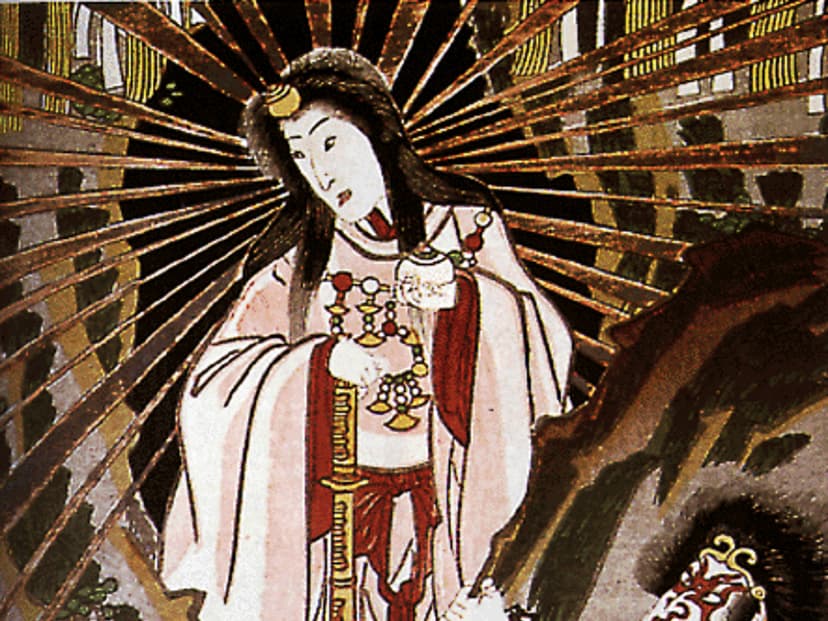
An akuma is an evil spirit in Japanese folklore, sometimes referred to as a devil or demon. The term is also used in Japanese Christianity to denote Satan and in Japanese Buddhism for Mara. Akuma are often depicted as malevolent beings associated with misfortune and mental illness.

Al Ana
Al Ana is a female fatal spirit or demon originating from Turkic folklore, often depicted as an ugly old woman who inhabits thickets near bodies of water. She is notably known for kidnapping newborn human babies and replacing them with her own monstrous offspring, known as changelings.