
Vercelli Cathedral
Archdiocese of Vercelli·Roman Catholic·Italy
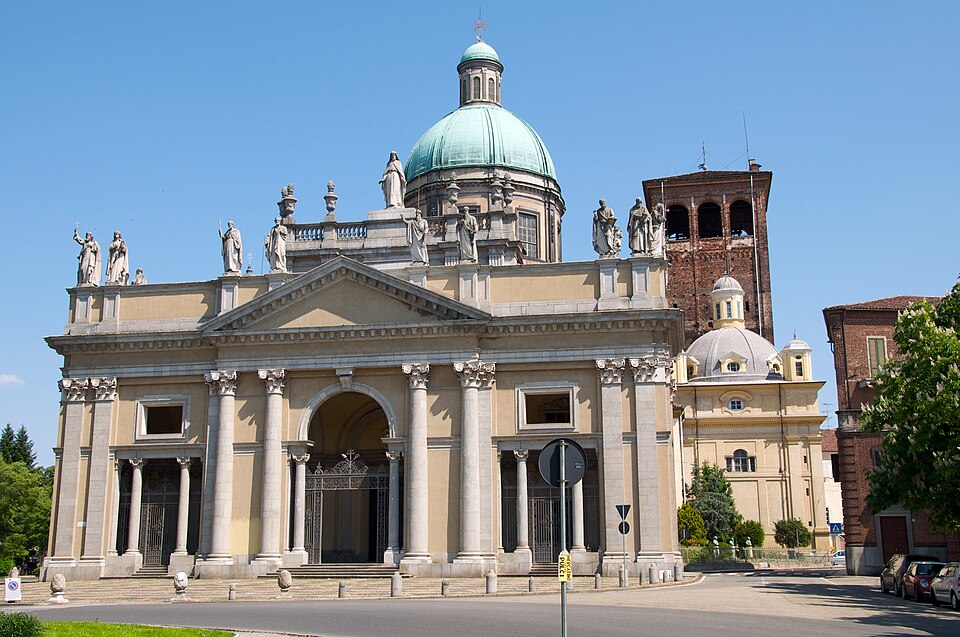
Vercelli Cathedral, officially the Duomo di Vercelli or Cattedrale di Sant'Eusebio, is the principal church of Vercelli, Italy, and serves as the cathedral for the Archdiocese of Vercelli. It is dedicated to Saint Eusebius, its first bishop, and stands on a site with a history of earlier ecclesiastical structures dating back to the 4th century.
Key Facts
- ›The first cathedral on the site was reportedly built in the 4th century by Saint Eusebius himself.
- ›The current structure is largely the result of a significant rebuilding commissioned in the second half of the 16th century by Bishop Guido Ferrero.
- ›Architect Pellegrino Tibaldi was responsible for the initial reconstruction phase, erecting the choir, side chapels, and sacristies.
- ›The nave, aisles, and transept were completed between 1702 and 1717 by Stefano Negro.
- ›The west front was finished between 1757 and 1763 by Benedetto Alfieri and Luigi Barberis.
- ›The cathedral houses the important chapter library, which contains the Vercelli Book and the Codex Vercellensis.
Vercelli Book, Codex Vercellensis, Tomb of Blessed Amadeus Ix, Tombs of the House of Savoy
Pellegrino Tibaldi, Stefano Negro, Benedetto Alfieri, Luigi Barberis, Giovanni Larghi, Giuseppe Locarni
About Vercelli Cathedral
Vercelli Cathedral, known in Italian as the Duomo di Vercelli or Cattedrale di Sant'Eusebio, stands as the principal church of the city of Vercelli in the Piedmont region of Italy. It holds the distinction of being the cathedral of the Archdiocese of Vercelli and is dedicated to Saint Eusebius of Vercelli, its inaugural bishop.
History and Construction
The site of the present cathedral has a long ecclesiastical history, with its first structure reportedly built in the 4th century, attributed to Saint Eusebius himself. This early building was constructed over an ancient necropolis and was dedicated to Saint Theonestus. Following Eusebius's death, he was buried there, and the dedication was changed accordingly. This initial structure was destroyed during the Gothic invasions of the 5th century.
Subsequent centuries saw multiple reconstructions and refurbishments. A significant basilica, inspired by Roman and Ravennate models, replaced the destroyed building. Major restorations took place in the 9th and 11th centuries, the latter following severe decay and a fire in 997. The 12th century saw the construction of the campanile and further restoration of the cathedral's main body, which then featured five aisles, a transept, and a portico.
The most substantial rebuilding effort began in the second half of the 16th century under Bishop Guido Ferrero, who commissioned Pellegrino Tibaldi to replace the medieval edifice. Tibaldi erected the choir, side chapels, and sacristies before funding issues halted progress. Between 1702 and 1717, Stefano Negro constructed the nave, aisles, and transept. The remaining sections, including the west front, were completed between 1757 and 1763 by Benedetto Alfieri and Luigi Barberis. A chapel for the relics of Saint Eusebius, discovered during 16th-century works, was added towards the end of the 18th century and later rebuilt in the late 19th century by Giuseppe Locarni. A dome was added by Giovanni Larghi between 1857 and 1860.
Treasury and Library
Vercelli Cathedral is notable for its important treasury, which now functions as a museum, and its significant chapter library. This library is home to the Vercelli Book and the Codex Vercellensis, both esteemed historical and literary works.
Royal Burials
A chapel located off the southern nave serves as the burial site for Blessed Amadeus IX and other members of the former ruling House of Savoy. Interred here are Charles I, Charles III, Yolande of Valois (wife of Blessed Amadeus), and Victor Amadeus I.
Source: Wikipedia ↗
Frequently Asked Questions
When was Vercelli Cathedral first built?
The construction of the first cathedral is attributed to Saint Eusebius in the 4th century. However, the present cathedral is largely a result of rebuilding that began in the second half of the 16th century.
Who is Vercelli Cathedral dedicated to?
Vercelli Cathedral is dedicated to Saint Eusebius of Vercelli, who was the first bishop of the city. He is also believed to have built the first cathedral on the site.
What is significant about the Vercelli Cathedral's library?
The cathedral possesses an important chapter library that houses the Vercelli Book and the Codex Vercellensis, both significant historical and literary manuscripts.
Which architects were involved in rebuilding Vercelli Cathedral?
Key architects involved in the rebuilding include Pellegrino Tibaldi, who began the work in the 16th century, followed by Stefano Negro for the nave and transept, and Benedetto Alfieri and Luigi Barberis for the west front.
Are there any notable burials at Vercelli Cathedral?
Yes, a chapel off the southern nave contains the tombs of Blessed Amadeus IX and other members of the former ruling house of Savoy, including Charles I, Charles III, Yolande of Valois, and Victor Amadeus I.
Related Cathedrals
Aosta Cathedral
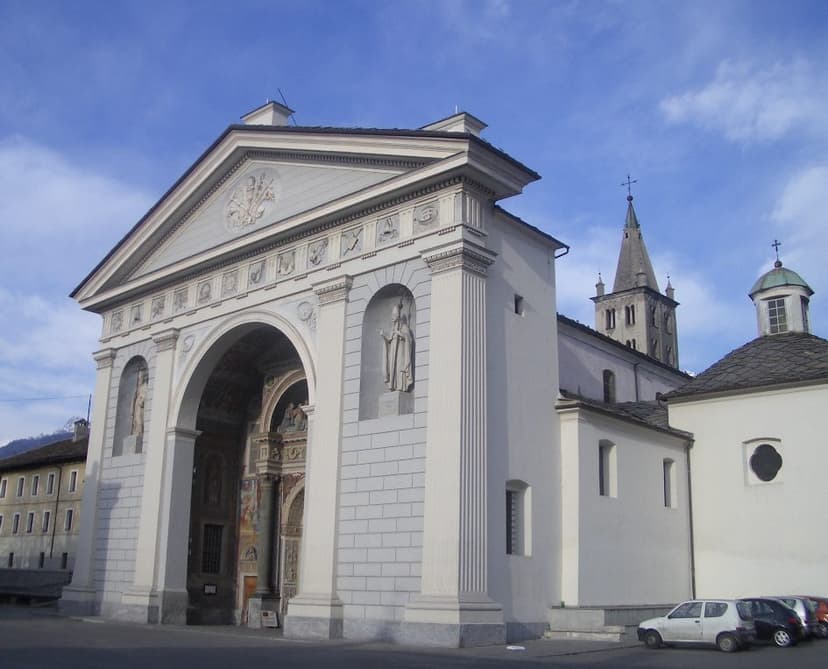
Aosta Cathedral, also known as the Cathedral of Santa Maria Assunta and San Giovanni Battista, is a Roman Catholic cathedral in Aosta, Italy, with origins dating back to the 4th century. It serves as the episcopal seat for the Diocese of Aosta and has undergone significant architectural modifications throughout its history, reflecting various styles from its Romanesque foundations to its Neoclassical facade.

Padua Cathedral
Padua Cathedral, officially the Basilica Cathedral of Saint Mary of the Assumption, serves as the seat of the Bishop of Padua in Veneto, Italy. Originally erected in the 4th century, it has undergone multiple significant reconstructions, with the current Renaissance structure dating from the 16th century and completed in the 18th century. The cathedral is a central religious and historical site in Padua, dedicated to the Assumption of the Virgin Mary.
Luni Cathedral
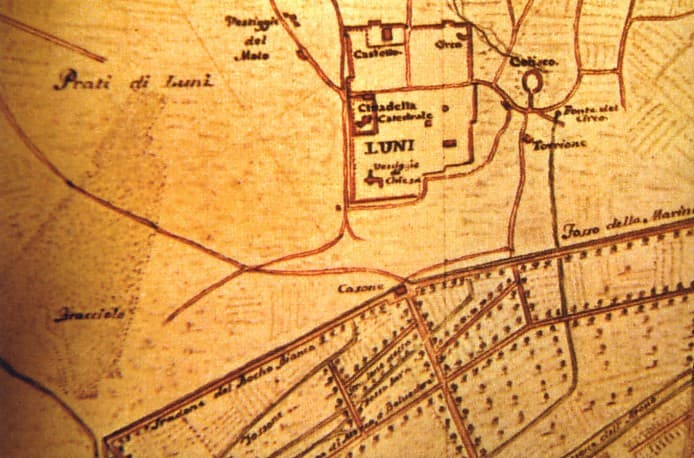
Luni Cathedral, formerly the Pieve of Santa Maria, was a significant religious center located in the ancient Roman city of Luni, Liguria, Italy. Originally built by Romans in the late 4th and early 5th centuries, it served as the seat of the Diocese of Luni and was considered the "mother" church for the region. Despite its eventual abandonment and ruin as the city declined, it remained a site of annual liturgical observance until the early 14th century.