
Padua Cathedral
Padua Cathedral, officially the Basilica Cathedral of Saint Mary of the Assumption, serves as the seat of the Bishop of Padua in Veneto, Italy. Originally erected in the 4th century, it has undergone multiple significant reconstructions, with the current Renaissance structure dating from the 16th century and completed in the 18th century. The cathedral is a central religious and historical site in Padua, dedicated to the Assumption of the Virgin Mary.
Key Facts
- ›The first cathedral on the site was built in the 4th century, following the Edict of Milan.
- ›The current Renaissance structure's construction began in 1551 and continued for two centuries, concluding in 1754.
- ›While previously attributed to Michelangelo, the design of the current building is credited to Andrea della Valle and Agostino Righetto.
- ›The cathedral was consecrated on August 25, 1754, and subsequently designated a minor basilica.
- ›The facade of the cathedral remains unfinished, as per the original plans.
- ›The adjoining Baptistery, dating from the 12th century, features frescoes by Giusto de' Menabuoi.

- Incomplete facade
- Adjoining baptistery with frescoes by Giusto de' Menabuoi
- Dome designed by John Glory and Giorgio Massari
- Plaque from the Roman era on the bell tower
Andrea Della Valle, Agostino Righetto, Gerolamo Frigimelica Roberti, Francesco Maria Preti, Giambattista Novello, John Glory, Giorgio Massari
About Padua Cathedral
Padua Cathedral, officially known as the Basilica Cathedral of Saint Mary of the Assumption (Duomo di Padova; Basilica Cattedrale di Santa Maria Assunta), stands as a significant religious edifice in Padua, Veneto, Italy. Located on the east end of Piazza Duomo, adjacent to the bishop's palace, it is the principal church of the Roman Catholic Diocese of Padua and serves as the seat of the Bishop of Padua. Dedicated to the Assumption of the Virgin Mary, the cathedral has a long and complex history, with the current structure being the third building erected on the same site.
History and Construction
The earliest predecessor to the current cathedral was established in the 4th century, following the Edict of Milan. This first church, dedicated to Santa Giustina, was destroyed by an earthquake on January 3, 1117. A subsequent Romanesque cathedral was built on its ruins and consecrated in 1180. The present Renaissance building began construction in 1551, with a design that underwent significant development over two centuries. Although earlier attributions pointed to Michelangelo, the architectural plans are now credited to Andrea della Valle and Agostino Righetto, with later contributions from architects like Gerolamo Frigimelica Roberti and Francesco Maria Preti. The cathedral was finally consecrated on August 25, 1754, and subsequently received the dignity of a minor basilica. Despite the extensive construction period, the facade of the cathedral remains unfinished.
Architecture and Features
Padua Cathedral is designed in the Latin cross form and features a prominent octagonal dome, the construction of which began in 1756 under the direction of John Glory and Giorgio Massari. The interior is characterized by a nave flanked by aisles, with chapels lining the side aisles. The crossing is crowned by a large circular dome. Notable elements include the incomplete facade, which was intended to be more elaborate, and the adjacent Baptistery. The Baptistery, dating from the 12th century and revised in the 13th, is renowned for its extensive frescoes from 1375–76 by Giusto de' Menabuoi, depicting scenes from the life of Christ and the Virgin Mary. The cathedral also houses the bodies of several saints, including San Daniele, San Leonino, and San Gregorio Barbarigo, and serves as a parish center for the local community.
Source: Wikipedia ↗
Frequently Asked Questions
When was Padua Cathedral first built?
The first cathedral on the site was erected in the 4th century, shortly after the Edict of Milan. This initial structure was later destroyed by an earthquake in 1117.
Who designed the current Padua Cathedral?
While historically attributed to Michelangelo, the design for the current Renaissance building is credited to Andrea della Valle and Agostino Righetto. Construction began in 1551 and spanned two centuries.
What is the architectural style of Padua Cathedral?
The current cathedral is primarily a Renaissance building. Earlier reconstructions incorporated Romanesque elements, as seen in frescoes from the medieval church.
Is the facade of Padua Cathedral complete?
No, the facade of Padua Cathedral remains unfinished. This was in accordance with the original plans which envisioned a more elaborate entrance.
What is the significance of the adjoining Baptistery?
The Baptistery, dating to the 12th century and revised in the 13th, is notable for its frescoes created by Giusto de' Menabuoi between 1375 and 1376.
What happened to the earlier cathedrals on the site?
The first cathedral was destroyed by an earthquake in 1117. A subsequent Romanesque rebuilding was consecrated in 1180, which was then largely replaced by the current Renaissance structure.
Related Cathedrals
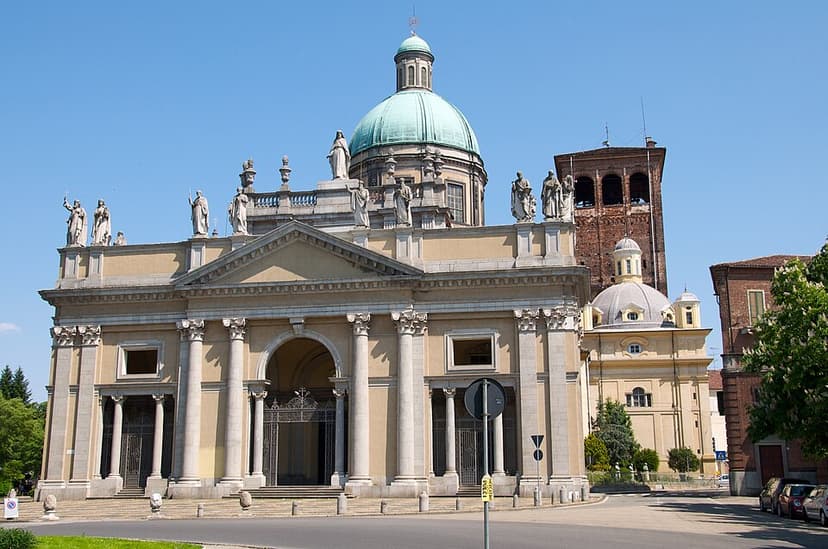
Vercelli Cathedral
Vercelli Cathedral, officially the Duomo di Vercelli or Cattedrale di Sant'Eusebio, is the principal church of Vercelli, Italy, and serves as the cathedral for the Archdiocese of Vercelli. It is dedicated to Saint Eusebius, its first bishop, and stands on a site with a history of earlier ecclesiastical structures dating back to the 4th century.
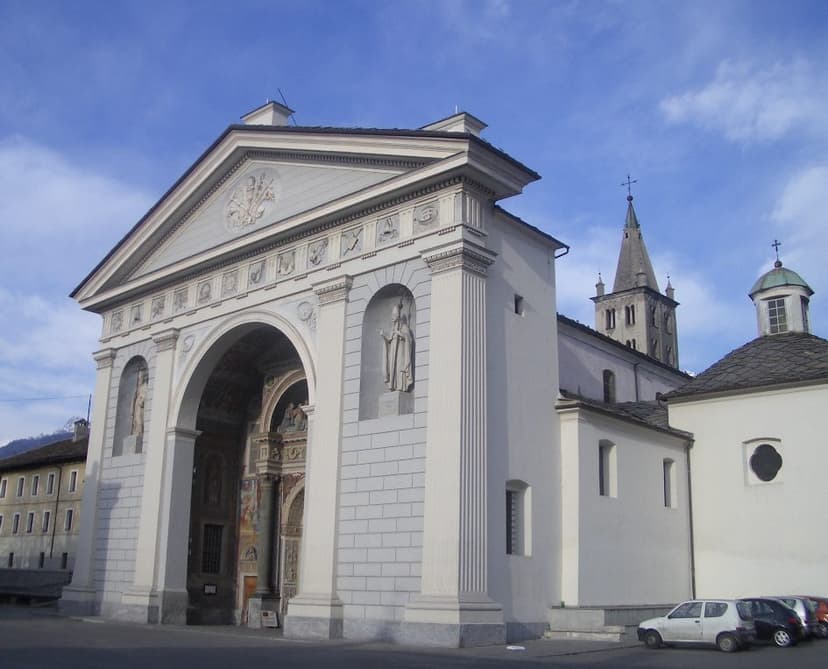
Aosta Cathedral
Aosta Cathedral, also known as the Cathedral of Santa Maria Assunta and San Giovanni Battista, is a Roman Catholic cathedral in Aosta, Italy, with origins dating back to the 4th century. It serves as the episcopal seat for the Diocese of Aosta and has undergone significant architectural modifications throughout its history, reflecting various styles from its Romanesque foundations to its Neoclassical facade.

Albenga Cathedral
Albenga Cathedral, officially the Cathedral of Saint Michael the Archangel, is a Roman Catholic cathedral in Albenga, Italy, serving as the seat of the Diocese of Albenga-Imperia. Occupying a site with a church since the late 4th or early 5th century, its present medieval structure dates primarily from around 1100, with significant rebuilding in the late 12th century and later modifications, notably in 1582. A restoration in the 1970s aimed to restore its medieval appearance, and the bell tower was substantially rebuilt in the late 14th century.