
Plymouth Cathedral
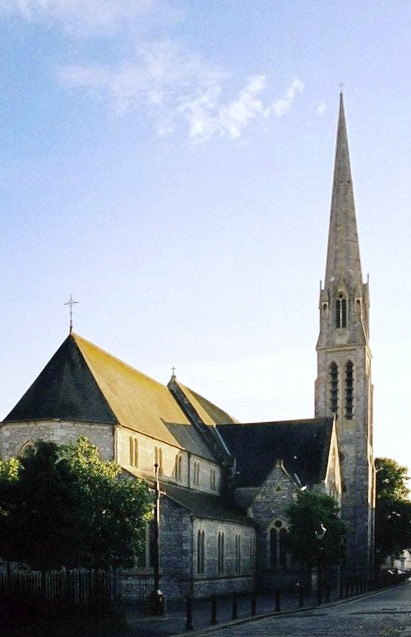
Plymouth Cathedral, officially the Cathedral Church of Saint Mary and Saint Boniface, is the mother church of the Roman Catholic Diocese of Plymouth in England. Established in 1850, the diocese covers Cornwall, Devon, and Dorset, with the cathedral serving as the seat of the Bishop of Plymouth. It is notable for its construction in the mid-19th century and its role in serving the spiritual needs of the region, including naval personnel.
Key Facts
- ›The diocese of Plymouth was established in 1850 following the papal bull Universalis Ecclesiae.
- ›William Vaughan was consecrated the second Bishop of Plymouth in 1855 and initiated the construction of the cathedral.
- ›The cathedral was built by local men from Stonehouse, with Joseph Hansom and Charles Hansom serving as architects.
- ›Construction began in 1856 on land purchased for £3,904.
- ›The cathedral was opened with Mass on March 25, 1858, and consecrated by Bishop Vaughan on September 22, 1880.
- ›It is used for an annual naval mass for Royal Navy personnel stationed at HMNB Devonport.
- Patronage of the Virgin Mary and Saint Boniface
- Location Within the Roman Catholic Diocese of Plymouth
- Annual Naval Mass For Royal Navy Personnel
19th Century
Joseph Hansom, Charles Hansom
About Plymouth Cathedral
The Cathedral Church of Saint Mary and Saint Boniface, commonly known as Plymouth Cathedral, stands as the principal church of the Roman Catholic Diocese of Plymouth. This diocese encompasses the counties of Cornwall, Devon, and Dorset in England. The establishment of the Diocese of Plymouth in 1850 marked a significant reorganization of Catholic diocesan structures following the papal bull Universalis Ecclesiae.
History and Construction
Prior to the Reformation, the region was part of the Diocese of Exeter. With the Catholic emancipation and the reconstruction of the Catholic diocesan framework, Plymouth emerged as a central point for Cornwall, Devon, and Dorset. The first Bishop of Plymouth, George Errington, was consecrated in 1851. His successor, William Vaughan, consecrated in 1855, was instrumental in the building of the new cathedral.
Prior to the current structure, the small church of Saint Mary on Saint Mary Street served as the Pro-cathedral. Bishop Vaughan purchased land on the outskirts of Plymouth in 1856 for the construction of a replacement. The architects for the project were Joseph Hansom and Charles Hansom, with construction undertaken by local men from Stonehouse. The foundation stone was laid on June 22, 1856. The cathedral was opened with Mass on March 25, 1858, and officially consecrated by Bishop Vaughan on September 22, 1880.
Significance and Usage
The cathedral is dedicated to the Virgin Mary and Saint Boniface, the latter being a figure believed to have been born in Crediton, within the diocese's territory. Beyond its role as the seat of the Bishop of Plymouth, the cathedral also serves a unique purpose for the Royal Navy. Personnel stationed at HMNB Devonport attend an annual naval mass celebrated there each July.
A convent and girls' school operated by the Sisters of Notre Dame de Namur was established near the cathedral in 1858. This institution was later destroyed during the Plymouth Blitz of 1941 and has since been redeveloped as a residential complex, with the Notre Dame Catholic School now located in the Derriford suburb of Plymouth.
Source: Wikipedia ↗
Frequently Asked Questions
When was Plymouth Cathedral founded?
The Diocese of Plymouth, to which the cathedral belongs, was created in 1850. The cathedral itself was opened with Mass on March 25, 1858, and consecrated in 1880.
Who were the architects of Plymouth Cathedral?
The architects for Plymouth Cathedral were Joseph Hansom and Charles Hansom. Local men from Stonehouse were responsible for the construction.
What is the significance of the patron saints of Plymouth Cathedral?
Plymouth Cathedral is under the patronage of the Virgin Mary and Saint Boniface. Saint Boniface is believed to have been born in Crediton, within the diocese's area.
Does Plymouth Cathedral have a role for the Royal Navy?
Yes, Plymouth Cathedral is used by Royal Navy personnel stationed at HMNB Devonport for an annual naval mass celebrated in July.
What was the previous church used as a cathedral before the current one was built?
Before the construction of the current cathedral, the small church of Saint Mary, erected in 1807 at Saint Mary Street, served as the Pro-cathedral for the diocese.
Related Cathedrals
Aldershot Cathedral
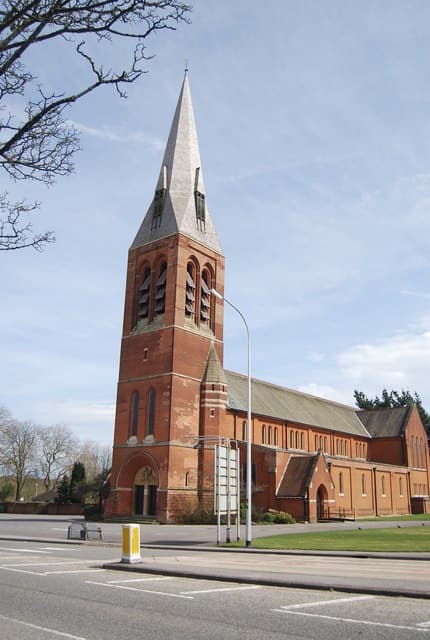
The Cathedral Church of St Michael and St George is the Roman Catholic cathedral for the Bishopric of the Forces, located in Aldershot, England. Originally built as an Anglican church for the British Army, it was consecrated in 1893 and later repurposed in 1973 to become the seat of the Roman Catholic Bishop of the Forces. It is a significant landmark due to its Gothic Revival architecture and its close association with military history.

Arundel Cathedral
The Cathedral Church of Our Lady and St Philip Howard in Arundel, West Sussex, England, was dedicated in 1873 as a Catholic parish church and became a cathedral in 1965 with the foundation of the Diocese of Arundel and Brighton. It serves as the seat of the Bishop of Arundel and Brighton and is recognized as a Grade I listed building, notable for its French Gothic Revival architecture.
Brentwood Cathedral
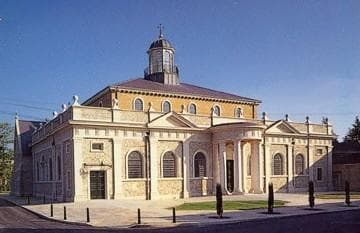
Brentwood Cathedral, officially the Cathedral of St Mary and St Helen, is the seat of the Roman Catholic Diocese of Brentwood in England. Originally a parish church built in 1861, it was elevated to cathedral status in 1917 and significantly enlarged and redesigned in an Italianate classical style between 1989 and 1991. Its architecture draws inspiration from the Italian Renaissance and English Baroque, creating a space focused on liturgy and flooded with light.