
Aldershot Cathedral
Bishopric of the Forces·Roman Catholic·England
The Cathedral Church of St Michael and St George is the Roman Catholic cathedral for the Bishopric of the Forces, located in Aldershot, England. Originally built as an Anglican church for the British Army, it was consecrated in 1893 and later repurposed in 1973 to become the seat of the Roman Catholic Bishop of the Forces. It is a significant landmark due to its Gothic Revival architecture and its close association with military history.
Key Facts
- ›Originally designed as the principal church for Anglican chaplaincies of the British Army.
- ›Foundation stone laid by Queen Victoria in 1892.
- ›Consecrated in 1893 by the Bishop of Winchester.
- ›Became the seat of the Roman Catholic Bishop of the Forces in 1973.
- ›Features stained glass windows by Heaton, Butler and Bayne.
- ›Grade II listed in 1979 for its architectural and historic interest.
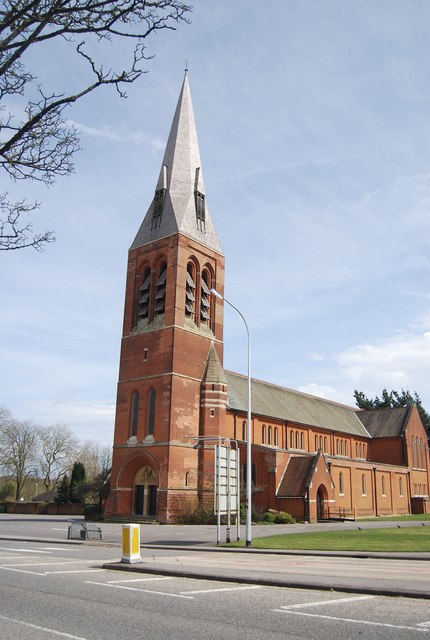
Early English Gothic Revival
- Relief of Saint George Above the Main Door
- Stained Glass Windows By Heaton, Butler and Bayne
- 1930s Mosaic On the Reredos Depicting the Last Supper
- Blessed Sacrament Chapel Constructed In 1998
- Lady Chapel With A Mosaic Dedicated To Army Chaplains
- Wooden Screens Carved By Robert 'Mouse' Thompson
- Sanctuary Crucifix Made From Aircraft Parts
19th Century, 20th Century, 21st Century
Ingers Bell, Aston Webb
About Aldershot Cathedral
The Cathedral Church of St Michael and St George serves as the Roman Catholic cathedral for the Bishopric of the Forces. Situated on Queens Avenue in Aldershot, England, this building possesses a unique history, having been originally conceived as a principal church for the Anglican chaplaincies of the British Army.
History and Transition
Designed in 1892 by Ingers Bell and Aston Webb of the War Office in the Early English Gothic Revival style, the church was constructed by J. Davey of Brentwood, Essex, and dedicated to St George. Its foundation stone was laid by Queen Victoria on June 27, 1892, underscoring its military purpose. The church was consecrated on October 7, 1893, by Rt. Rev. Anthony Thorold, the Bishop of Winchester, with Queen Victoria and other royal family members in attendance. Meanwhile, the Catholic community worshipped in the Church of St Michael and St Sebastian, a large wooden structure built in 1855. By the early 1970s, St George's was no longer required by the Anglican chaplaincies due to the presence of other underused churches and an increasing Catholic military population. Consequently, in 1973, it became the seat of the Roman Catholic Bishop of the Forces and was rededicated to St Michael and St George. The former wooden Church of St Michael and St Sebastian was later used as an Army store before it burned down in 1983.
Architecture and Interior Features
The cathedral is a striking local landmark, characterized by its long, red-brick structure with Portland stone facings and a tall red-brick spire. Above the main entrance, a relief depicts Saint George triumphing over a slain dragon. The interior features a yellow-brick finish with broad aisles and a wide nave comprising five bays of Early English style arches. A debased Romanesque clerestory with two windows above each arch adds to the architectural detail. The south aisle displays red marble tablets commemorating members of the Royal Army Service Corps (RASC) who died in service between 1882 and 1920. The cathedral is adorned with numerous stained glass windows, created by Heaton, Butler and Bayne, illustrating saints and biblical scenes. Some windows were moved to the cathedral following the closure of the Church of St Michael and St Sebastian. The ornate east end is notable for a rich 1930s mosaic on the reredos portraying the Last Supper. The chancel was reordered to accommodate a free-standing altar. The East Window above the altar is dedicated to the men of the Royal Army Service Corps lost in the Boer War, depicting various biblical scenes. Memorials in the Sanctuary commemorate the 376 men who died in that conflict. The Blessed Sacrament Chapel, added in 1998, features brass panels from the altar rail of the former Church of St Michael and St Sebastian. The Lady Chapel contains a mosaic honoring Army Chaplains who perished in the Boer War. The chancel furnishings are modern and sparse, with the bishop's throne being a simple wooden chair surmounted by a banner. The cathedral occasionally hosts musical concerts. The main organ, installed in 1908, is no longer in use due to asbestos concerns, and an Allen organ, formerly belonging to Carlo Curley, has been used since 2014. The wooden screens of the side chapels were carved by Robert 'Mouse' Thompson, each featuring his signature mouse motif. In 2015, a sanctuary crucifix made from parts of 23 aircraft was blessed, symbolizing a connection to the Royal Air Force. The cathedral was designated Grade II listed in 1979 for its special architectural and historic interest.
Source: Wikipedia ↗
Frequently Asked Questions
What was Aldershot Cathedral originally built for?
Aldershot Cathedral was originally intended to be the principal church for the Anglican chaplaincies of the British Army. The foundation stone was laid by Queen Victoria in 1892, reflecting its intended role within the military.
When did Aldershot Cathedral become a Catholic cathedral?
The building became the seat of the Roman Catholic Bishop of the Forces in 1973. This transition occurred because the Church of England had surplus churches in the area, while the Catholic military community was growing.
What is the architectural style of Aldershot Cathedral?
The cathedral was designed in the Early English Gothic Revival style. It is characterized by its red-brick exterior with Portland stone facings and a tall tower topped by a spire, making it a prominent local landmark.
Are there any notable artistic features inside Aldershot Cathedral?
Yes, the cathedral contains many fine stained glass windows depicting saints and biblical scenes by Heaton, Butler and Bayne. Additionally, the east end features a 1930s mosaic on the reredos portraying the Last Supper.
What is the historical significance of Aldershot Cathedral?
Its significance lies in its deep association with the British Army, serving as a place of worship and commemoration for military personnel. It holds memorials and books of remembrance for those who served, particularly the Royal Army Service Corps.
Related Cathedrals

Arundel Cathedral
The Cathedral Church of Our Lady and St Philip Howard in Arundel, West Sussex, England, was dedicated in 1873 as a Catholic parish church and became a cathedral in 1965 with the foundation of the Diocese of Arundel and Brighton. It serves as the seat of the Bishop of Arundel and Brighton and is recognized as a Grade I listed building, notable for its French Gothic Revival architecture.
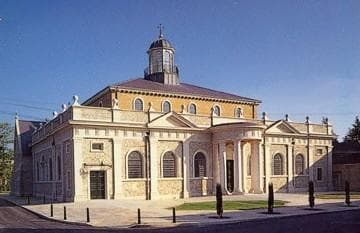
Brentwood Cathedral
Brentwood Cathedral, officially the Cathedral of St Mary and St Helen, is the seat of the Roman Catholic Diocese of Brentwood in England. Originally a parish church built in 1861, it was elevated to cathedral status in 1917 and significantly enlarged and redesigned in an Italianate classical style between 1989 and 1991. Its architecture draws inspiration from the Italian Renaissance and English Baroque, creating a space focused on liturgy and flooded with light.
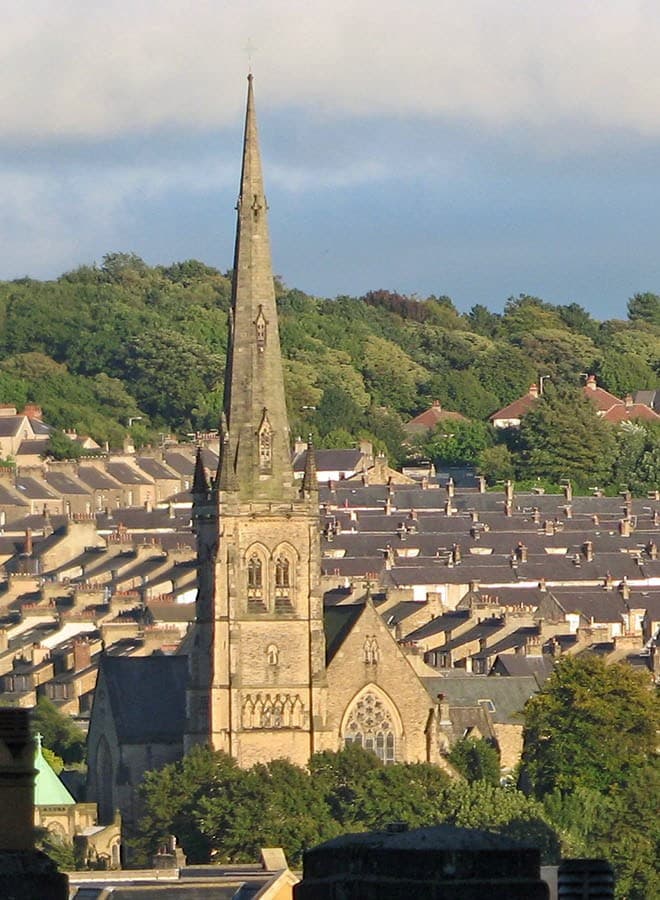
Lancaster Cathedral
Lancaster Cathedral, officially known as The Cathedral Church of St Peter and Saint Peter's Cathedral, is a significant Roman Catholic cathedral in Lancaster, England. Originally a parish church, it was elevated to cathedral status in 1924, marking its increased importance within the Diocese of Lancaster. The current structure, a notable example of Gothic Revival architecture, was built between 1857 and 1859.