
Brentwood Cathedral
Brentwood·Roman Catholic·England
Brentwood Cathedral, officially the Cathedral of St Mary and St Helen, is the seat of the Roman Catholic Diocese of Brentwood in England. Originally a parish church built in 1861, it was elevated to cathedral status in 1917 and significantly enlarged and redesigned in an Italianate classical style between 1989 and 1991. Its architecture draws inspiration from the Italian Renaissance and English Baroque, creating a space focused on liturgy and flooded with light.
Key Facts
- ›Began as a Gothic-style parish church in 1861.
- ›Elevated to cathedral status in 1917.
- ›Underwent significant enlargement and redesign in an Italianate classical style from 1989 to 1991 by architect Quinlan Terry.
- ›The new cathedral was consecrated on May 31, 1991.
- ›Retains part of the original 1861 Gothic Revival church.
- ›Listed at Grade II* in 2022.
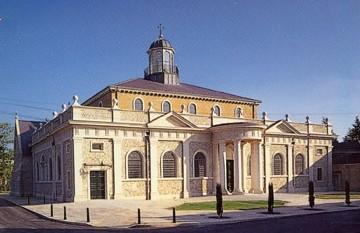
Italianate Classical, Gothic Revival, Renaissance, English Baroque
- Retained Section of the Original 1861 Gothic Revival Church
- Italianate Classical Enlargement By Quinlan Terry
- Square Plan Focused On the High Altar
- Octagonal Lantern
- Doric Pilasters On the North Elevation
- Portico Inspired By St. Paul's Cathedral
- Ceiling With Gold Leaf Patterns
- Wren-Style Windows With Clear Leaded Lights
- Bishop's Chair Made of Nabrassina Stone
- Terracotta Roundels Depicting the Stations of the Cross By Raphael Maklouf
- Organ From St Mary-At-the-Walls, Colchester
19th Century, 20th Century
Quinlan Terry
About Brentwood Cathedral
The Cathedral of St Mary and St Helen, commonly known as Brentwood Cathedral, is a significant ecclesiastical building located in Brentwood, Essex, England. It serves as the principal church and seat of the Roman Catholic Diocese of Brentwood. Its history is marked by transformation, evolving from a modest parish church into a contemporary cathedral.
History and Development
The origins of Brentwood Cathedral trace back to 1861 when a parish church was constructed in the Gothic style. This relatively small structure was later elevated to cathedral status in 1917, signifying its increased importance within the diocese. A comprehensive enlargement and redesign project took place between 1989 and 1991, led by the acclaimed architect Quinlan Terry. This extensive work saw the church expanded in an Italianate classical style, replacing an earlier extension from 1974. The newly dedicated cathedral was consecrated by Cardinal Hume on May 31, 1991, funded by anonymous donors. In recognition of its architectural and historical merit, the cathedral was listed at Grade II* in 2022.
Architectural Design
Quinlan Terry's design for the enlarged cathedral drew inspiration from a blend of early Italian Renaissance aesthetics and the English Baroque style exemplified by Christopher Wren. This approach was chosen to create a space suitable for the town and its conservation area, and crucially, to provide an appropriate setting for liturgical celebration with optimal space and light. The cathedral is designed around a square plan, with the high altar centrally placed within the nave to accommodate post-Vatican II liturgical practices. Construction of this new phase began in 1989 and concluded two years later.
The north elevation features nine bays articulated by Doric pilasters, punctuated by a large half-circular portico reminiscent of one at St Paul's Cathedral. The clerestory, constructed from traditional Smeed Dean brick, rises to an octagonal lantern or cupola, which forms the highest point both externally and internally. A deliberate architectural decision was made to retain a portion of the original 1861 Gothic Revival church, creating a juxtaposition with the new classical structure. The east elevation visually links the old and new elements through the scale of the 1991 building and the use of ragstone and Welsh slate roof tiles.
Internally, all the classical architectural orders are represented, including giant Doric pilasters, a Tuscan arcade, Ionic pilasters on Palladian windows in the aisles, and Corinthian and Composite influences evident on the cathedral and its organ case. The interior is designed to feel restrained, with richness concentrated in the ceiling. Dominant decorative elements include Roman key and double guilloche patterns picked out in gold leaf. The round-headed windows are in the style of Wren and feature clear leaded lights made from handmade glass. The cathedral's clear windows on all sides, coupled with white walls and a stone floor, create a translucent effect intended to uplift the spirit and convey a sense of the divine presence.
Furnishings and Artistry
Among the notable interior features is a processional cross, a copy of a medieval design, depicting Christ with a crown of the Risen Lord while bearing the corpus of the crucified Saviour, representing a transitional theological perspective. The Bishop's chair, or cathedra, crafted from Nabrassina stone with Portland stone steps, is a significant marker of the bishop's authority over the diocese, bearing the diocesan coat of arms and inlaid with slate to match the floor. Consecration crosses are incised into the stone of the Doric pilasters, signifying the dedication of the entire building to God. The east aisle houses rooms for confession, opposite which stands a crucifix formerly located in the church at Stock, Essex. The arcade is adorned with terracotta roundels depicting the fifteen Stations of the Cross, modelled by Raphael Maklouf, known for his work on Commonwealth coinage. These roundels, with their subtle glaze, are noted for their intimate expression of the familiar scenes.
Music and Choir
The musical life of Brentwood Cathedral and its diocese is managed by Brentwood Cathedral Music. Andrew Wright, the Master of Music, appointed in 1982, also serves as Director of Diocesan Music. He founded the cathedral choir in 1984, which has since expanded to include boys, girls, ladies, gentlemen, and lay clerks. The choir has achieved international recognition through recordings, BBC Radio broadcasts, and concert tours across Europe. The choir is affiliated with the Royal School of Church Music (RSCM) and maintains musical and ecumenical connections with the Diocese of Chelmsford and Chelmsford Cathedral Choir. The cathedral's organ was a gift from the Diocese of Chelmsford, originally from the redundant Anglican church of St Mary-at-the-Walls in Colchester, dating from 1889 and subsequently rebuilt and restored.
Source: Wikipedia ↗
Frequently Asked Questions
What is the history of Brentwood Cathedral?
Brentwood Cathedral began as a parish church in 1861, built in a Gothic style. It was raised to cathedral status in 1917. A major expansion and redesign in an Italianate classical style took place between 1989 and 1991.
Who designed the modern Brentwood Cathedral?
The modern enlargement and redesign of Brentwood Cathedral were undertaken by Quinlan Terry, a recipient of the Driehaus Prize. He took inspiration from the early Italian Renaissance and the English Baroque style of Christopher Wren.
What are the architectural styles of Brentwood Cathedral?
The cathedral exhibits a mix of styles. The original structure was Gothic Revival, while the 1989-1991 enlargement is in an Italianate classical style, drawing on Renaissance and English Baroque influences. Classical architectural orders are represented throughout the interior.
What are some notable features of Brentwood Cathedral's interior?
The interior features a square plan focused on the high altar, with decorative ceilings adorned with Roman key and double guilloche patterns in gold leaf. It is flooded with light through clear leaded windows in the style of Wren, and includes classical chandeliers and a processional cross with a unique theological representation.
What is the significance of the Bishop's chair at Brentwood Cathedral?
The Bishop's chair, or cathedra, is a tangible symbol of the bishop's presidency over the diocese. It is made of Nabrassina stone with Portland stone steps and features the coat of arms of the Diocese of Brentwood.
What musical traditions are associated with Brentwood Cathedral?
Brentwood Cathedral has a dedicated music program overseen by Brentwood Cathedral Music. The cathedral choir, founded in 1984, includes boys, girls, ladies, gentlemen, and lay clerks, and has undertaken recordings and tours internationally.
Related Cathedrals
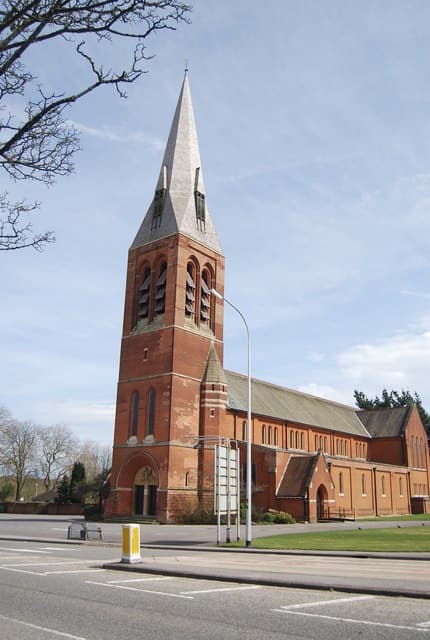
Aldershot Cathedral
The Cathedral Church of St Michael and St George is the Roman Catholic cathedral for the Bishopric of the Forces, located in Aldershot, England. Originally built as an Anglican church for the British Army, it was consecrated in 1893 and later repurposed in 1973 to become the seat of the Roman Catholic Bishop of the Forces. It is a significant landmark due to its Gothic Revival architecture and its close association with military history.

Arundel Cathedral
The Cathedral Church of Our Lady and St Philip Howard in Arundel, West Sussex, England, was dedicated in 1873 as a Catholic parish church and became a cathedral in 1965 with the foundation of the Diocese of Arundel and Brighton. It serves as the seat of the Bishop of Arundel and Brighton and is recognized as a Grade I listed building, notable for its French Gothic Revival architecture.
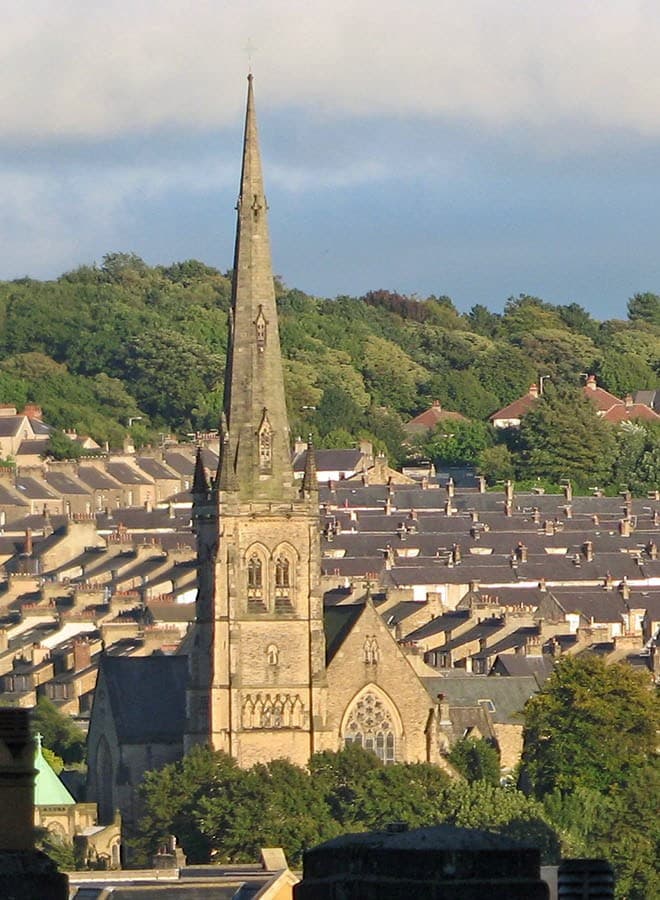
Lancaster Cathedral
Lancaster Cathedral, officially known as The Cathedral Church of St Peter and Saint Peter's Cathedral, is a significant Roman Catholic cathedral in Lancaster, England. Originally a parish church, it was elevated to cathedral status in 1924, marking its increased importance within the Diocese of Lancaster. The current structure, a notable example of Gothic Revival architecture, was built between 1857 and 1859.