
Otranto Cathedral
Archdiocese of Otranto·Roman Catholic·Italy
Otranto Cathedral, officially the Basilica Cattedrale di Santa Maria Annunziata, is a Roman Catholic cathedral in Otranto, Italy, consecrated in 1088. It is renowned for its exceptionally well-preserved 12th-century floor mosaic, which covers the entire nave, sanctuary, and apse, and depicts a rich tapestry of biblical scenes, medieval literature, and bestiaries. The cathedral stands as a significant historical and architectural monument, reflecting a blend of Byzantine, early Christian, and Romanesque styles, and notably houses the relics of the Martyrs of Otranto.
Key Facts
- ›Consecrated in 1088, Otranto Cathedral was founded in 1068 by Norman Bishop William.
- ›The cathedral is famous for its extensive 12th-century floor mosaic, commissioned by Archbishop Gionata, featuring biblical narratives, chivalric literature, and bestiaries.
- ›It was heavily rebuilt in the 15th century after the Ottoman siege of 1480, becoming a church again and housing the relics of the Martyrs of Otranto.
- ›The interior is supported by 42 monolithic granite and marble columns, and its crypt, dating from the 11th century, is inspired by the Mosque–Cathedral of Córdoba.
- ›The 12th-century bell tower, built of local limestone, likely served as a lookout over the sea and surrounding areas.
- ›The cathedral showcases a synthesis of architectural styles including Byzantine, early Christian, and Romanesque elements, with later Baroque additions.

12th-Century Floor Mosaic, Chapel of the Martyrs, 11th-Century Crypt, Rose Window On West Front, Bell Tower
About Otranto Cathedral
Otranto Cathedral, officially known as the Basilica Cattedrale di Santa Maria Annunziata, stands as a significant Roman Catholic cathedral in the city of Otranto, Italy. Dedicated to the Annunciation of the Virgin Mary, it serves as the archiepiscopal seat for the Archdiocese of Otranto. The cathedral's consecration in 1088 marked the culmination of a foundation initiated in 1068 by the Norman bishop William. Its architecture represents a compelling fusion of Byzantine, early Christian, and Romanesque styles, reflecting the diverse cultural influences of its historical setting.
Historical Significance and Architectural Features
The cathedral is particularly celebrated for its expansive 12th-century floor mosaic, an exceptional work of art that spans the entire nave, sanctuary, and apse. Commissioned by the first Latin archbishop, Gionata, and executed by artists led by the Basilian monk Pantaleon, the mosaic is renowned for its intricate depictions of biblical narratives, elements of medieval chivalry, bestiaries, and the Alexander Romance, all framed by the symbolism of the Tree of Life. The exterior of the cathedral features a hut-shaped façade, which has undergone numerous restorations. A prominent rose window, added after the Ottoman occupation, adorns the gabled west front, incorporating Gothic and Arabic-style features.
The interior is characterized by a nave and two aisles separated by arches supported by forty-two monolithic granite and marble columns. The crypt, dating from the 11th century, draws inspiration from the cisterns of Theodosius and the Mosque–Cathedral of Córdoba, featuring three semi-circular apses and numerous bays supported by columns salvaged from various ancient and medieval structures. Among its notable interior features is the Chapel of the Martyrs in the south aisle, which houses the relics of Otranto citizens who were executed by the Ottomans in 1480 for refusing to renounce their Christian faith. The cathedral also boasts a 12th-century bell tower, with a sturdy square plan, likely intended as a lookout point over the sea and surrounding territories.
Source: Wikipedia ↗
Frequently Asked Questions
When was Otranto Cathedral consecrated?
Otranto Cathedral was consecrated on August 1, 1088, during the papacy of Pope Urban II. The foundation of the cathedral dates back to 1068.
What is the most famous feature of Otranto Cathedral?
The most famous feature is the 12th-century floor mosaic that covers the entire floor of the nave, sanctuary, and apse. It is considered one of the best surviving mosaics of its kind.
What historical events have affected Otranto Cathedral?
In 1480, the cathedral was occupied and partially converted into a mosque by Ottoman forces, who also destroyed its 13th-century frescoes. Following its reconquest in 1481, it was rebuilt and dedicated to housing the relics of the Martyrs of Otranto.
What architectural styles are present in Otranto Cathedral?
The cathedral is a synthesis of various architectural styles, incorporating Byzantine, early Christian, and Romanesque elements. Later additions include Baroque elements and a Gothic/Arabic-style rose window.
What is depicted in the floor mosaic?
The mosaic depicts scenes from the Old Testament, medieval chivalry literature, bestiaries, and the Alexander Romance, interwoven with the Tree of Life. It also includes the legend of Alexander's flight to heaven.
Where are the relics of the Martyrs of Otranto kept?
The bones of the Otranto citizens martyred by the Ottomans in 1480 are housed in seven large glassed recesses in the Chapel of the Martyrs, located in the south aisle of the cathedral.
Related Cathedrals
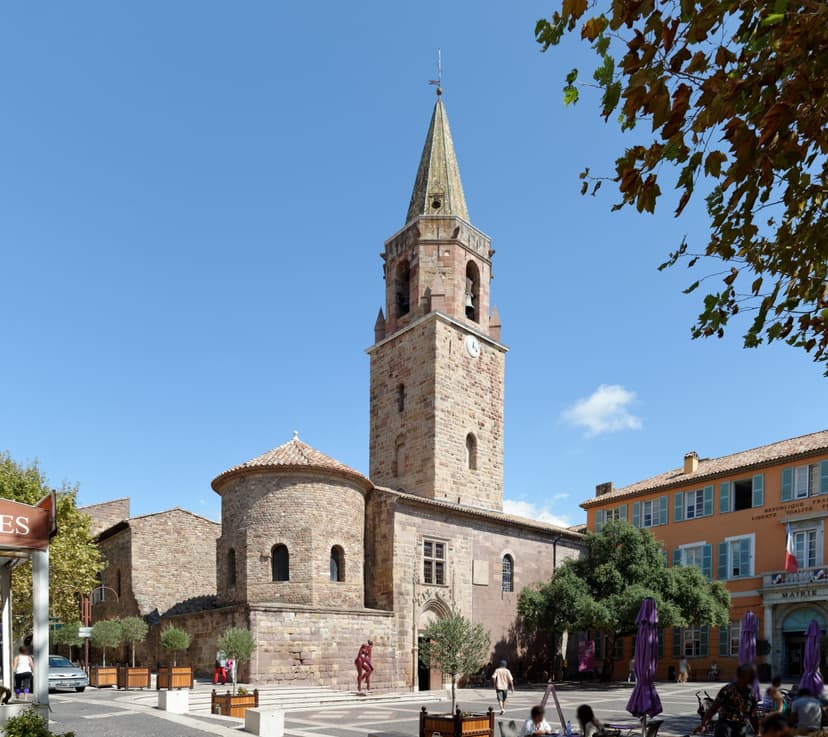
Fréjus Cathedral
Fréjus Cathedral, officially Cathédrale Saint-Léonce de Fréjus, is a Roman Catholic church in Fréjus, France, dedicated to Saint Leontius of Fréjus. It served as the seat of the Bishop of Fréjus from the 5th century until the diocese was merged with Toulon in 1957, after which it became a co-cathedral. The complex includes a baptistery considered the oldest Christian structure in Provence.
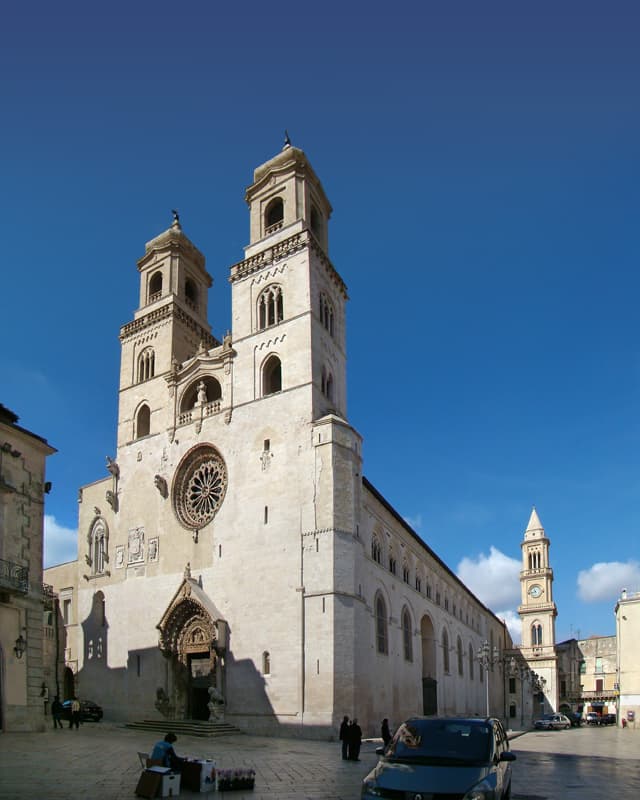
Altamura Cathedral
Altamura Cathedral, officially dedicated to the Assumption of the Blessed Virgin Mary, is a significant Roman Catholic cathedral located in Altamura, Apulia, southern Italy. Originally commissioned by Emperor Frederick II, it has undergone numerous expansions and alterations throughout its history, reflecting various architectural styles and historical periods. It currently serves as the seat of the Bishop of Altamura-Gravina-Acquaviva delle Fonti.
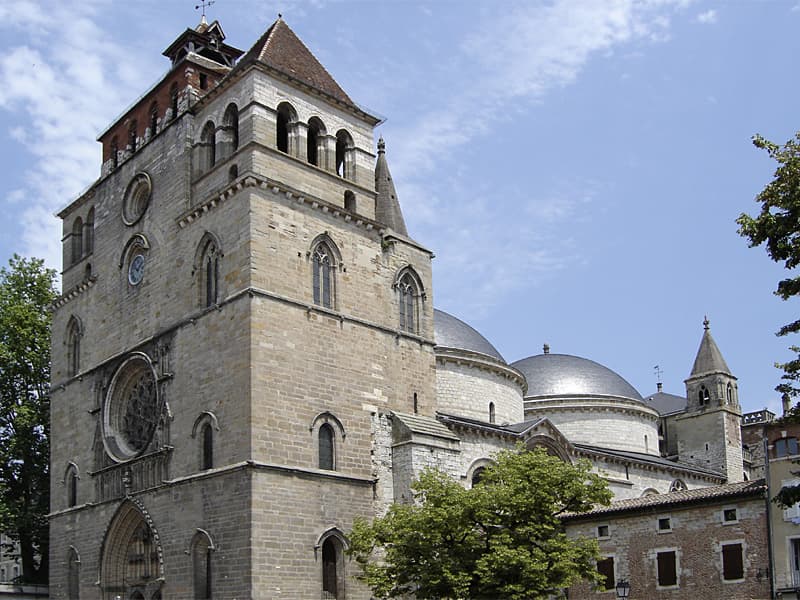
Cahors Cathedral
Cahors Cathedral, officially known as the Cathedral of Saint-Étienne de Cahors, is a significant Roman Catholic church in Occitanie, France. It is recognized as a national monument and stands as an important example of the architectural transition from late Romanesque to Gothic styles. The cathedral holds a precious relic, the Holy Cap, believed to have been worn by Christ.