
Altamura Cathedral
Altamura Cathedral, officially dedicated to the Assumption of the Blessed Virgin Mary, is a significant Roman Catholic cathedral located in Altamura, Apulia, southern Italy. Originally commissioned by Emperor Frederick II, it has undergone numerous expansions and alterations throughout its history, reflecting various architectural styles and historical periods. It currently serves as the seat of the Bishop of Altamura-Gravina-Acquaviva delle Fonti.
Key Facts
- ›Commissioned by Emperor Frederick II and built between 1232 and 1254.
- ›Originally oriented differently, with the main gate and altar in reversed positions compared to today.
- ›Suffered a collapse on January 29, 1316, and was rebuilt with assistance from Bitonto.
- ›Significant enlargements and additions were made in the 16th century, including a second bell tower and sacristy.
- ›Features a 14th-century rose window and a 14th-century portal adorned with numerous Biblical scenes.
- ›The interior includes a wooden ceiling decorated with gilded stuccoes, a Baroque loggia between the towers, and a 16th-century nativity scene.
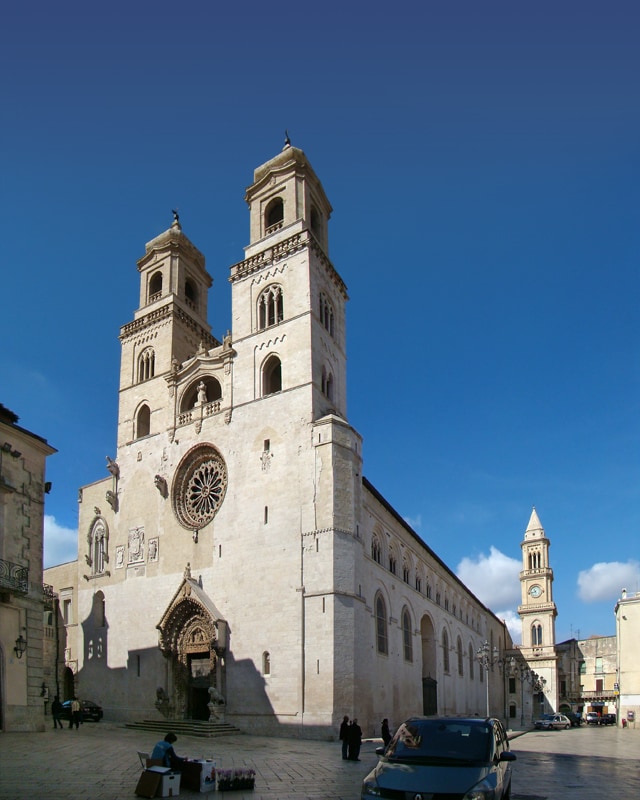
Gothic, Romanesque, Byzantine, Baroque
- Frederick Ii's Original Building Elements
- 14th-Century Rose Window With Agnus Dei Bas-Relief
- 14th-Century Portal With Extensive Biblical Scenes
- Wooden Ceiling Decorated With Gilded Stuccoes
- 16th-Century Polychrome Wooden Nativity Scene
- Stone Ambon With Sculpted Scenes From Jesus' Life
13th Century, 14th Century, 16th Century, 18th Century, 19th Century
Frederick Ii, Corradino De Judicibus
About Altamura Cathedral
Altamura Cathedral, officially known as the Cattedrale di Santa Maria Assunta, is a prominent Roman Catholic cathedral located in the city of Altamura, within the Metropolitan City of Bari in the Apulia region of southern Italy. Dedicated to the Assumption of the Blessed Virgin Mary, it stands as a significant religious and historical landmark.
History and Construction
The cathedral's origins trace back to Emperor Frederick II, who initiated its construction between 1232 and 1254. Initially, its main gate and altar were positioned in reverse of the current layout. A notable event in its history was a collapse on January 29, 1316, after which the church was rebuilt with the aid of skilled artisans from the nearby town of Bitonto. Over centuries, Altamura Cathedral underwent several transformations and expansions. The northern portal dates to the early 14th century, while the 16th century saw the addition of a second bell tower, the altar area, and the sacristy. The upper sections of the bell towers and the loggia between them were added in the 18th century, and the clock tower was completed in 1858.
Architectural Features
The cathedral exhibits a blend of architectural styles, reflecting its long construction history. The façade is characterized by two tall bell towers, with variations in their numbering of Romanesque and Gothic elements. Most portals and windows feature Gothic pointed arches. A significant architectural element is the 14th-century rose window, distinguished by its 15 rays and a central bas-relief depicting the Agnus Dei. The 14th-century portal is particularly noteworthy, enclosed within a prothyrum supported by columns resting on lion sculptures. This portal is richly decorated with sculpted Biblical scenes, including a Virgin with Child and Two Angels in the lunette and a Last Supper on the architrave.
Internally, the cathedral comprises a nave and two aisles separated by columns and pillars, with matronaea at the sides. The capitals retain their Byzantine style, representing some of the earliest visible decorative details from Frederick II's original structure. The nave is covered by a wooden ceiling adorned with gilded stuccoes. The interior houses a lavishly decorated wooden choir from 1543, a stone ambon with sculpted scenes from Jesus' life, and a wooden pulpit from the 16th century. Among the side chapels, the first left chapel contains a polychrome wooden nativity scene from 1587, and the fourth left chapel, dedicated to St. Joseph, is in the Baroque style.
Current Status and Significance
Altamura Cathedral has undergone significant restoration efforts, including major works in 2006 that restored its external walls to their original white color, and further renovations in 2017 addressing the floor, lighting, and portals. Since 1986, it has served as the seat of the Bishop of Altamura-Gravina-Acquaviva delle Fonti, underscoring its continuing importance as a center of religious life in the region.
Source: Wikipedia ↗
Frequently Asked Questions
When was Altamura Cathedral originally built?
Altamura Cathedral was built by the will of Emperor Frederick II between 1232 and 1254. Its initial orientation and features were different from the current structure.
What significant events impacted the cathedral's construction?
The cathedral collapsed on January 29, 1316, requiring a substantial rebuilding effort with help from skilled constructors from Bitonto. It also suffered damage from a lightning strike in 1726, leading to restoration and tower extensions.
What are some notable architectural features of Altamura Cathedral?
Key features include two tall bell towers, a 14th-century rose window with 15 rays, and a 14th-century portal decorated with sculpted Biblical scenes. The interior boasts Byzantine-style capitals and a wooden ceiling with gilded stuccoes.
What is the current ecclesiastical role of Altamura Cathedral?
Since 1986, Altamura Cathedral has been the seat of the Bishop of Altamura-Gravina-Acquaviva delle Fonti. Prior to this, it served as the church for the territorial prelature of Altamura.
Has the cathedral undergone recent renovations?
Yes, Altamura Cathedral was restored in 2006, which returned its external walls to their original white color. Further restoration work was carried out in 2017 on the floor, lighting system, entrance portals, and wooden structures.
Related Cathedrals

Acquaviva Cathedral
Acquaviva delle Fonti Cathedral, also known as the Concattedrale di Sant'Eustachio, is the principal church of Acquaviva delle Fonti and serves as a co-cathedral within the Diocese of Altamura-Gravina-Acquaviva delle Fonti. Originally a Romanesque structure from the 12th century, it was significantly rebuilt in a Renaissance style in the 16th century and consecrated in 1623.
Basilica of San Gavino
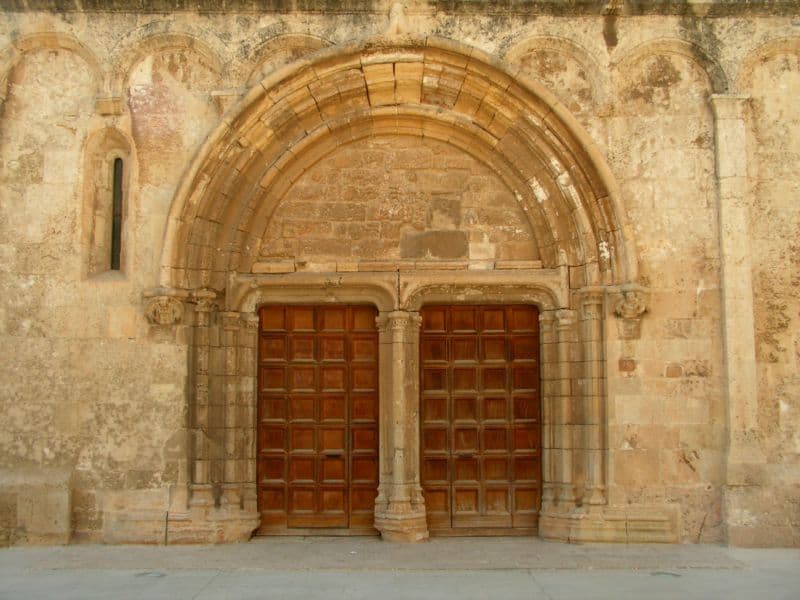
The Basilica di San Gavino is a proto-Romanesque church located in Porto Torres, Sardinia, Italy. Originally a cathedral and the seat of a bishopric for centuries, it is now a parish church and a site for the veneration of local martyrs. Its construction began in the early 11th century, commissioned by local rulers, and it showcases a blend of architectural styles due to later restorations.

Bologna Cathedral
Bologna Cathedral, formally the Metropolitan Cathedral of Saint Peter, serves as the principal church of the Archdiocese of Bologna, Italy. While its origins trace back to the 11th century, the majority of the present structure was rebuilt in the 17th century after a catastrophic vault collapse. It is dedicated to Saint Peter and is a significant religious and architectural landmark in the city.