
Basilica of San Gavino
The Basilica di San Gavino is a proto-Romanesque church located in Porto Torres, Sardinia, Italy. Originally a cathedral and the seat of a bishopric for centuries, it is now a parish church and a site for the veneration of local martyrs. Its construction began in the early 11th century, commissioned by local rulers, and it showcases a blend of architectural styles due to later restorations.
Key Facts
- ›The Basilica DI San Gavino was the cathedral of the bishopric of Turris Libisonis from 489 until 1441.
- ›Construction began in the early 11th century, commissioned by Gonario I, giudice of Torres and Arborea, and was completed by Pisan masters.
- ›The church was inaugurated in 1080 by Marianus I of Arborea and Archbishop Constantine of Castra.
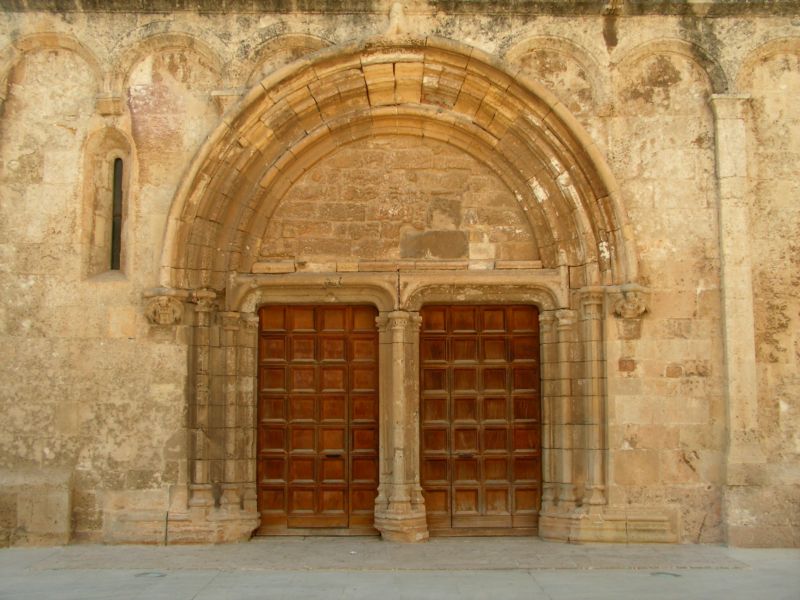
- ›Restoration work in the 15th century introduced Catalan-Gothic elements, particularly to the main portal.
- ›The crypt was renovated in the 18th century to house the remains of martyrs discovered in 1614.
- ›The basilica contains a nave and two aisles separated by columns and pilasters, many of which are repurposed from ancient structures.
Proto-Romanesque, Catalan-Gothic
Proto-Romanesque Architecture, Catalan-Gothic Portal, Crypt Housing Remains of Martyrs, Repurposed Ancient Columns and Capitals, Two Apses
Pisan Masters
About Basilica of San Gavino
Basilica di San Gavino
The Basilica di San Gavino, also known as the Basilica of Saint Gabinus, is a significant proto-Romanesque church situated in Porto Torres, Sardinia, Italy. It holds historical importance as a former cathedral and the seat of the bishopric of Turris Libisonis for nearly a millennium, from 489 to 1441. Today, it functions as a parish church and serves as a veneration site for local martyrs, particularly Saint Gabinus, whose remains are believed to be interred within the church.
History and Construction
The origins of the Basilica di San Gavino are rooted in the early 11th century. Historical records indicate that Gonario I, the giudice (duke) of Torres and Arborea, commissioned its construction, entrusting the work to Pisan masters. The building project continued under his son, Barisone I, and the basilica was officially inaugurated in 1080 by Marianus I of Arborea and Archbishop Constantine of Castra. The church is located in an area of Porto Torres known for its Paleo-Christian necropolis and ancient basilicas dating from the 5th to 7th centuries AD, with one of these earlier structures built over the tomb of Saint Gabinus.
Over the centuries, the basilica has undergone several modifications and restorations. An epigraph found on the Romanesque portal attests to restoration work undertaken in the 15th century, which incorporated Catalan-Gothic architectural elements. This period saw the addition of a new portal in the Catalan-Gothic style, featuring a rounded arch supported by columns with capitals depicting angels and coats of arms. Further renovations occurred in the 18th century, specifically to the crypt, to better house the remains of the martyrs of Torres, which were discovered in 1614.
Architectural Features
The Basilica di San Gavino exhibits a proto-Romanesque architectural style, characterized by its robust construction and relatively simple forms. The exterior is notable for its two apses, positioned at either end of the rectangular plan, and is adorned with blind columns and Lombard bands. The ceiling is covered with lead plates. The church is situated between two courtyards, known as atrio Comita and atrio Metropoli.
Internally, the basilica comprises a nave and two aisles. These are divided by two series of rounded arches supported by twenty-two columns, many of which are spolia (repurposed material) taken from ancient edifices and are made of gray marble and pink granite. Three pairs of cruciform pilasters also contribute to the structural support. The majority of the capitals are of Roman origin. The nave is significantly wider than the aisles, approximately three times its width, and is covered by wooden trusses, while the aisles feature cross vaults. The high altar, which was historically located in the center of the nave until the 19th century, is now situated in the south-western apse. The opposing apse contains a 17th-century wooden catafalque that houses polychrome statues of the martyrs Gabinus, Protus, and Ianuarius.
Access to the anti-crypt, which is in Renaissance style and contains statues of martyrs, is provided through the aisles. Below the anti-crypt lies the crypt, which holds ancient Roman sarcophagi. These sarcophagi, in turn, contain the remains attributed to the martyrs of Torres.
Source: Wikipedia ↗
Frequently Asked Questions
When was the Basilica di San Gavino built?
The earliest document mentioning the church dates to 1065, indicating its foundation in the early 11th century. Construction continued under local rulers and was inaugurated in 1080.
What is the architectural style of the Basilica di San Gavino?
The basilica is primarily proto-Romanesque. However, later restorations in the 15th century added Catalan-Gothic elements to the portal, and the crypt was renovated in the 18th century.
What is the historical significance of the Basilica di San Gavino?
It served as the cathedral for the bishopric of Turris Libisonis for nearly a millennium and is built over the tomb of Saint Gabinus. It is now a parish church and a place for venerating local martyrs.
Where are the remains of Saint Gabinus located?
The remains of Saint Gabinus are interred in the present church, believed to be built over his tomb. His remains are housed within the crypt.
What notable architectural features does the basilica have?
The basilica features two apses, blind columns, and Lombard bands on its exterior. The interior has a nave and two aisles separated by Romanesque arches supported by repurposed ancient columns and pilasters.
Related Cathedrals
Alghero Cathedral
Alghero Cathedral, officially the Cathedral of St. Mary the Immaculate, is a Roman Catholic cathedral located in the historic center of Alghero, Sardinia, Italy. It served as the seat of the Bishop of Alghero from 1503 to 1986 and has been the seat of the Bishop of Alghero-Bosa since then. The cathedral is notable for its blend of architectural styles, reflecting its long construction and restoration history.

Ancona Cathedral
Ancona Cathedral, also known as the Basilica Cattedrale Metropolitana di San Ciriaco, is a significant Roman Catholic cathedral in Ancona, Italy, dedicated to Saint Cyriacus. Standing on the site of an ancient Greek acropolis, it showcases a compelling blend of Romanesque-Byzantine and Gothic architectural elements, reflecting centuries of history and reconstruction.

Ariano Irpino Cathedral
Ariano Irpino Cathedral, originally known as Ariano Cathedral, is a Roman Catholic cathedral dedicated to the Assumption of the Virgin Mary. Located in Ariano Irpino, Italy, it has a history marked by destruction and rebuilding, evolving from its 10th-century Romanesque origins to its current Baroque-influenced form. The cathedral serves as the seat for the Diocese of Ariano Irpino-Lacedonia and is noted for housing a relic believed to be a thorn from Christ's crown.