
Ancona Cathedral
Ancona-Osimo·Roman Catholic·Italy
Ancona Cathedral, also known as the Basilica Cattedrale Metropolitana di San Ciriaco, is a significant Roman Catholic cathedral in Ancona, Italy, dedicated to Saint Cyriacus. Standing on the site of an ancient Greek acropolis, it showcases a compelling blend of Romanesque-Byzantine and Gothic architectural elements, reflecting centuries of history and reconstruction.
Key Facts
- ›The cathedral is built on the site of a Greek temple dating back to the 4th century BC, with a Christian basilica constructed on top in the 6th century.
- ›Significant enlargements between the 10th and 11th centuries transformed it into a cathedral, with further modifications in the late 12th and early 13th centuries to adopt a Greek cross plan.
- ›The structure features a unique blend of Romanesque-Byzantine and Gothic architectural styles, evident in its facade, portal, and dome.
- ›The dome, built in the 13th century and attributed to Margaritone D'Arezzo, is one of the oldest in Italy with an ogival shape.
- ›The cathedral has undergone several restorations, notably by Giuseppe Sacconi in 1883 to restore its medieval appearance, and has been damaged and repaired after World War I and World War II bombings.
- ›The interior houses important artworks and relics, including the Chapel of the Crucifix with Byzantine-era sgraffito tiles and the crypt containing the remains of Saint Cyriacus and other saints.

Romanesque-Byzantine, Gothic
- Greek Cross Plan
- Dome Attributed To Margaritone D'Arezzo
- Chapel of the Crucifix With 1189 Sgraffito Tiles
- Crypt of Tears With Archaeological Remains
- Renaissance Sepulchre of Blessed Girolamo Ginelli
- Monumental Pulpit By Luigi Vanvitelli
- Facade With Romanesque-Gothic Portal
4th Century Bc, 6th Century, 10th Century, 11th Century, 12th Century, 13th Century, 15th Century, 16th Century, 18th Century
Giorgio Da Como, Margaritone D'Arezzo, Luigi Vanvitelli, Giuseppe Sacconi, Giovanni Dalmata, Gioacchino Varlè
About Ancona Cathedral
Ancona Cathedral, officially the Basilica Cattedrale Metropolitana di San Ciriaco, is a prominent Roman Catholic cathedral located in Ancona, central Italy. Dedicated to Saint Cyriacus, it serves as the seat of the Archbishop of Ancona. The cathedral is a remarkable example of architectural fusion, incorporating significant Romanesque-Byzantine and Gothic elements, and it occupies a historically rich site on the Guasco hill, the former acropolis of the ancient Greek city, offering commanding views over Ancona and its gulf.
History and Construction
The site's religious history dates back to a Greek temple from the 4th century BC, upon which a Christian basilica was erected in the 6th century. Between the 10th and 11th centuries, the church underwent enlargement, officially becoming a cathedral. Further substantial modifications occurred between the late 12th and early 13th centuries, transforming its plan into a Greek cross, a characteristic Byzantine layout, and establishing a new entrance facing the port. The older church structure was integrated as the transept of the new edifice.
Throughout its history, the cathedral has seen various additions and alterations. In 1739, Luigi Vanvitelli designed a significant pulpit, and in 1883, Giuseppe Sacconi undertook a major restoration aimed at returning the cathedral to its austere medieval appearance, while respecting Vanvitelli's artistic contributions. The structure has also endured damage from bombings during both World War I and World War II, with repairs undertaken each time. The year 2000 marked the millennium of the cathedral's dedication, celebrated with various commemorative events.
Architectural Significance
The exterior of Ancona Cathedral is constructed from white stone quarried from Mount Conero. It features protruding apses at the ends of the transept and an elevated central body crowned by a dome over the crossing, aligning with the nave. Decorative Lombard bands adorn the external surfaces. The bell tower stands separately, documented from 1314 and built on the site of an earlier 13th-century tower.
The facade is divided into three sections and is accessed by a wide staircase. It is adorned with a 13th-century Romanesque portal supported by four columns, elaborately carved with motifs including lions and symbolic reliefs of the Evangelists. The portal itself, attributed to Giorgio da Como around 1228, showcases a Romanesque-Gothic style with intricate column work featuring reliefs of saints, animals, and floral designs. Above the portal, a large oculus is framed between two single mullioned windows.
The dome, a significant feature, is one of the oldest in Italy with its ogival shape and dodecagonal drum, built over the crossing in the 13th century and attributed to Margaritone d'Arezzo. Its copper covering was added in the 16th century. The interior is laid out on a Greek cross plan, with each arm divided into a nave and two aisles, supported by ancient Roman columns with Byzantine capitals. The dome's interior is adorned with pendentives featuring Byzantine-style figures of praying angels. The side arms of the transept terminate in elevated apses, while the central presbytery arm had its original apse altered during the 18th-century construction of the church choir. The naves are covered by 15th-century painted wooden vaults.
Interior Highlights and Relics
The south transept houses the Chapel of the Crucifix, notable for its screens (transennae) made of tiles with sgraffito decoration from 1189, depicting various biblical figures and symbolic animals in Byzantine style. Below this lies the Crypt of Tears, where visitors can view archaeological remains of the ancient Greek temple. The northern aisles of the presbytery contain the Renaissance sepulchre of Blessed Girolamo Ginelli, created by Giovanni Dalmata in 1509.
In the northern transept is the Madonna Chapel, featuring a lavishly decorated niche designed by Luigi Vanvitelli in 1739, which houses a venerated 17th-century image of the Madonna. Beneath this chapel is a crypt containing the remains of Saint Cyriacus, as well as those of Saints Liberius and Marcellinus, and the ashes of Saint Palatia, housed in ornate urns designed by Gioacchino Varlè between 1757 and 1760.
Artistic Depictions
Ancona Cathedral has been immortalized in several Renaissance paintings. Vittore Carpaccio depicted it in his 1502 work "St. George and the Dragon." Giovanni Bellini featured the cathedral in his "Martyrdom of Saint Mark" (1526) and "Crucifixion" (1530), while Pinturicchio included it in "Pius II Arrives in Ancona" (1502–1507). Additionally, Antonio Danti painted a view of Ancona and its cathedral from the sea for the Vatican Gallery of Maps between 1580 and 1583.
Source: Wikipedia ↗
Frequently Asked Questions
What is the history of Ancona Cathedral's site?
The site of Ancona Cathedral was originally occupied by a Greek temple from as early as the 4th century BC. A Christian basilica was later built upon its foundations in the 6th century, marking the beginning of its religious significance.
What architectural styles are present in Ancona Cathedral?
Ancona Cathedral is characterized by a mix of Romanesque-Byzantine and Gothic elements. This fusion is visible in various parts of the building, from its facade and portal to its overall plan and dome.
When was Ancona Cathedral significantly rebuilt or enlarged?
The church was enlarged between the 10th and 11th centuries to become a cathedral. Further significant enlargement works occurred between the late 12th and early 13th centuries, which resulted in its adoption of a Greek cross plan.
What are some notable features of the interior of Ancona Cathedral?
The interior follows a Greek cross plan with re-used ancient Roman columns. Notable features include the Chapel of the Crucifix with 1189 sgraffito tiles, the crypt containing relics of Saint Cyriacus, and the Renaissance sepulchre of Blessed Girolamo Ginelli.
Has Ancona Cathedral been damaged by conflict?
Yes, Ancona Cathedral suffered damage from bombings during both World War I and World War II. It has been restored on each occasion following these events.
Who designed the monumental pulpit in Ancona Cathedral?
The monumental pulpit in the left transept was designed by Luigi Vanvitelli in 1739. It was intended to display a seventeenth-century painting of the Virgin that was an object of popular devotion.
Related Cathedrals
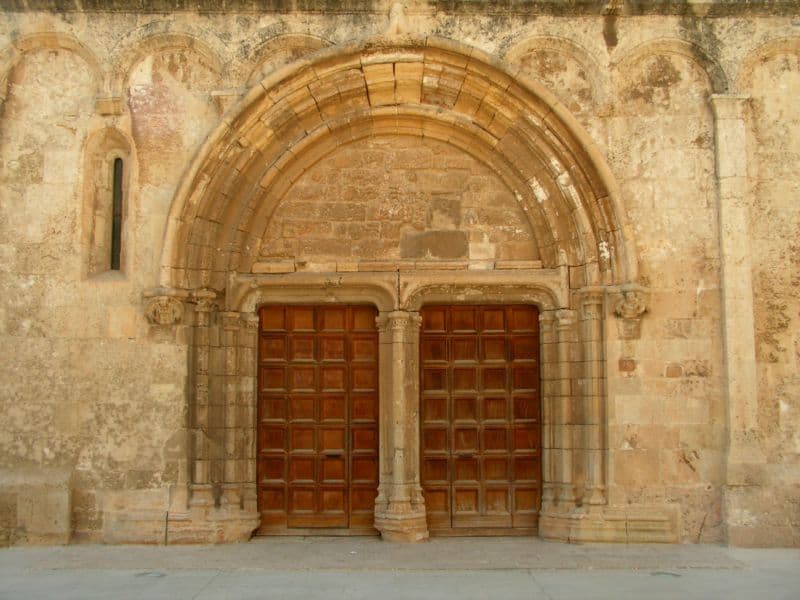
Basilica of San Gavino
The Basilica di San Gavino is a proto-Romanesque church located in Porto Torres, Sardinia, Italy. Originally a cathedral and the seat of a bishopric for centuries, it is now a parish church and a site for the veneration of local martyrs. Its construction began in the early 11th century, commissioned by local rulers, and it showcases a blend of architectural styles due to later restorations.

Bologna Cathedral
Bologna Cathedral, formally the Metropolitan Cathedral of Saint Peter, serves as the principal church of the Archdiocese of Bologna, Italy. While its origins trace back to the 11th century, the majority of the present structure was rebuilt in the 17th century after a catastrophic vault collapse. It is dedicated to Saint Peter and is a significant religious and architectural landmark in the city.

Belluno Cathedral
Belluno Cathedral, officially the Basilica Cathedral of Saint Martin, is the principal Roman Catholic church in Belluno, Veneto, Italy. It serves as the episcopal seat for the Diocese of Belluno-Feltre and was elevated to a minor basilica in 1980. The current Renaissance structure was built between 1517 and 1624, replacing an earlier church.