
Fréjus Cathedral
Fréjus Cathedral, officially Cathédrale Saint-Léonce de Fréjus, is a Roman Catholic church in Fréjus, France, dedicated to Saint Leontius of Fréjus. It served as the seat of the Bishop of Fréjus from the 5th century until the diocese was merged with Toulon in 1957, after which it became a co-cathedral. The complex includes a baptistery considered the oldest Christian structure in Provence.
Key Facts
- ›The cathedral complex dates from between the 5th and 13th centuries.
- ›The 5th-century baptistery is considered the oldest Christian structure in Provence.
- ›Fréjus Cathedral was declared a French monument historique in 1862.
- ›The cathedral features two separate naves under one roof: the bishop's church (Notre-Dame) and the parish church (St. Stephen).
- ›The cloister, built in the 13th century, features capitals decorated with the bishop's key and the fleur-de-lis.
- ›The cathedral complex incorporates elements of earlier Roman buildings.
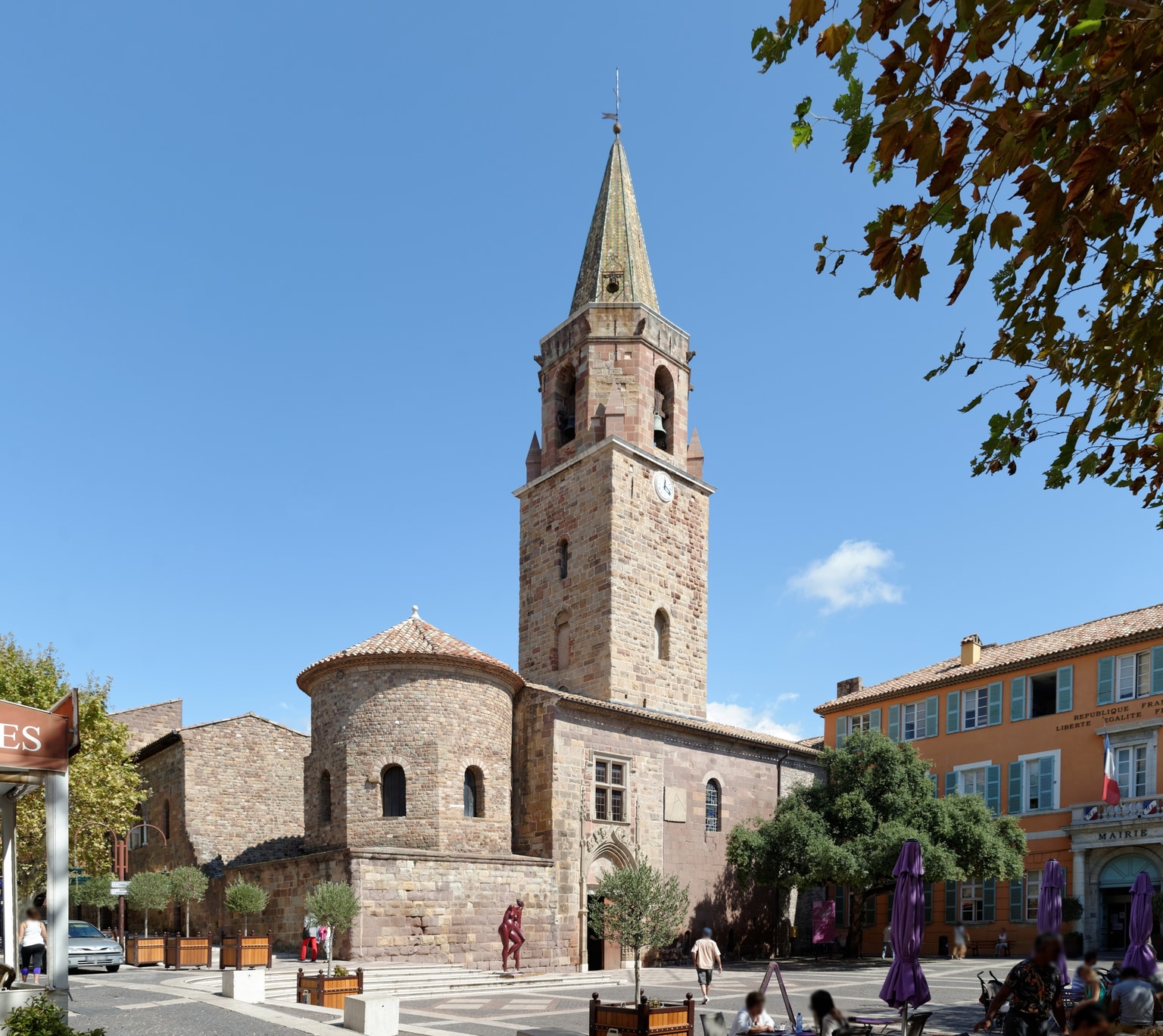
- 5th-Century Baptistery
- Cloister With Double Corinthian Columns
- Two Naves Under One Roof
- 13th-Century Bell Tower With An 18th-Century Spire
- Cloister Paintings Depicting Biblical Scenes, Fantastic Animals, and Daily Life
Jules Formigé
About Fréjus Cathedral
Fréjus Cathedral: A Rich Tapestry of History and Architecture
Fréjus Cathedral, officially known as Cathédrale Saint-Léonce de Fréjus, stands as a significant religious and historical monument in the town of Fréjus, located in the Var department of Provence, southeastern France. Dedicated to Saint Leontius of Fréjus, the cathedral's history stretches back to the 5th century, when it first became the seat of the Bishop of Fréjus. This ancient diocese, though abolished in 1801, was restored in 1822 and later merged with the Diocese of Toulon in 1957 to form the present Diocese of Fréjus-Toulon, with Fréjus Cathedral now serving as a co-cathedral.
Historical Context and Architectural Evolution
The cathedral is part of a complex of medieval religious buildings, with origins dating between the 5th and 13th centuries, a period when Fréjus was a vital religious and commercial hub in Provence. The complex is remarkably preserved and includes a parish church and the cathedral under a single roof, a baptistery, the bishop's residence, a canonry, and a cloister. The baptistery, a prime example of early Christian or Merovingian architecture, dates from the 5th century and is considered the oldest Christian structure in Provence and one of the oldest in France. It was rediscovered in 1925 by architect Jules Formigé.
Throughout its history, Fréjus Cathedral has undergone numerous transformations. Elements of earlier Roman buildings, such as columns and walls, were incorporated into its structure. The town itself, founded by Julius Caesar, was an important Roman port. The cathedral's site is near what appears to have been the Roman forum, and its walls align with Roman town planning. The 13th century marked a period of significant enlargement and modification, with the addition of a bell tower and porch, giving the cathedral a more imposing, almost military appearance. The church also received a new chevet and additions to the bishop's palace. The construction of new vaults between the bell tower and west porch, utilizing unusual 'Lombard' arches, represented an intermediate step between Romanesque and Gothic styles. Further modifications in the 13th century, as Gothic architecture gained popularity, saw the widening of arcades to bring the two naves closer together.
Notable Features and Artistic Treasures
A distinctive architectural feature of Fréjus Cathedral is the presence of two separate churches under the same roof: the Church of Saint Stephen, serving as the local parish church, and the Eglise Notre-Dame, belonging to the bishop. These spaces were gradually merged from the 13th century onwards, now separated only by arches. The cloister, built in the 13th century, is a serene space for contemplation, featuring pointed arches supported by double Corinthian columns. The capitals are adorned with the bishop's symbol, the key, and the fleur-de-lis, representing Charles I of Anjou.
The cathedral houses several notable artworks and decorative elements. The choir of Saint Stephen contains tombs of bishops from the 14th and 15th centuries, including two sarcophagi that are still in place. The choir stalls in the Notre-Dame choir, crafted from walnut in 1441 by Jean Flamenc, are a testament to medieval craftsmanship. In the second lateral chapel on the north side of Saint Stephen's nave is a 15th-century retable by Jacopo Durandi depicting Saint Margaret the Virgin. The upper level of the cloister, added between 1350 and 1360, features brightly painted wooden panels with biblical scenes, mythical creatures, and depictions of medieval life, offering a unique glimpse into the medieval imagination.
Key Historical Milestones
- 5th Century: Foundation of the cathedral and its baptistery, traditional attribution to Saint Leontius.
- 10th Century: Expulsion of Saracen pirates brings a period of relative peace.
- 12th Century: Fréjus is governed jointly by the Viscount and the bishop.
- 13th Century: Significant enlargement and modification of the cathedral, construction of the cloister and bell tower.
- 16th Century: Brief economic revival with the building of new city walls.
- 1751: The bishopric is moved to Draguignan due to the town's economic decline.
- 1862: Declared a French monument historique.
- 1925: Rediscovery of the 5th-century baptistery.
- 1957: Diocese of Fréjus united with Toulon to form the Diocese of Fréjus-Toulon.
Fréjus Cathedral, with its layered history and diverse architectural styles, stands as a compelling witness to the evolution of religious and civic life in Provence.
Source: Wikipedia ↗
Frequently Asked Questions
What is Fréjus Cathedral dedicated to?
Fréjus Cathedral is dedicated to Saint Leontius of Fréjus, who was bishop of Fréjus in the 5th century. The foundation of the cathedral is traditionally attributed to him.
When was the baptistery of Fréjus Cathedral built?
The baptistery is the oldest part of the cathedral, dating to the 5th century. It was rediscovered in 1925 and restored in the 1930s.
What is significant about the architecture of Fréjus Cathedral?
The cathedral is notable for its complex history of modifications, including the incorporation of Roman elements and the 13th-century construction of two naves under one roof. The 5th-century baptistery is a significant example of early Christian architecture.
What is the history of the Diocese of Fréjus?
The Diocese of Fréjus existed from the 5th century. It was abolished in 1801 but restored in 1822. In 1957, it was united with the Diocese of Toulon to form the Diocese of Fréjus-Toulon.
What are some notable features of the cathedral complex?
The complex includes a 5th-century baptistery, a 13th-century cloister with decorated capitals, and the unique arrangement of two separate churches (Notre-Dame and St. Stephen) under a single roof, a feature not uncommon in Provence.
Related Cathedrals

Otranto Cathedral
Otranto Cathedral, officially the Basilica Cattedrale di Santa Maria Annunziata, is a Roman Catholic cathedral in Otranto, Italy, consecrated in 1088. It is renowned for its exceptionally well-preserved 12th-century floor mosaic, which covers the entire nave, sanctuary, and apse, and depicts a rich tapestry of biblical scenes, medieval literature, and bestiaries. The cathedral stands as a significant historical and architectural monument, reflecting a blend of Byzantine, early Christian, and Romanesque styles, and notably houses the relics of the Martyrs of Otranto.

Toulon Cathedral
Toulon Cathedral, also known as Notre-Dame-de-la-Seds or Sainte-Marie-Majeure, is a historic Catholic cathedral in Toulon, France. It has served as the seat of bishops since the 5th century and currently functions as the ecclesiastical seat for the Diocese of Fréjus-Toulon. The cathedral is a national monument, notable for its long construction history spanning from the 11th to the 18th century.
Nevers Cathedral
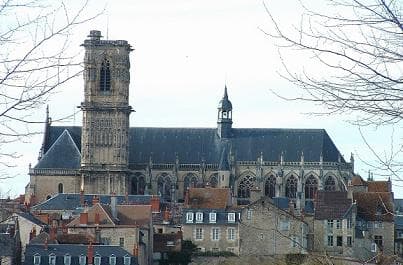
Nevers Cathedral, officially Cathédrale Saint-Cyr-et-Sainte-Julitte de Nevers, is a Roman Catholic cathedral in Nevers, France, serving as the seat of the Bishop of Nevers. It is a significant national monument with origins dating back to the Roman period, and its history showcases a blend of Romanesque and Gothic architectural styles shaped by numerous reconstructions and restorations.