
Nevers Cathedral
Nevers Cathedral, officially Cathédrale Saint-Cyr-et-Sainte-Julitte de Nevers, is a Roman Catholic cathedral in Nevers, France, serving as the seat of the Bishop of Nevers. It is a significant national monument with origins dating back to the Roman period, and its history showcases a blend of Romanesque and Gothic architectural styles shaped by numerous reconstructions and restorations.
Key Facts
- ›The cathedral's origins trace back to the Roman period, with discoveries of a Gallo-Roman temple dedicated to Janus.
- ›It was first built as a Christian church in 517 dedicated to Saints Gervais and Protais, later rebuilt and consecrated in 1097 in a Carolingian style.
- ›Following fires, it was extensively rebuilt in Gothic styles, notably the Rayonnant Gothic style after fires in 1228 and 1308.
- ›The Bohier tower, a prominent feature, was constructed in the early 16th century.
- ›The cathedral suffered vandalism during the French Revolution and severe damage from Allied bombing in 1944, necessitating postwar reconstruction.
- ›It was designated a Monument Historique in 1862 and a basilica in the MID-19th century.
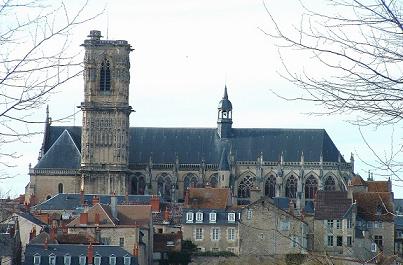
Romanesque, Gothic, Rayonnant Gothic, Carolingian, Louis Xv
- Remains of A Gallo-Roman Temple Dedicated To Janus
- Polychrome Oak Triumphal Cross Dating From About 1200
- Bohier Tower
- Gothic Nave and Chevet
- Preserved Romanesque Choir and Transept
Peter Paludanus
About Nevers Cathedral
Nevers Cathedral, officially known as Cathédrale Saint-Cyr-et-Sainte-Julitte de Nevers, stands as a significant Roman Catholic church and the episcopal seat of the Bishop of Nevers. Located in the town of Nevers, Nièvre, France, it is recognized as a national monument and holds the distinction of being designated a basilica and a Monument Historique. The cathedral's history is a complex tapestry of construction, destruction, and reconstruction, reflecting centuries of architectural evolution and historical events.
History and Architectural Evolution
The origins of Nevers Cathedral are remarkably ancient, with evidence suggesting a Gallo-Roman presence on the site, including the discovery of remains from a temple dedicated to Janus. The first Christian edifice was established in 517, dedicated to Saints Gervais and Protais. This early building was later replaced by a second cathedral, initiated in 1068 and consecrated in 1097. This structure, built in a Carolingian style, featured a flat wooden roof and flanking towers.
Subsequent centuries saw Nevers Cathedral undergo significant transformations. Following a fire in 1211, it was rebuilt by Bishop Guillaume de Saint-Lazare in the Gothic style, preserving its Romanesque choir and transept. Further rebuilding after fires in 1228 and 1308 led to its adoption of the Rayonnant Gothic style, characterized by elaborate window panels and an open triforium. The 14th century saw the commencement of a south tower, and construction continued into the 15th century with radiating chapels and further work on the south tower, which was completed in 1528. The late 18th century brought a major restoration campaign, including a Louis XV-style reroofing and interior modifications. The cathedral, however, also experienced periods of severe damage, including vandalism during the French Revolution and significant destruction from Allied bombing in 1944, which necessitated extensive postwar reconstruction.
Notable Features and Significance
Among its preserved treasures is a polychrome oak triumphal cross dating from around 1200, featuring a walnut Christus and medallions of the four evangelists. The massive and elaborately decorated Bohier tower, adjacent to the south lateral portal, dates from the early 16th century. Historically, Nevers also served as a pilgrimage site on the route to Santiago de Compostela during the 14th century. Despite the damage it has sustained, Nevers Cathedral continues to be an active place of worship and a testament to the enduring legacy of religious architecture and history in France.
Source: Wikipedia ↗
Frequently Asked Questions
What is Nevers Cathedral dedicated to?
Nevers Cathedral is dedicated to Saints Cyricus and Julitta. Their relics were brought to Nevers in two stages during the reconstruction period of the second cathedral.
What is the architectural style of Nevers Cathedral?
The cathedral exhibits a mix of architectural styles. While its choir and transept retain Romanesque elements, the nave and eastern apse were added in Gothic styles, particularly the Rayonnant Gothic after rebuilding in the 14th century. Later additions include Louis XV style elements from an 18th-century restoration.
When was Nevers Cathedral first built?
The diocese was established in Nevers in 517, with the construction of the first building dedicated to Saints Gervais and Protais. A significant reconstruction began in 1068, with its consecration in 1097.
Has Nevers Cathedral undergone significant damage or restoration?
Yes, Nevers Cathedral has a history of fires and damage. It was rebuilt after fires in 1211, 1228, and 1308. It also suffered vandalism during the French Revolution and was severely damaged by Allied bombing in 1944, with ongoing restorations since then.
Is Nevers Cathedral a pilgrimage site?
During the 14th century, Nevers became one of the pilgrimage sites on the route to Santiago de Compostela, indicating its historical significance for religious travel.
Related Cathedrals
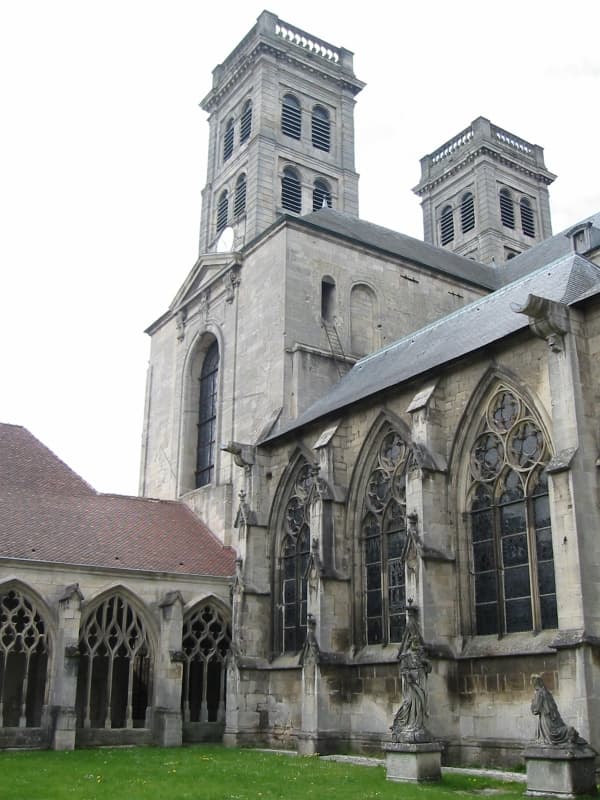
Verdun Cathedral
Verdun Cathedral, officially Cathédrale Notre-Dame de Verdun, is a Roman Catholic cathedral in Verdun, France. It is notable for its historical depth, tracing its origins to the 3rd century, and for its architectural blend of Romanesque, Gothic, and Neo-Classical styles. The cathedral holds significant historical importance, having been a focal point during World War I.

Saint-Denis Cathedral
The Basilica of Saint-Denis, now formally the Basilica Cathedral of Saint-Denis, is a Roman Catholic cathedral in Saint-Denis, France, renowned as the birthplace of Gothic architecture. Its choir, completed in 1144, is considered the first structure to fully embody Gothic architectural principles. Historically, it served as a significant pilgrimage site and the royal necropolis for French monarchs, housing nearly every king from the 10th to the 19th century.

Orléans Cathedral
Orléans Cathedral, officially the Basilique Cathédrale Sainte-Croix d'Orléans, is a significant Roman Catholic cathedral in Orléans, France. It holds historical importance, having been visited by Joan of Arc during the Siege of Orléans, and stands as one of the largest and last Gothic cathedrals constructed in France. The cathedral has undergone multiple reconstructions and renovations throughout its history.