
Nottingham Cathedral
Diocese of Nottingham·Roman Catholic·England
The Cathedral Church of St. Barnabas, located in Nottingham, England, is the principal church of the Roman Catholic Diocese of Nottingham. Constructed between 1841 and 1844, it was designed by Augustus Welby Northmore Pugin and holds significant architectural importance as one of the largest Catholic churches built in England since the Reformation.
Key Facts
- ›Built between 1841 and 1844, it was consecrated in 1844.
- ›Designed by Augustus Welby Northmore Pugin, a renowned architect also known for his work on the Houses of Parliament.
- ›It became a cathedral in 1852, following the re-establishment of the Catholic hierarchy in England and Wales.
- ›Most of Pugin's original decorative scheme was altered or removed following the Second Vatican Council, though restoration efforts are ongoing.
- ›It houses the tomb of Venerable Mary Potter, founder of the Little Company of Mary.
- ›The cathedral is a Grade II* listed building.

Early English Gothic, Gothic Revival
- Tomb of Venerable Mary Potter
- Fragment of Pugin's Original Decorative Scheme In the Blessed Sacrament Chapel
- Ongoing Restoration of Pugin's Designs
19th Century
Augustus Welby Northmore Pugin
About Nottingham Cathedral
The Cathedral Church of St. Barnabas, commonly known as Nottingham Cathedral, stands as the principal church of the Roman Catholic Diocese of Nottingham. Situated in Nottingham, England, it serves as the seat of the Bishop of Nottingham.
History and Construction
Construction of the cathedral took place between 1841 and 1844, with a cost of £15,000. Its consecration occurred in 1844, a significant period following the Roman Catholic Relief Act of 1829, which eased restrictions on Catholicism in the United Kingdom. A substantial portion of the funding was provided by Lord Shrewsbury. The renowned architect Augustus Welby Northmore Pugin was commissioned for the design, a figure also celebrated for his work on the interior of the Houses of Parliament. The cathedral was initially designed in the Early English Plain Gothic style, though Pugin's later churches would embrace the Decorated Gothic style more fully. Rev Robert William Willson, the priest in charge of Nottingham at the time and later Bishop-Elect of Hobart, Tasmania, retained Pugin as the architect. Upon its completion, Nottingham Cathedral was the largest Catholic church erected in England since the Reformation.
Elevation to Cathedral Status and Architectural Alterations
Following the re-establishment of a Catholic hierarchy in England and Wales in 1850 by decree of Pope Pius IX, the church was elevated to cathedral status in 1852, becoming one of the first four Catholic cathedrals in England and Wales since the English Reformation. The cathedral is designated as a Grade II* listed building. A significant portion of Pugin's original decorative scheme was lost or obscured due to alterations made in the aftermath of the Second Vatican Council. The original high altar was removed, and much of the painted decoration was covered or painted over. Fittings such as the old cathedra and figures from the rood screen were also removed, though the figures were reinstated in 1993. The interior's current appearance is markedly different from Pugin's intended richness. A fragment of his original decorative scheme survives in the Blessed Sacrament Chapel, considered a highlight of the interior. The replacement high altar from the 1960s was again replaced in 1993 with one in a more harmonizing style. While some fragments of Pugin's decoration, like roundels in the nave, have been uncovered and restored, much of his original work remains lost.
Notable Features and Modern Developments
A notable feature within the cathedral is the tomb of Venerable Mary Potter, the foundress of the Little Company of Mary in Nottingham, with the tomb designed by Smith & Roper. In September 2022, a project commenced to restore some of A. W. N. Pugin's original planned designs, including uncovering whitewash covering the original decoration of the Lady Chapel. This restoration initiative is a collaboration between Nottingham Cathedral, Nottingham Trent University, and Culture Syndicates, supported by a grant from the National Lottery Heritage Fund. The clergy of the cathedral also minister to the church of St. Augustine on Woodborough Road.
Source: Wikipedia ↗
Frequently Asked Questions
When was Nottingham Cathedral built?
Nottingham Cathedral was built between 1841 and 1844 and was first consecrated in 1844. Its construction marked a significant moment for Catholicism in England after the Roman Catholic Relief Act of 1829.
Who designed Nottingham Cathedral?
The cathedral was designed by Augustus Welby Northmore Pugin, a prominent architect of the Gothic Revival movement. Pugin also designed the interior of the Houses of Parliament.
What is the architectural style of Nottingham Cathedral?
The cathedral was initially built in the Early English Plain Gothic style. While much of Pugin's original rich decoration was later altered, some fragments remain, particularly in the Blessed Sacrament Chapel.
When did Nottingham Cathedral become a cathedral?
Nottingham Cathedral was raised to cathedral status in 1852, fifteen years after its construction and following the establishment of a new Catholic hierarchy in England and Wales by Pope Pius IX.
Are there any notable tombs or features within the cathedral?
Yes, a prominent feature is the tomb of Venerable Mary Potter, the founder of the Little Company of Mary, which was designed by Smith & Roper. Restoration projects are also underway to uncover original designs by Pugin.
Related Cathedrals
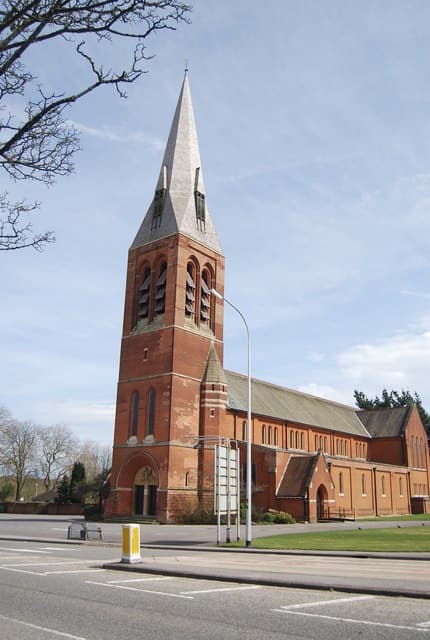
Aldershot Cathedral
The Cathedral Church of St Michael and St George is the Roman Catholic cathedral for the Bishopric of the Forces, located in Aldershot, England. Originally built as an Anglican church for the British Army, it was consecrated in 1893 and later repurposed in 1973 to become the seat of the Roman Catholic Bishop of the Forces. It is a significant landmark due to its Gothic Revival architecture and its close association with military history.

Arundel Cathedral
The Cathedral Church of Our Lady and St Philip Howard in Arundel, West Sussex, England, was dedicated in 1873 as a Catholic parish church and became a cathedral in 1965 with the foundation of the Diocese of Arundel and Brighton. It serves as the seat of the Bishop of Arundel and Brighton and is recognized as a Grade I listed building, notable for its French Gothic Revival architecture.
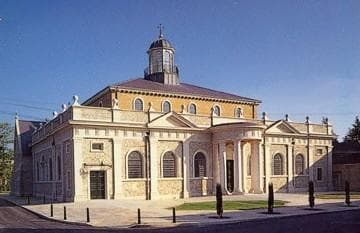
Brentwood Cathedral
Brentwood Cathedral, officially the Cathedral of St Mary and St Helen, is the seat of the Roman Catholic Diocese of Brentwood in England. Originally a parish church built in 1861, it was elevated to cathedral status in 1917 and significantly enlarged and redesigned in an Italianate classical style between 1989 and 1991. Its architecture draws inspiration from the Italian Renaissance and English Baroque, creating a space focused on liturgy and flooded with light.