
Middlesbrough Cathedral
Diocese of Middlesbrough·Roman Catholic·England
Middlesbrough Cathedral, officially Saint Mary's Cathedral, is the Roman Catholic cathedral for the Diocese of Middlesbrough in England. It serves as the principal church of the bishop and is a modern architectural design reflecting post-Vatican II liturgical principles. The current cathedral replaced an earlier 19th-century structure that suffered from structural issues and was later destroyed by fire.
Key Facts
- ›The original Middlesbrough Cathedral was built from 1876 and opened in 1878, serving as a church before the Diocese of Middlesbrough was established.
- ›The first Bishop of Middlesbrough was consecrated in the original cathedral in 1879.
- ›Structural problems led to the decision to build a new cathedral, with construction of the current Saint Mary's Cathedral beginning in November 1985.
- ›The current cathedral was consecrated on May 15, 1988, by Bishop Augustine Harris.
- ›The cathedral's design incorporates features mandated by the Second Vatican Council, such as a clearly visible altar and audible liturgy.
- ›The cathedral houses a significant organ built by Schumacher of Belgium, featuring two manuals and 16 stops.

Modern
- Modern Liturgical Design Reflecting Vatican Ii
- Organ By Schumacher of Belgium
- Cathedral Choir and Choral Foundation
20th Century
Frank Swainston, Peter Fenton
About Middlesbrough Cathedral
Middlesbrough Cathedral, officially Saint Mary's Cathedral, stands as the principal church of the Roman Catholic Diocese of Middlesbrough in England. Located in Coulby Newham, a suburb of Middlesbrough, it is the seat of the Bishop of Middlesbrough and is part of the ecclesiastical Province of Liverpool. The current cathedral is a testament to modern ecclesiastical architecture, commissioned to serve the evolving needs of the diocese.
History and Development
The history of Middlesbrough Cathedral is marked by two distinct structures. The original church, the Cathedral Church of Our Lady Of Perpetual Succour, was constructed from 1876 and opened in 1878. Initially built to accommodate 1,500 worshippers, it served the community before the Diocese of Middlesbrough was formally established in December 1878. The first Bishop of Middlesbrough, Richard Lacy, was consecrated there in 1879. However, by the 1980s, the original building faced significant structural problems and had become increasingly isolated due to population shifts. Consequently, a new cathedral was planned.
Construction of the present Saint Mary's Cathedral began in November 1985 in Coulby Newham. The foundation stone was blessed in November 1985, and the cathedral was consecrated on May 15, 1988, by Bishop Augustine Harris. Tragically, the original cathedral was severely damaged by fire in May 2000, leading to its demolition. The site of the old cathedral is now occupied by the Cleveland Police headquarters.
Architecture and Design
The current Middlesbrough Cathedral is a modern, light-filled building designed to reflect the liturgical changes brought about by the Second Vatican Council. Key design principles included ensuring that the altar was clearly visible to all congregants and that the liturgy was audible to everyone present. The building complex encompasses the sanctuary, nave, Blessed Sacrament chapel, sacristy, church hall, narthex, and a campanile. Peter Fenton was responsible for the detailed drawings and the design of the cathedral furnishings, working from an initial outline plan by Frank Swainston.
Music and Worship
A significant feature of Middlesbrough Cathedral is its active music tradition, guided by the Cathedral’s Choral Foundation. This foundation includes several choirs, such as the Cathedral Choir, Cathedral Consort, and Cathedral Junior Choristers, all under the leadership of the Cathedral and Diocesan Director of Music. The Cathedral Choir typically leads the main Sunday morning Solemn Mass, while other choirs participate in services like Choral Vespers and Benediction on Wednesday evenings. The cathedral also boasts a notable organ built by Schumacher of Belgium, featuring two manuals and pedals with 16 stops, its asymmetric case designed to complement the cathedral's interior architecture.
Source: Wikipedia ↗
Frequently Asked Questions
When was the current Middlesbrough Cathedral built?
Building work on the current Saint Mary's Cathedral in Coulby Newham commenced in November 1985. It was consecrated on Sunday, May 15, 1988.
What happened to the original Middlesbrough Cathedral?
The original cathedral, built in 1876, faced structural problems and isolation. It was gutted by fire in May 2000 and subsequently demolished; the site is now occupied by Cleveland Police headquarters.
Who designed Middlesbrough Cathedral?
The original architect for the new cathedral was Frank Swainston, who passed away after the outline plan was agreed. Peter Fenton developed the detailed drawings and designed the furnishings, with advice from J. O. Tarren and Professor Patrik Nuttgens.
What is the architectural style of Middlesbrough Cathedral?
Middlesbrough Cathedral is described as a modern, light building, designed to accommodate the liturgical changes following the Second Vatican Council, emphasizing visibility and audibility in worship.
What musical traditions are associated with Middlesbrough Cathedral?
The cathedral has a Choral Foundation, comprising various choirs including the Cathedral Choir, Cathedral Consort, and Cathedral Junior Choristers. The music tradition is led by the Cathedral and Diocesan Director of Music.
Related Cathedrals
Aldershot Cathedral
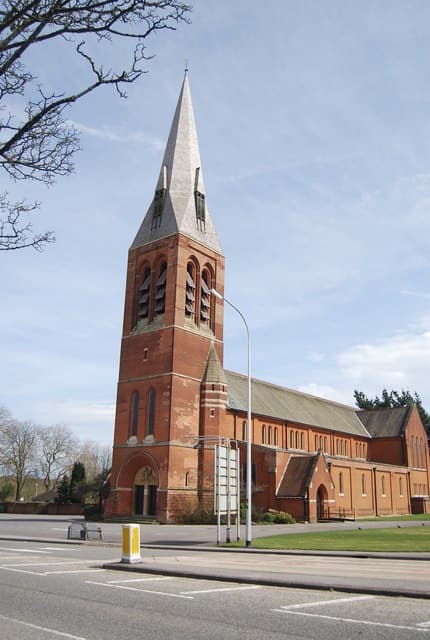
The Cathedral Church of St Michael and St George is the Roman Catholic cathedral for the Bishopric of the Forces, located in Aldershot, England. Originally built as an Anglican church for the British Army, it was consecrated in 1893 and later repurposed in 1973 to become the seat of the Roman Catholic Bishop of the Forces. It is a significant landmark due to its Gothic Revival architecture and its close association with military history.

Arundel Cathedral
The Cathedral Church of Our Lady and St Philip Howard in Arundel, West Sussex, England, was dedicated in 1873 as a Catholic parish church and became a cathedral in 1965 with the foundation of the Diocese of Arundel and Brighton. It serves as the seat of the Bishop of Arundel and Brighton and is recognized as a Grade I listed building, notable for its French Gothic Revival architecture.
Brentwood Cathedral
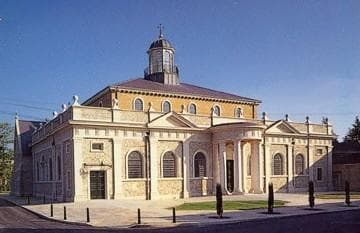
Brentwood Cathedral, officially the Cathedral of St Mary and St Helen, is the seat of the Roman Catholic Diocese of Brentwood in England. Originally a parish church built in 1861, it was elevated to cathedral status in 1917 and significantly enlarged and redesigned in an Italianate classical style between 1989 and 1991. Its architecture draws inspiration from the Italian Renaissance and English Baroque, creating a space focused on liturgy and flooded with light.