
Metz Cathedral
Metz Cathedral, officially dedicated to Saint Stephen, is the principal church of the Catholic Diocese of Metz and the seat of its bishops. Renowned for its exceptionally large expanse of stained glass, it is nicknamed "the Good Lord's lantern." The present Gothic structure evolved over centuries, incorporating elements from pre-Romanesque to Neo-Gothic styles, and it boasts one of the highest naves in France.
Key Facts
- ›The cathedral is dedicated to Saint Stephen and serves as the seat of the bishops of Metz.
- ›It features the third-highest nave in France, reaching 41.41 meters (135.9 ft).
- ›Metz Cathedral is nicknamed "la Lanterne du Bon Dieu" due to its world-record stained glass coverage of 6,496 m2.
- ›Its construction spanned several centuries, beginning in the early 14th century and incorporating Gothic, Neoclassical, and Neo-Gothic elements.
- ›The cathedral treasury holds a significant collection of sacred vestments and liturgical items accumulated over the history of the diocese.
- ›The building's orientation is unusual, deviating from the traditional east-west axis due to local topography.

- Largest Expanse of Stained Glass In the World
- Third-Highest Nave In France
- Unusual North-Northeast Orientation
- Cathedral Treasury With Sacred Vestments and Eucharistic Items
- Portal of Christ
Hermann Von MüNster, Theobald of Lixheim, Valentin Bousch, Jacques-FrançOis Blondel, Paul Tornow, Auguste Dujardin, Wilhelm Schmitz
About Metz Cathedral
Metz Cathedral, formally dedicated to Saint Stephen, stands as the principal church of the Catholic Diocese of Metz and serves as the episcopal seat for its bishops. Its history is deeply intertwined with the city of Metz, tracing back to a significant Gallo-Roman site and early Christian foundations. The present magnificent structure is primarily a testament to Gothic architecture, with construction of the current cathedral beginning in the early 14th century.
Architectural Marvel
The cathedral is renowned for its striking Rayonnant Gothic style, characterized by its soaring height and extensive use of stained glass. It boasts the third-highest nave in France, reaching an impressive 41.41 meters (135.9 ft), contributing to its nickname, "la Lanterne du Bon Dieu" (the Good Lord's lantern). This moniker is particularly apt due to the cathedral housing the world's largest expanse of stained glass, totaling 6,496 m2 (69,920 sq ft). These windows feature works by master glassmakers from the Gothic and Renaissance periods, as well as later artistic contributions from Romantic, Cubist, and Tachist movements.
A distinctive feature of Metz Cathedral is its orientation. Unlike many European cathedrals, it is not aligned on a traditional east-west axis. This deviation is attributed to the specific topography of the Moselle valley where it is situated, leading to a north-northeasterly orientation. The western facade also presents a unique aspect, with a single portal rather than the typical three, and the main entrance is often accessed from the southwestern side.
Historical Development
The site of Metz Cathedral has been a place of worship and significance for centuries, with evidence of early Christian presence dating back to the 4th century. The first bishop, Clement, is recorded in 346. An earlier church, dedicated to Saint Stephen, is noted by Gregory of Tours as having been spared during the Hunnish sack of 451. Significant developments occurred in the Ottonian period, with a pre-Romanesque basilica constructed between the late 10th and early 11th centuries.
The transition to the Gothic style began around 1220, with substantial work undertaken throughout the 13th, 14th, and 15th centuries. This period saw the integration of the neighboring collegiate church of Notre-Dame, leading to architectural adaptations. The cathedral was finally consecrated on April 11, 1552.
Subsequent centuries brought further modifications. The 18th century saw attempts to introduce Neoclassical elements, notably a proposed portico by Jacques-François Blondel, which faced resistance and caused structural issues. The French Revolution led to the removal of many Gothic tombs and monuments, and the cathedral briefly served as a "Temple of Reason." The 19th century brought about extensive repairs and a significant Neo-Gothic portal on the west front, designed by Paul Tornow.
Collection and Significance
Beyond its architectural grandeur, Metz Cathedral houses a valuable treasury. This collection, assembled over the long history of the Metz diocese, includes sacred vestments and items used in the Eucharist, offering a glimpse into centuries of liturgical practice and artistic craftsmanship.
The cathedral continues to be an active place of worship and a significant cultural landmark, drawing visitors interested in its rich history, stunning architecture, and the unparalleled beauty of its stained glass artistry.
Source: Wikipedia ↗
Frequently Asked Questions
What is Metz Cathedral known for?
Metz Cathedral is most famous for its extensive stained glass windows, the largest expanse in the world, earning it the nickname "the Good Lord's lantern." It also features one of the tallest naves in France.
When was Metz Cathedral built?
The construction of the present Gothic cathedral began in the early 14th century. Major phases of work continued through the 15th and 16th centuries, with later additions and renovations in Neoclassical and Neo-Gothic styles.
What is the architectural style of Metz Cathedral?
The primary style is Rayonnant Gothic, characterized by its large stained glass windows and soaring nave. However, it also incorporates elements from earlier periods and later Neoclassical and Neo-Gothic additions.
Who are some notable artists associated with Metz Cathedral's stained glass?
Historically significant stained glass artists include Hermann von Münster, Theobald of Lixheim, and Valentin Bousch. More contemporary artists represented include Marc Chagall, Jacques Villon, and Roger Bissière.
Why is Metz Cathedral's orientation unusual?
The cathedral's orientation is north-northeast, deviating from the typical west-east axis. This is due to the topography of the Moselle valley at the site, which did not allow for the standard alignment.
Related Cathedrals
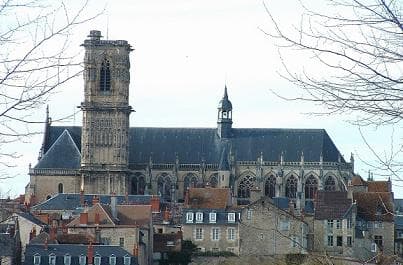
Nevers Cathedral
Nevers Cathedral, officially Cathédrale Saint-Cyr-et-Sainte-Julitte de Nevers, is a Roman Catholic cathedral in Nevers, France, serving as the seat of the Bishop of Nevers. It is a significant national monument with origins dating back to the Roman period, and its history showcases a blend of Romanesque and Gothic architectural styles shaped by numerous reconstructions and restorations.
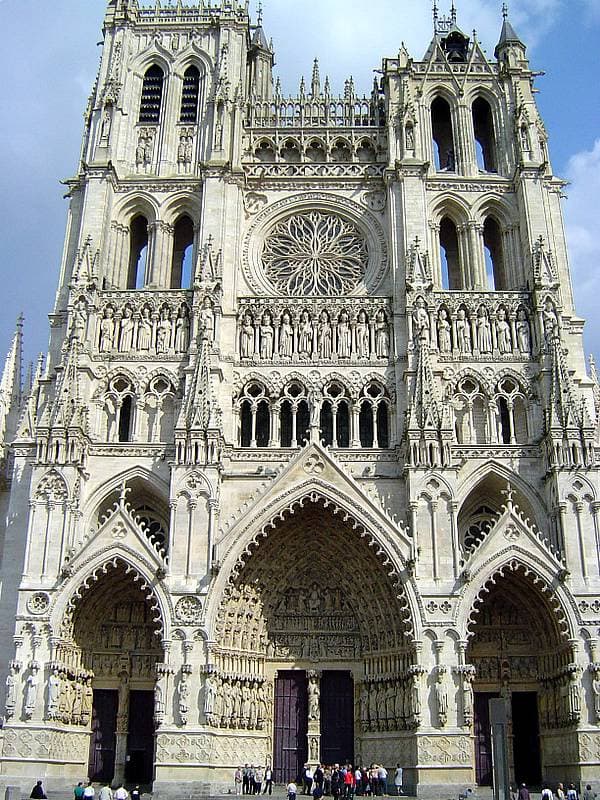
Amiens Cathedral
Amiens Cathedral, officially the Cathedral of Our Lady of Amiens, is a preeminent example of Gothic architecture and a significant religious site in France. It is renowned for its immense scale, being the largest cathedral by volume in France, and for its remarkably unified High Gothic and Rayonnant style, achieved through a swift construction period. The cathedral is also celebrated for its extensive collection of early Gothic sculpture, particularly on its west facade, and holds a UNESCO World Heritage designation.

Orléans Cathedral
Orléans Cathedral, officially the Basilique Cathédrale Sainte-Croix d'Orléans, is a significant Roman Catholic cathedral in Orléans, France. It holds historical importance, having been visited by Joan of Arc during the Siege of Orléans, and stands as one of the largest and last Gothic cathedrals constructed in France. The cathedral has undergone multiple reconstructions and renovations throughout its history.