
Ivrea Cathedral
Ivrea Cathedral is a Roman Catholic church in Ivrea, Italy, with a history stretching back to the late 4th century. Originally built on the site of a Roman temple, it underwent significant rebuilding in the Romanesque style under Bishop Warmund in the 10th century and has seen further architectural modifications throughout its existence. It is a significant example of Romanesque architecture in the Canavese region.
Key Facts
- ›The cathedral was first built towards the end of the 4th century, likely replacing a Roman temple.
- ›It was rebuilt in the Romanesque style between the 10th and 12th centuries under Bishop Warmund.
- ›The campanili date from the early 11th century, with upper sections completed two centuries later.
- ›Architectural styles include Romanesque, Bramante-style, Palladian, and Late Baroque.
- ›The crypt contains frescoes from the 13th to 15th centuries.
- ›Notable art includes works by Defendente Ferrari and frescoes possibly depicting a member of the Theban Legion.

Romanesque, Neoclassical, Bramante-Style, Palladian, Late Baroque
- Site of A Former Roman Temple
- Surviving Romanesque Elements From Bishop Warmund's Rebuilding
- 13th-15th Century Crypt Frescoes
- Works By Defendente Ferrari
- Depiction of A Possible Member of the Theban Legion
Giuseppe Martinez
About Ivrea Cathedral
Ivrea Cathedral, situated in the city of Ivrea, Italy, is a Roman Catholic church with a history that begins in the late 4th century, believed to have been constructed on the foundations of an earlier Roman temple. Its architectural evolution is marked by significant periods of rebuilding and modification, making it a site of considerable historical and artistic interest.
History and Architecture
The initial Christian structure at the site emerged between the fourth and fifth centuries, designed in the style of a Roman basilica. A pivotal phase in its development occurred in the 10th century under Bishop Warmund, who undertook a substantial enlargement of the church, rebuilding it in the Romanesque style. Works from this period, including parts of the apse, survive and are considered important examples of Romanesque architecture in the Canavese region. The campanili (bell towers) also trace their origins to the early 11th century, with their upper sections completed approximately two centuries later, following potential collapses.
Throughout subsequent centuries, the cathedral's appearance was further altered. In 1516, Bishop Bonafacio Ferrero commissioned a Bramante-style portico to replace the Romanesque façade. Later, in the early 19th century, architect Giuseppe Martinez was tasked with remodeling the building in a Late Baroque style, and the portico was reworked into a Palladian style in 1854.
Art and Significance
The cathedral's interior and related collections house notable artworks. The crypt features frescoes dating from the 13th to the 15th centuries, some of which have been affected by the passage of time. A significant depiction of a holy warrior, possibly representing a member of the Theban Legion, is found on a foundation pillar of the southern bell tower. Artworks by Giacomino of Ivrea and a painting attributed to the Maestro di Oropa are also present. The sacristy contains a 1521 depiction of the Adoration of the Child with the Blessed Warmondo by Piedmont master Defendente Ferrari, with a second work by Ferrari, the Adoration of the Child with St. Clare and the Poor Clares, relocated from a former convent.
Historically, the cathedral was served by a Chapter of Canons, whose statutes were documented and amended over several centuries, with papal confirmations and later reforms influenced by imperial decrees and post-Napoleonic restorations. Though its architectural styles have varied, Ivrea Cathedral remains a testament to the continuous religious and artistic life of the region.
Source: Wikipedia ↗
Frequently Asked Questions
When was Ivrea Cathedral first built?
The cathedral was first constructed towards the end of the 4th century, presumably on the site of an earlier Roman temple.
What is the primary architectural style of Ivrea Cathedral?
While the cathedral has seen many modifications, it is an important example of Romanesque architecture, particularly due to surviving portions from Bishop Warmund's 10th-century rebuilding. It also features elements of Neoclassical, Bramante-style, Palladian, and Late Baroque architecture.
What notable artworks are found in Ivrea Cathedral?
The crypt contains frescoes dating from the 13th to 15th centuries. The sacristy holds a 1521 depiction of the Adoration of the Child by Defendente Ferrari, and another work by the same artist is located in the chapter room.
Who was Bishop Warmund and what was his role in the cathedral's history?
Bishop Warmund, who held the episcopal seat from 969 to 1005, initiated a significant campaign to enlarge the church. He rebuilt the cathedral in the Romanesque style and established a scriptorium, contributing to its importance as an example of this architectural period.
What is the history of the campanili at Ivrea Cathedral?
The campanili are attributed to the early 11th century. Their upper parts, housing the bells, were completed about two hundred years later. These upper portions may have collapsed and began to be rebuilt in the 12th century.
Related Cathedrals
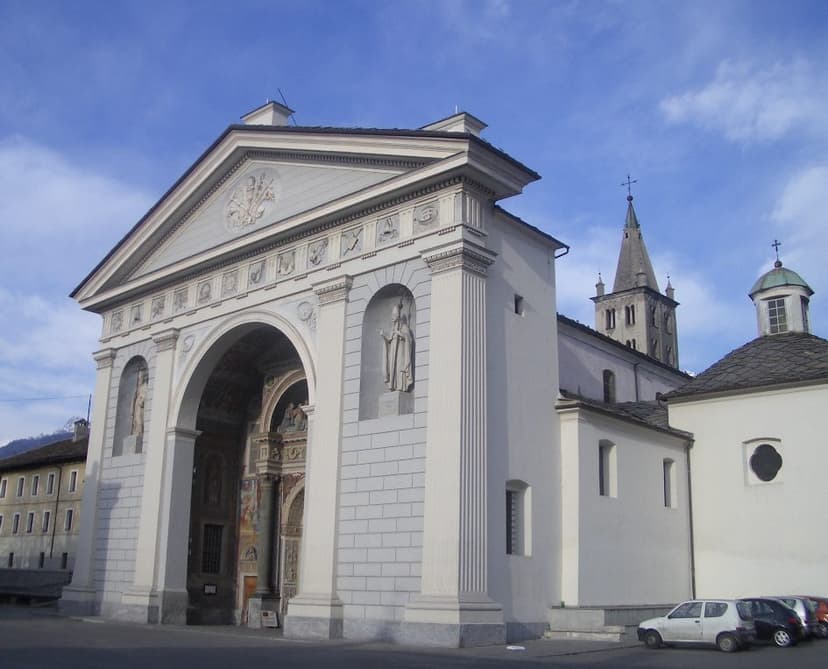
Aosta Cathedral
Aosta Cathedral, also known as the Cathedral of Santa Maria Assunta and San Giovanni Battista, is a Roman Catholic cathedral in Aosta, Italy, with origins dating back to the 4th century. It serves as the episcopal seat for the Diocese of Aosta and has undergone significant architectural modifications throughout its history, reflecting various styles from its Romanesque foundations to its Neoclassical facade.
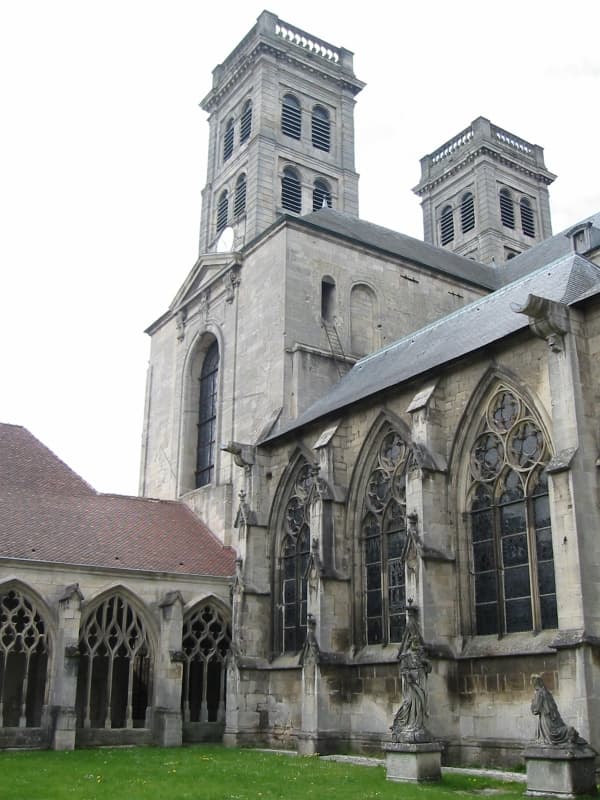
Verdun Cathedral
Verdun Cathedral, officially Cathédrale Notre-Dame de Verdun, is a Roman Catholic cathedral in Verdun, France. It is notable for its historical depth, tracing its origins to the 3rd century, and for its architectural blend of Romanesque, Gothic, and Neo-Classical styles. The cathedral holds significant historical importance, having been a focal point during World War I.

Albenga Cathedral
Albenga Cathedral, officially the Cathedral of Saint Michael the Archangel, is a Roman Catholic cathedral in Albenga, Italy, serving as the seat of the Diocese of Albenga-Imperia. Occupying a site with a church since the late 4th or early 5th century, its present medieval structure dates primarily from around 1100, with significant rebuilding in the late 12th century and later modifications, notably in 1582. A restoration in the 1970s aimed to restore its medieval appearance, and the bell tower was substantially rebuilt in the late 14th century.