
Cathedral of Saint Paul, National Shrine of the Apostle Paul
Archdiocese of Saint Paul and Minneapolis·Catholic·United States
The Cathedral of Saint Paul, National Shrine of the Apostle Paul, is a Catholic cathedral in Saint Paul, Minnesota, serving as a co-cathedral for the Archdiocese of Saint Paul and Minneapolis. Notable for its distinctive copper-clad dome, it is dedicated to Paul the Apostle and holds the distinction of being the National Shrine of the Apostle Paul. It is recognized as one of the largest churches in the United States.
Key Facts
- ›The current building opened in 1915, replacing three previous cathedrals.
- ›It was designated the National Shrine of the Apostle Paul on March 25, 2009.
- ›The cathedral is built in a 'Classical Renaissance' architectural style with a Greek Cross design.
- ›Its dome measures 76 feet (23 M) in diameter and 186 feet (57 M) high.
- ›The exterior is constructed from Rockville granite, and the interior features American Travertine and various marbles.
- ›It is the third-largest Catholic cathedral and sixth-largest church in the United States.

Classical Renaissance, Beaux-Arts
- Copper-Clad Dome
- Greek Cross Design
- Marble Statues of the Four Evangelists
- Stained Glass Windows By Charles Connick
- Mosaics of the Cardinal Virtues
- Chapels Dedicated To Patron Saints of European Ethnic Groups
Emmanuel Louis Masqueray
About Cathedral of Saint Paul, National Shrine of the Apostle Paul
The Cathedral of Saint Paul, National Shrine of the Apostle Paul, is a prominent Catholic cathedral located in Saint Paul, Minnesota. It serves as a co-cathedral for the Archdiocese of Saint Paul and Minneapolis, sharing this role with the Basilica of Saint Mary in Minneapolis. Situated on Cathedral Hill, it offers commanding views of downtown Saint Paul and is distinguished by its striking copper-clad dome. The cathedral is dedicated to Saint Paul the Apostle, the namesake of the city, and holds the significant designation as the National Shrine of the Apostle Paul, a status conferred by the United States Conference of Catholic Bishops on March 25, 2009. It is recognized as the third-largest Catholic cathedral and the sixth-largest church in the United States.
History and Development
The origins of Catholic worship in the area trace back to a small log chapel built in 1841 by Father Lucien Galtier. This humble structure evolved into the first cathedral under Bishop Joseph Crétin, who recognized the need for a larger edifice to serve the growing Catholic population. Subsequent cathedrals were constructed to accommodate the expanding diocese, with the third cathedral, built of stone, completed in 1858. The elevation of the Diocese of Saint Paul to an archiepiscopal see in 1888 underscored the necessity for a grander, more substantial cathedral. This led to the selection of a new site on the brow of St. Anthony Hill and the commissioning of renowned French Beaux-Arts architect Emmanuel Louis Masqueray. Construction of the current cathedral began with the laying of the cornerstone on June 2, 1907, and the building was opened in 1915, though it was not formally consecrated until 1958.
Architecture and Design
Designed by Emmanuel Louis Masqueray, the Cathedral of Saint Paul is an exemplar of "Classical Renaissance" architecture, laid out in a Greek Cross plan. The cathedral's dome, a central feature, measures 76 feet (23 m) in diameter and rises to a height of 186 feet (57 m). The exterior is clad in Rockville granite from Minnesota, while the interior walls are of American Travertine, with columns made from various types of marble. Masqueray's design emphasizes an open interior, allowing for unobstructed views of the altar and pulpit. The interior aesthetic, with its sunburst chandelier and wave motifs carved into walls and pews, is intended to evoke the feeling of being within a boat, referencing the Latin word "nave." The exterior facade features granite carvings of Christ and the apostles, along with biblical inscriptions.
Art and Interior Features
The interior of the cathedral is adorned with twenty-four stained glass windows depicting angelic choirs and three rose windows in the transepts, designed by Charles Connick. Heroic-sized marble statues of the four evangelists, sculpted by John Angel, are positioned in the niches of the piers, symbolizing their role in supporting the Church through their writings. The life of Saint Paul is further honored through a bronze baldachin and massive bronze grilles. The cathedral also houses six chapels dedicated to the patron saints of various European ethnic groups that settled the region, as well as chapels dedicated to the Sacred Heart, Mary, Saint Joseph, and Saint Peter. The cathedral is equipped with two E. M. Skinner and Æolian-Skinner organs, which underwent restoration and enhancement in the 2010s.
Significance and Notable Events
Beyond its architectural and religious significance, the Cathedral of Saint Paul has been the site of notable historical events. It has hosted Masses attended by prominent figures such as Eugenio Cardinal Pacelli and President John F. Kennedy. In 2009, its designation as the National Shrine of the Apostle Paul marked a significant moment in its history. The cathedral has also been a venue for important community events, including the funeral of Philando Castile and, for several years, the Red Bull Crashed Ice competition, which drew large crowds to the area. The building was added to the National Register of Historic Places in 1974 and is a contributing property to the Historic Hill District.
Source: Wikipedia ↗
Frequently Asked Questions
When was the Cathedral of Saint Paul built?
The cornerstone for the current cathedral was laid on June 2, 1907, and the first Mass was held on March 15, 1915. The building was formally consecrated in 1958 after substantial completion.
What is the architectural style of the Cathedral of Saint Paul?
The cathedral is built in a 'Classical Renaissance' architectural style and features a Greek Cross design. Its prominent dome is a significant architectural element.
What are some notable features of the interior?
The interior design aims to give visitors an unobstructed view of the altar and pulpit. It features marble statues of the four evangelists, stained glass windows, and mosaics, with interior elements designed to evoke imagery of a boat.
Has the cathedral hosted any significant historical figures?
Yes, Eugenio Cardinal Pacelli (later Pope Pius XII) celebrated Mass here in 1936, and President John F. Kennedy attended Mass in 1962. The funeral of Philando Castile was also held here in 2016.
What is the significance of the National Shrine designation?
On March 25, 2009, the United States Conference of Catholic Bishops designated the Cathedral of Saint Paul as the National Shrine of the Apostle Paul, making it the first in Minnesota and the only one in North America dedicated to the Apostle Paul.
What renovations has the cathedral undergone?
In 2001-2002, the cathedral underwent a major renovation to replace its copper roof, which involved extensive tuck pointing and sand-blasting of the exterior. The organ also underwent significant restoration in 2013.
Related Cathedrals
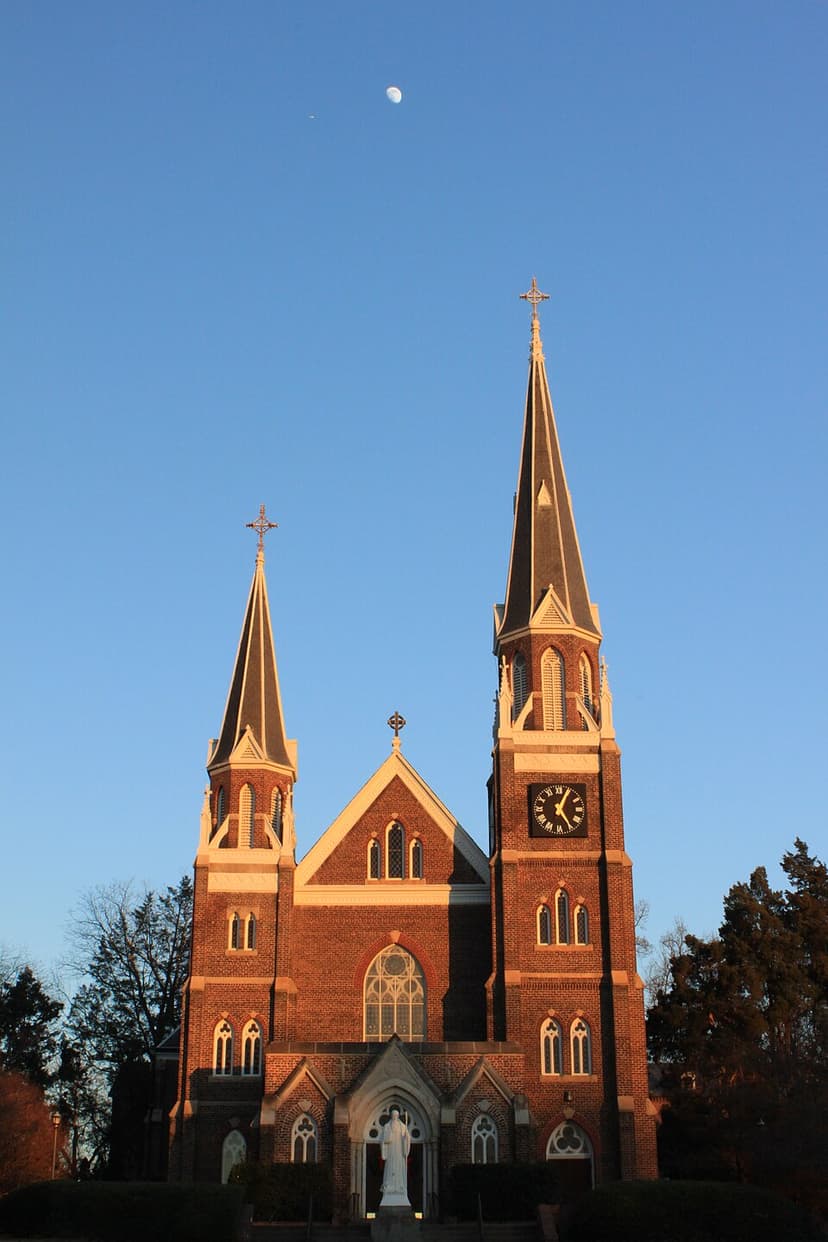
Cathedral-Basilica of St. Mary Help of Christians
The Cathedral-Basilica of St. Mary Help of Christians is a significant Catholic religious site located within Belmont Abbey in Belmont, North Carolina. Originally established as a Benedictine monastery, it has grown to encompass an educational institution and a shrine elevated to the status of a minor basilica. The basilica is notable for its Gothic Revival architecture and its historical connection to the American-Cassinese Benedictine Congregation.

Bordeaux Cathedral
Bordeaux Cathedral, officially the Primatial Cathedral of St Andrew of Bordeaux, is a Roman Catholic cathedral in Bordeaux, France, serving as the seat of the Archbishop of Bordeaux. It is a significant landmark included in the UNESCO World Heritage Site of the Routes of Santiago de Compostela in France. The cathedral showcases a rich architectural history, evolving from Romanesque to Gothic styles and incorporating Renaissance elements, making it a vital historical and religious site.
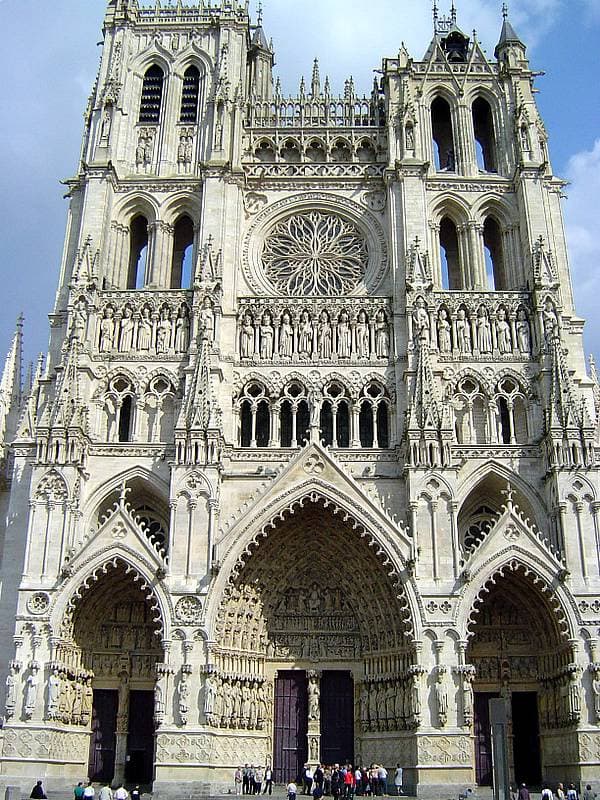
Amiens Cathedral
Amiens Cathedral, officially the Cathedral of Our Lady of Amiens, is a preeminent example of Gothic architecture and a significant religious site in France. It is renowned for its immense scale, being the largest cathedral by volume in France, and for its remarkably unified High Gothic and Rayonnant style, achieved through a swift construction period. The cathedral is also celebrated for its extensive collection of early Gothic sculpture, particularly on its west facade, and holds a UNESCO World Heritage designation.