
Cathedral-Basilica of St. Mary Help of Christians
The Cathedral-Basilica of St. Mary Help of Christians is a significant Catholic religious site located within Belmont Abbey in Belmont, North Carolina. Originally established as a Benedictine monastery, it has grown to encompass an educational institution and a shrine elevated to the status of a minor basilica. The basilica is notable for its Gothic Revival architecture and its historical connection to the American-Cassinese Benedictine Congregation.
Key Facts
- ›Construction of the Abbey Church of Mary Help of Christians began in 1892 and was completed in 1894.
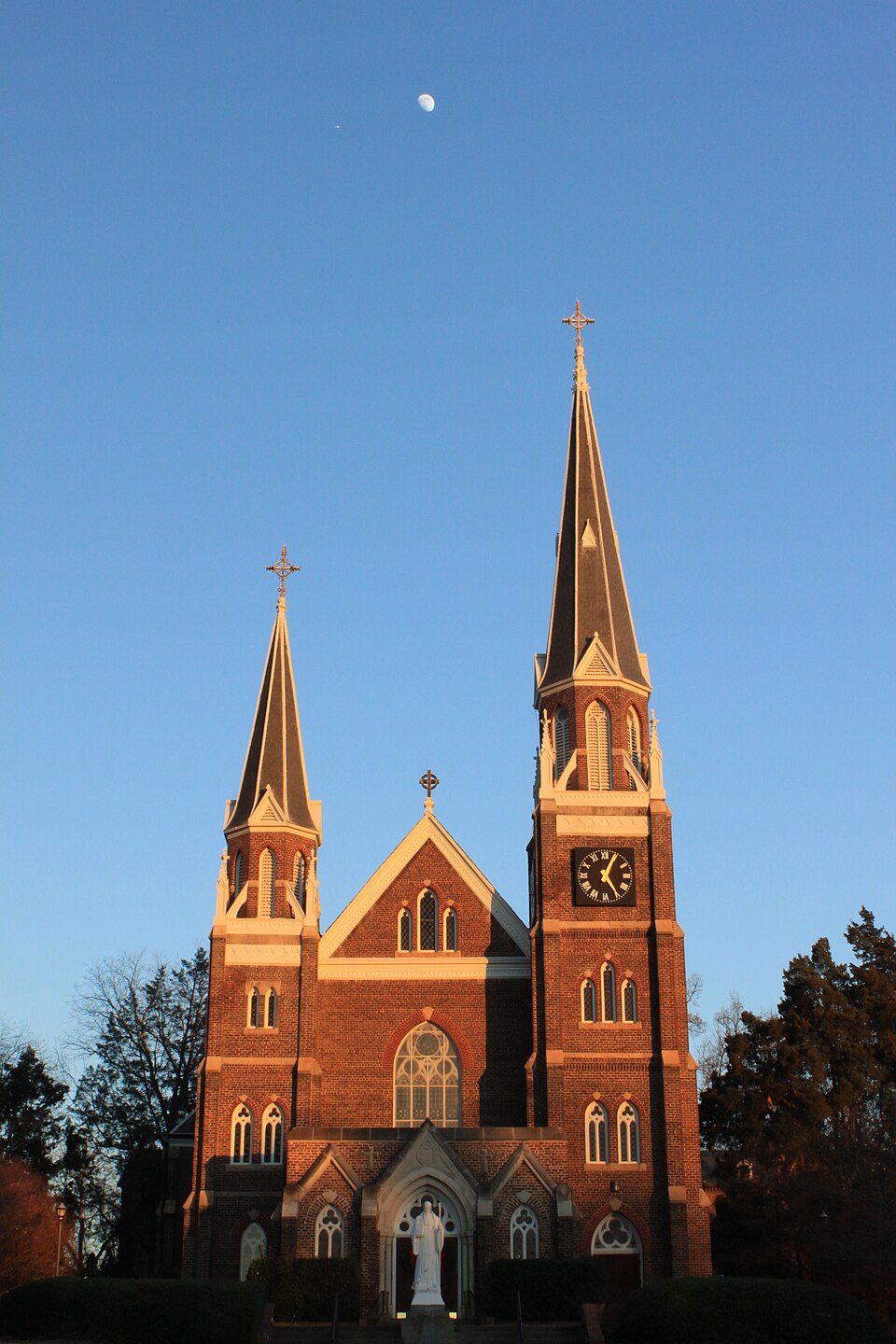
- ›The church is built in a Gothic Revival style with a cruciform plan and features two towers of unequal size.
- ›Pope John Paul II elevated the shrine to the status of minor basilica in 1998.
- ›The baptismal font is carved from a stone historically used for selling enslaved African Americans in North Carolina.
- ›Belmont Abbey served as a territorial abbey with quasi-diocesan responsibilities for several North Carolina counties from 1910 to 1977.
- ›The entire central campus of Belmont Abbey was listed on the National Register of Historic Places in 1993 as the 'Belmont Abbey National Historic District'.
- Baptismal Font Carved From A Slave Market Stone
- Two Towers of Unequal Size On the Facade
- Cruciform Plan
About Cathedral-Basilica of St. Mary Help of Christians
Belmont Abbey Basilica
The Cathedral-Basilica of St. Mary Help of Christians, located within Belmont Abbey in Belmont, North Carolina, is a prominent Catholic religious and historical site. Founded as a Benedictine monastery, it has evolved to include an educational institution and a church that has been recognized as a minor basilica.
History and Establishment
The origins of Belmont Abbey trace back to Father Jeremiah O'Connell, who, after the destruction of his college during the American Civil War, purchased land in 1876 and donated it to the Benedictines. His aim was to establish an educational institution in North Carolina. Under the guidance of Abbot Boniface Wimmer, the Benedictine monks began constructing the monastery and college buildings, utilizing local red clay.
Pope Leo XIII officially elevated the priory monastery to an abbey on December 19, 1884, placing it under the patronage of Mary Help of Christians. Leo Haid was elected as the first abbot, serving until his death in 1924. He also established a seminary at Belmont and was appointed Vicar Apostolic of North Carolina, becoming the first American abbot-bishop. In May 1891, Abbot Haid dedicated the Grotto of Our Lady of Lourdes as a pilgrimage shrine.
Territorial Abbey and Diocesan Role
From 1910 to 1977, Belmont Abbey held the status of a territorial abbey, which meant it exercised certain administrative functions akin to a diocese. It was responsible for parishes in several North Carolina counties, including Gaston, Catawba, and Cleveland. In 1944, most of this territory was transferred to the Diocese of Raleigh, and by 1977, Gaston County was also placed under the Diocese of Charlotte, marking the suppression of its territorial abbey status.
Abbey Basilica of Mary Help of Christians
The construction of the Abbey Church, later designated the Abbey Basilica of Mary Help of Christians, commenced in 1892 and was completed in 1894, with its dedication occurring on April 11, 1894. The church is a notable example of Gothic Revival architecture, characterized by its cruciform layout, steep gable roof, and a facade with two towers of unequal height. A particularly significant feature is the baptismal font, which is carved from a stone that was historically used for selling enslaved African Americans in North Carolina, linking the sacred space to the region's complex past. Pope John Paul II bestowed the honorific title of minor basilica upon the shrine on July 27, 1998.
Educational Mission and Present Day
Belmont Abbey College, initially known as Saint Mary's College, has been an integral part of the abbey's mission since its inception. The college received its charter to grant degrees in 1886. Despite experiencing a fire that destroyed a portion of its building in 1900, it was rebuilt and adopted the Belmont Abbey name in 1913. The college continues to operate, offering liberal arts programs and addressing community needs, such as healthcare through its nursing program. As of 2020, Belmont Abbey remains the motherhouse for other Benedictine abbeys and is home to approximately twenty monks. The central campus was recognized for its historical significance and listed on the National Register of Historic Places as the "Belmont Abbey National Historic District" on July 14, 1993.
Source: Wikipedia ↗
Frequently Asked Questions
When was the Abbey Church of Mary Help of Christians constructed?
Construction for the Abbey Church of Mary Help of Christians began in 1892 and was finished in 1894. The church was dedicated on April 11, 1894.
What architectural style is the Cathedral-Basilica of St. Mary Help of Christians?
The church is designed in the Gothic Revival architectural style. It features a cruciform plan, a steep gable roof, and two towers of differing heights on its facade.
What is the significance of the baptismal font?
The baptismal font within the basilica is unique as it is carved from a stone that was historically used for the sale of African American slaves in North Carolina. This feature connects the sacred space to a poignant aspect of regional history.
Has the church been recognized with any special status?
Yes, Pope John Paul II bestowed upon the shrine the honor of being a minor basilica through a pontifical decree in 1998. This designation acknowledges its importance and historical significance.
What was Belmont Abbey's historical role beyond a monastery?
From 1910 to 1977, Belmont Abbey functioned as a territorial abbey, meaning it held responsibilities similar to a diocese. It oversaw parishes in several counties across North Carolina before its territory was reorganized under diocesan structures.
Related Cathedrals

Cathedral of Saint Patrick
The Cathedral of Saint Patrick in Charlotte, North Carolina, serves as the mother church and seat of the Roman Catholic Diocese of Charlotte. Originally established as Saint Patrick's Church in 1938, it was elevated to cathedral status in 1972. The cathedral is known for its Gothic Revival architectural elements and its stained glass windows depicting biblical scenes and saints.
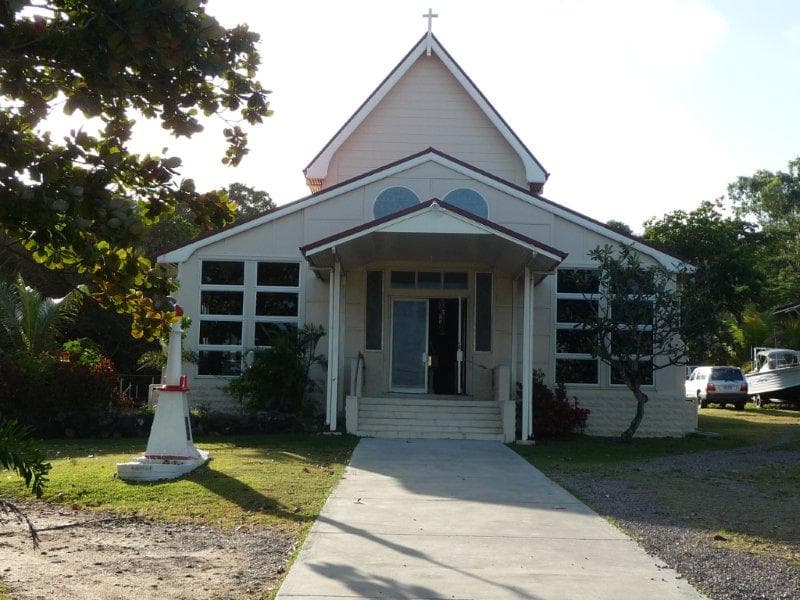
All Souls and St Bartholomew's Cathedral Church
All Souls and St Bartholomew's Cathedral Church on Thursday Island, Queensland, Australia, is a significant heritage-listed Anglican church. It was established as a memorial to the lives lost in the 1890 shipwreck of the RMS Quetta, with construction beginning in 1893. The cathedral serves as a spiritual center for the diverse community of Thursday Island and commemorates maritime tragedies.

Cathedral of Saint Paul, National Shrine of the Apostle Paul
The Cathedral of Saint Paul, National Shrine of the Apostle Paul, is a Catholic cathedral in Saint Paul, Minnesota, serving as a co-cathedral for the Archdiocese of Saint Paul and Minneapolis. Notable for its distinctive copper-clad dome, it is dedicated to Paul the Apostle and holds the distinction of being the National Shrine of the Apostle Paul. It is recognized as one of the largest churches in the United States.