
All Souls and St Bartholomew's Cathedral Church
All Souls and St Bartholomew's Cathedral Church on Thursday Island, Queensland, Australia, is a significant heritage-listed Anglican church. It was established as a memorial to the lives lost in the 1890 shipwreck of the RMS Quetta, with construction beginning in 1893. The cathedral serves as a spiritual center for the diverse community of Thursday Island and commemorates maritime tragedies.
Key Facts
- ›Constructed as a memorial to the RMS Quetta shipwreck of 1890.
- ›Designed by architect John H. Buckeridge in the Gothic Revival style.
- ›Became the cathedral church of the Diocese of Carpentaria in 1900.
- ›The precinct includes the Bishop's House and a Church Hall.
- ›Incorporates relics and memorials related to maritime disasters.
- ›Added to the Queensland Heritage Register in 2001.
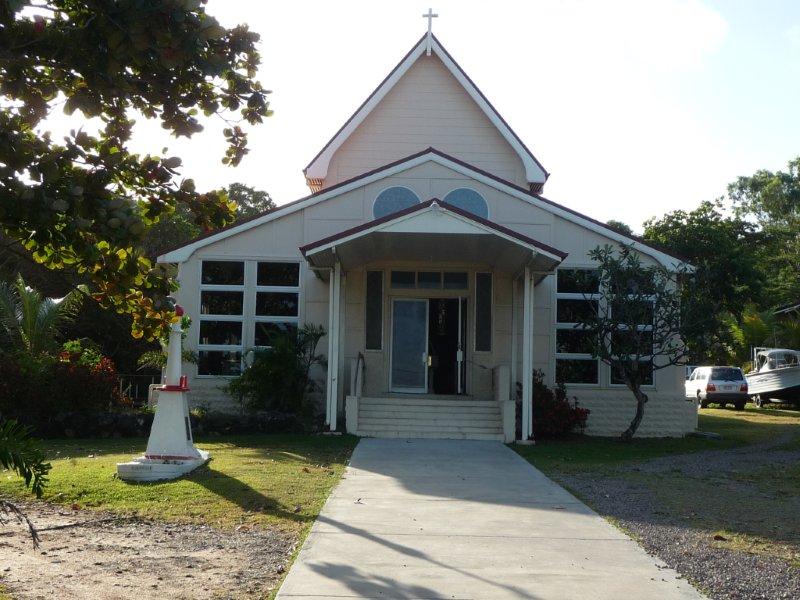
Quetta Shipwreck Memorials, Relics From the Rms Quetta, Douglas Memorial Chapel, Stained Glass Window Depicting St John
John H. Buckeridge, John Hamilton Park
About All Souls and St Bartholomew's Cathedral Church
All Souls and St Bartholomew's Cathedral Church, located on Thursday Island in Queensland, Australia, stands as a significant heritage-listed Anglican place of worship. Its establishment and construction were deeply rooted in commemoration, serving as a memorial to the tragic loss of life in the 1890 shipwreck of the RMS Quetta. The church precinct also includes the Bishop's House and a Church Hall, forming a cohesive historical and spiritual center for the community.
History and Construction
The impetus for the church's construction arose from the devastating shipwreck of the RMS Quetta on February 28, 1890, which claimed 133 lives. A proposal to erect a church as a memorial gained traction, with the foundation stone laid on May 24, 1893. The sanctuary, or chancel, was consecrated on November 12, 1893, as the All Souls Quetta Memorial Church. The design for this Gothic Revival structure was provided by John H. Buckeridge.
The church was built in stages as funds became available, and it was never fully completed according to Buckeridge's original extensive design. By mid-1895, the chancel and a significant portion of the nave were complete. The church seated approximately 250 people and was already functioning as a place of pilgrimage and a tourist attraction, housing relics from the Quetta wreck and other maritime disasters.
Becoming a Cathedral
In 1900, the Anglican Diocese of Carpentaria was established, with Thursday Island designated as its seat due to its central location on a major shipping route. The All Souls' Quetta Memorial Church was subsequently elevated to cathedral status, becoming the All Souls' Cathedral Church and Quetta Memorial. The Bishop of Carpentaria was to serve as the dean, with a sub-dean managing parochial affairs.
Features and Significance
The cathedral precinct reflects the multicultural nature of Thursday Island, with its congregation historically comprising soldiers, pearl-shellers, South Sea Islanders, Japanese communicants, and indigenous Christians. Special prayers were offered for those engaged in maritime activities, underscoring the strong connection between the community, the sea, and the church. The cathedral continues to be an active place of worship and a poignant reminder of historical maritime events and the enduring faith of its community.
Source: Wikipedia ↗
Frequently Asked Questions
Why was All Souls and St Bartholomew's Cathedral Church built?
The cathedral was built as a memorial to the 134 lives lost in the shipwreck of the RMS Quetta on February 28, 1890. It was intended to be a fitting tribute to those who perished in this significant maritime disaster.
Who designed All Souls and St Bartholomew's Cathedral Church?
The church was designed by John H. Buckeridge, the Anglican diocesan architect in Brisbane, between 1892 and 1893. While the original design was for a Gothic Revival building, it was constructed in stages due to funding.
When did this church become a cathedral?
The church became a cathedral in 1900 when the Anglican Diocese of Carpentaria was created, with Thursday Island as its seat. The All Souls' Quetta Memorial Church was then known as the All Souls' Cathedral Church and Quetta Memorial.
What is the significance of the Quetta Memorial Precinct?
The precinct, including the cathedral, Bishop's House, and Church Hall, commemorates the lives lost in the RMS Quetta shipwreck. It stands as a significant heritage site reflecting the history of maritime activity and Christian missionary work in the Torres Strait.
What are some notable features of the cathedral?
The cathedral features relics from the wreck of the Quetta and various memorials to those lost or saved. It also has stained glass windows, including one depicting an elderly St John donated by Torres Strait Islanders.
Related Cathedrals

Cabramatta
Cabramatta is a vibrant suburb in South Western Sydney, Australia, known for its significant post-World War II immigration and its transformation into a thriving Asian community. It holds historical importance as the country of the Cabrogal people and later developed as an agricultural township before becoming a multicultural hub.

Portsmouth Cathedral
Portsmouth Cathedral, officially the Cathedral Church of St Thomas of Canterbury, is the Anglican cathedral for the Diocese of Portsmouth, England. Originally a medieval chapel founded in the late 12th century, it evolved into a parish church before becoming a pro-cathedral in 1927 and a full cathedral in 1935. It is notable for its blend of architectural styles, reflecting centuries of rebuilding and expansion.

Guildford Cathedral
Guildford Cathedral, officially the Cathedral Church of the Holy Spirit, is the Anglican cathedral in Guildford, Surrey, England. Designed by Edward Maufe and constructed between 1936 and 1961, it is notable as the last Church of England cathedral consecrated on a new site and one of only three built in the 20th century. The cathedral stands on Stag Hill and is a significant landmark visible from miles around.