
Cabramatta
Various Christian denominations and Buddhism are practiced, with a significant Buddhist community.·Australia
Cabramatta is a vibrant suburb in South Western Sydney, Australia, known for its significant post-World War II immigration and its transformation into a thriving Asian community. It holds historical importance as the country of the Cabrogal people and later developed as an agricultural township before becoming a multicultural hub.
Key Facts
- ›Cabramatta was originally the country of the Cabrogal people of the Dharug nation, with the name meaning 'place of cabro' (edible insect larvae).
- ›The area was first settled by British colonists in the late 18th century, with the name Cabramatta appearing in the early 19th century on a property named 'Cabramatta Park'.
- ›A railway was built through Cabramatta in the 1850s, and the suburb developed as a predominantly agricultural township until the MID-20th century.
- ›Post-World War II immigration, particularly from Europe and later Southeast Asia, significantly shaped Cabramatta into a multicultural melting pot.
- ›The suburb is home to numerous Vietnamese Buddhist temples and features public parks like Cabravale Park, which includes a heritage-listed bandstand and a Vietnam War memorial.
- ›Cabramatta is a significant center for Vietnamese culture in Sydney, reflected in its demographics and community facilities.

Freedom Plaza With the Pai Lau Gateway, Dutton Plaza, Cabravale Park, Heritage-Listed Bandstand, Vietnam War Comradeship Memorial, Numerous Vietnamese Buddhist Temples
About Cabramatta
Cabramatta: A Multicultural Hub in South Western Sydney
Cabramatta, often abbreviated as Cabra, is a significant suburb located in South Western Sydney, New South Wales, Australia. Situated 30 kilometers south-west of Sydney's central business district, it falls under the local government area of the City of Fairfield. Historically, Cabramatta was the traditional land of the Cabrogal people of the Dharug nation, with its name derived from 'cabro,' referring to edible insect larvae found in the region, thus meaning 'place of cabro'.
Colonial History and Development
Before British colonization, the area was heavily timbered and marshy. In 1795, an early settler named Hatfield referred to it as 'Moonshine Run' due to its dense woods. The name Cabramatta began to be used in the early 19th century when the Bull family named their property 'Cabramatta Park.' A village that formed nearby in 1814 adopted this name, eventually growing into a township. The arrival of a railway in the 1850s, initially for freight and livestock, marked a period of development, with the station opening for public transport in 1856. The township remained predominantly agricultural, with a school established in 1882 and a post office in 1886. Cabramatta shared a close municipal relationship with neighbouring Canley Vale until 1899.
Post-War Immigration and Transformation
In the mid-20th century, Cabramatta evolved into a Sydney suburb, significantly influenced by a major state housing project in Liverpool during the 1960s. The presence of a migrant hostel near Cabramatta High School was pivotal in shaping the post-war community. Initially, large numbers of European immigrants passed through the hostel in the 1950s and 1960s, contributing to the local workforce and population growth. By the 1980s, the suburb was characterized by a diverse population with migrant parents, and Cabramatta High School was noted for its multicultural student body. In the 1960s and 1970s, a second wave of migration from Southeast Asia, particularly Vietnam, transformed Cabramatta into a thriving Asian community by the 1980s. While migration to Cabramatta declined by the early 1980s, leading to the closure and redevelopment of the migrant hostel, its legacy as a multicultural hub endured.
Modern Cabramatta
The Cabramatta CBD features Freedom Plaza, a pedestrian mall housing the ornamental Pai Lau gateway, symbolizing harmony and multiculturalism, which was opened in 1991. Dutton Plaza, a retail and car park development, was opened in 2016 and funded by Fairfield City Council. The suburb also contains various arcades and lanes with numerous retail stores, eateries, and cafes, such as Belvedere Arcade and Dutton Lane. Community facilities include five Vietnamese Buddhist temples. Cabravale Park, the main public park, serves as a war memorial and features a heritage-listed bandstand and the Vietnam War Comradeship Memorial.
Demographics and Cultural Significance
As of the 2021 census, Cabramatta's population reflects its diverse heritage, with a substantial percentage of residents born in Vietnam, Cambodia, China, Thailand, and Laos. Vietnamese and Chinese ancestries are prominent, and Buddhism is the most common religion. The suburb has been the setting for numerous films and literature, including documentaries and novels that explore the experiences of its residents and the community's unique character.
Source: Wikipedia ↗
Frequently Asked Questions
What is the origin of the name Cabramatta?
The name Cabramatta originates from the Indigenous Cabrogal people of the Dharug nation. The term 'cabro' refers to edible insect larvae found in local timber, and 'Cabramatta' means 'place of cabro'.
How did Cabramatta become a multicultural suburb?
Following World War II, Cabramatta became a significant destination for post-war immigrants, initially from Europe and later from Southeast Asia due to the Vietnam War. This influx transformed the suburb into a diverse and multicultural community.
What are some notable features of Cabramatta?
Cabramatta features Freedom Plaza with its ornamental Pai Lau gateway symbolizing multiculturalism, and Dutton Plaza, a modern retail and car park development. The suburb also has several arcades and lanes with various retail and dining establishments.
What is the demographic makeup of Cabramatta?
According to the 2021 census, a significant portion of Cabramatta's residents were born in Vietnam, Cambodia, China, Thailand, and Laos. Vietnamese and Chinese ancestries are the most common, with Buddhism being the predominant religion.
Are there any significant parks or memorials in Cabramatta?
Yes, Cabravale Park is the main public park and serves as a war memorial. It features a heritage-listed bandstand from 1922 and the Vietnam War Comradeship Memorial, commemorating Australian and Vietnamese soldiers.
Related Cathedrals
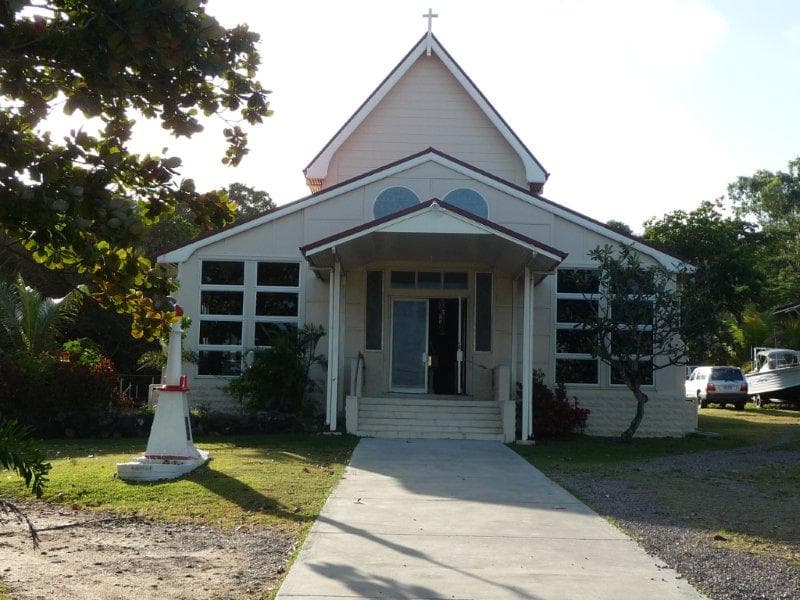
All Souls and St Bartholomew's Cathedral Church
All Souls and St Bartholomew's Cathedral Church on Thursday Island, Queensland, Australia, is a significant heritage-listed Anglican church. It was established as a memorial to the lives lost in the 1890 shipwreck of the RMS Quetta, with construction beginning in 1893. The cathedral serves as a spiritual center for the diverse community of Thursday Island and commemorates maritime tragedies.
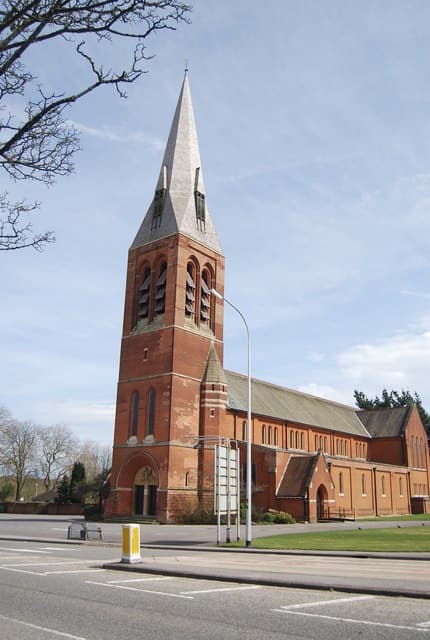
Aldershot Cathedral
The Cathedral Church of St Michael and St George is the Roman Catholic cathedral for the Bishopric of the Forces, located in Aldershot, England. Originally built as an Anglican church for the British Army, it was consecrated in 1893 and later repurposed in 1973 to become the seat of the Roman Catholic Bishop of the Forces. It is a significant landmark due to its Gothic Revival architecture and its close association with military history.

Angers Cathedral
Angers Cathedral, officially Cathédrale Saint-Maurice d'Angers, is a Catholic cathedral in Angers, France, serving as the seat of the Bishops of Angers. Renowned for its blend of Romanesque and Gothic architectural styles, it also features significant Baroque elements and an exceptional collection of stained-glass windows, some dating back to the late 12th century.