
Canosa Cathedral
Canosa Cathedral, officially the Cathedral of San Sabino, is a Romanesque-Byzantine architectural masterpiece located in Canosa di Puglia, Italy. Originally founded in the 8th century and consecrated in 1101, it stands as a significant religious and historical site, showcasing a rich blend of architectural styles and ancient influences. The cathedral holds the relics of Saint Sabinus, the town's patron saint, and is a testament to the enduring history of this ancient Apulian city.
Key Facts
- ›The Cathedral of San Sabino was founded in the 8th century by Lombard Duke Arechis II of Benevento.
- ›It was originally dedicated to Saints John and Paul before being renamed after Saint Sabinus on September 7, 1101.
- ›The cathedral features a Latin cross plan with five domes and an apse, characteristic of Romanesque/Byzantine architecture.
- ›It houses the crypt and shrine of Saint Sabinus of Canosa, the town's patron saint.
- ›The structure incorporates marble columns with Corinthian capitals salvaged from ancient monuments.
- ›Significant restoration and expansion occurred after the earthquake of 1851, including the reconstruction of the facade.
Crypt of Saint Sabinus, Five Domes, Marble Columns With Corinthian Capitals, Mausoleum of Bohemond I of Antioch, Reused Ancient Architectural Elements
About Canosa Cathedral
Canosa Cathedral (Cathedral of San Sabino)
Canosa Cathedral, officially known as the Cathedral of San Sabino, is a significant religious edifice located in Canosa di Puglia, a town with deep historical roots in the Apulia region of southern Italy. The cathedral stands as a prime example of Romanesque and Byzantine architectural influences, reflecting the various cultures and historical periods that have shaped this ancient city.
History and Foundation
The origins of Canosa Cathedral trace back to the 8th century when Lombard Duke Arechis II of Benevento is credited with its foundation. Initially dedicated to Saints John and Paul, the cathedral was later renamed in honor of Saint Sabinus of Canosa, the town's patron saint, on September 7, 1101. This renaming occurred centuries after the transfer of the saint's relics to the cathedral's crypt, solidifying its importance as a pilgrimage and devotional site.
Architectural Significance
The cathedral's design is a testament to its era, featuring a Latin cross plan covered by five domes and an apse. This architectural layout, combined with the use of marble columns adorned with Corinthian capitals salvaged from older, devastated monuments, highlights a blend of original construction and the reuse of classical elements. The structure's Romanesque and Byzantine characteristics are evident in its overall form and decorative details. Following damage from the 1851 earthquake, extensive restoration and expansion were undertaken, which included the reconstruction of the facade in local tuff and the enlargement of the Latin cross plan.
Key Features and Contents
Within the cathedral, visitors can find the crypt, which serves as the shrine for Saint Sabinus. The presbytery is crowned by a high altar with a ciborium, supported by four red marble columns. The chapels house various devotional items, including a baptismal font, frescoes, and altars dedicated to figures like Our Lady of the Fountain and Saint Anthony. Adjacent to the cathedral is the Mausoleum of Bohemond I of Antioch, a significant historical figure and son of Robert Guiscard, adding another layer of historical importance to the site. The cathedral was formally recognized as a cathedral in 1916 by Pope Benedict XV.
Source: Wikipedia ↗
Frequently Asked Questions
When was Canosa Cathedral founded?
The Cathedral of San Sabino was founded in the 8th century by the Lombard Duke Arechis II of Benevento. It was consecrated on September 7, 1101.
Who is the patron saint of Canosa Cathedral?
The cathedral is named after Saint Sabinus of Canosa, who is the town's patron saint. His relics are housed in the crypt beneath the chancel.
What architectural style is Canosa Cathedral?
The cathedral is primarily an example of Romanesque/Byzantine architecture. It features a Latin cross plan, five domes, and an apse.
What notable features are found inside Canosa Cathedral?
Inside, visitors can find the crypt of Saint Sabinus, marble columns with Corinthian capitals, a baptismal font, and various chapels. The presbytery has a high altar with a ciborium supported by red marble columns.
Has Canosa Cathedral undergone significant restoration?
Yes, the cathedral was damaged by the earthquake of 1851. Restoration work led to an expansion of its Latin cross plan and the reconstruction of its facade.
Related Cathedrals
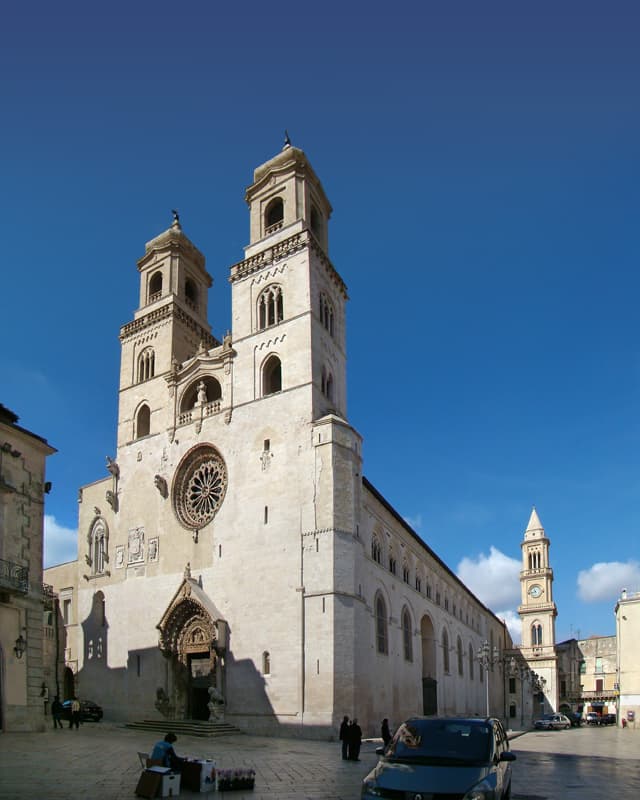
Altamura Cathedral
Altamura Cathedral, officially dedicated to the Assumption of the Blessed Virgin Mary, is a significant Roman Catholic cathedral located in Altamura, Apulia, southern Italy. Originally commissioned by Emperor Frederick II, it has undergone numerous expansions and alterations throughout its history, reflecting various architectural styles and historical periods. It currently serves as the seat of the Bishop of Altamura-Gravina-Acquaviva delle Fonti.
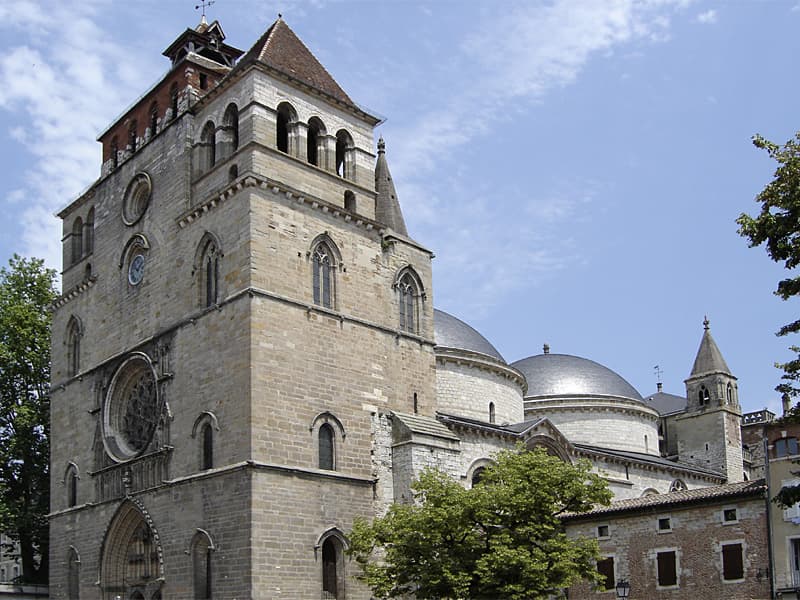
Cahors Cathedral
Cahors Cathedral, officially known as the Cathedral of Saint-Étienne de Cahors, is a significant Roman Catholic church in Occitanie, France. It is recognized as a national monument and stands as an important example of the architectural transition from late Romanesque to Gothic styles. The cathedral holds a precious relic, the Holy Cap, believed to have been worn by Christ.

Annunciation Melkite Catholic Cathedral
The Annunciation Melkite Catholic Cathedral, located in the West Roxbury neighborhood of Boston, Massachusetts, serves as the principal church for the Melkite Greek Catholic Eparchy of Newton, which covers the entire United States. Its current structure and status as a cathedral were established in 1966, replacing a previous parish church that served the growing Melkite community in Boston.