
Bosa Cathedral
Bosa Cathedral, officially the Concattedrale dell'Immacolata Concezione, is a Roman Catholic cathedral located in the historic center of Bosa, Sardinia, Italy. It currently serves as a co-cathedral for the Diocese of Alghero-Bosa and was formerly the seat of the Bishop of Bosa. The building showcases significant alterations from its 12th-century origins, with major renovations occurring in the 15th and early 19th centuries.
Key Facts
- ›The cathedral's origins trace back to the 12th century, with substantial modifications made in the 15th century.
- ›The present structure is largely the result of restorations initiated in 1803 by local architect Salvatore are.
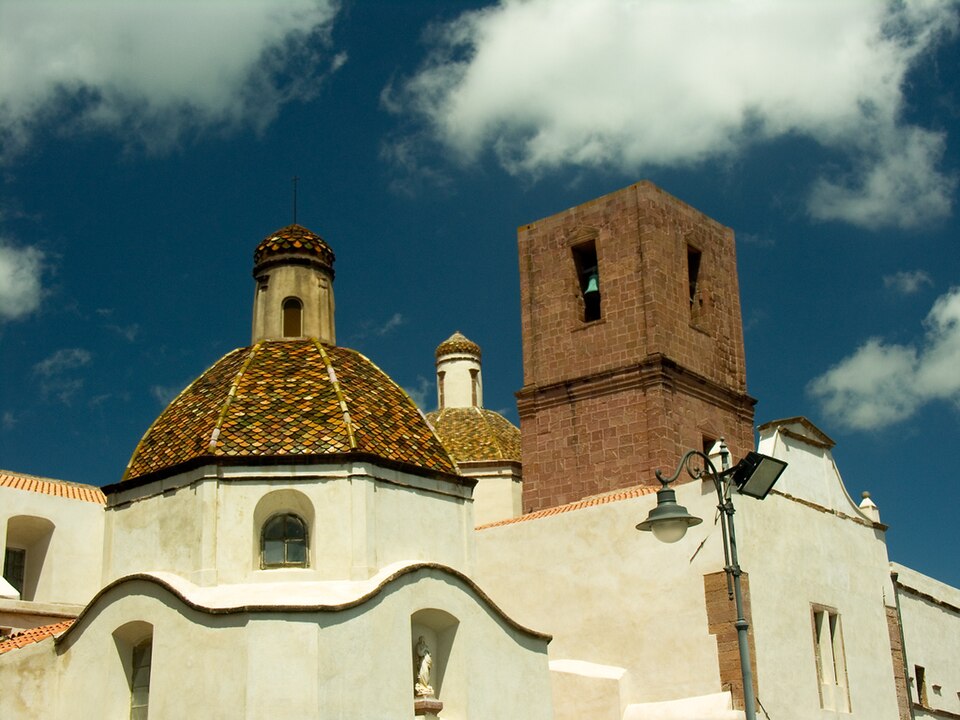
- ›It features two cupolas covered in colored majolica tiles and a squat, uncompleted bell tower dating to 1683.
- ›The interior consists of a single nave with a barrel-vaulted roof, pilasters, arches, and four side chapels.
- ›The presbytery is covered by an octagonal cupola and ends in a semi-circular apse, with marble lions at the foot of the stairs.
- ›The high altar is 17th-century marble, topped with statues of our Lady of the Immaculate Conception and Saints Emilius and Priamus.
- Majolica-Tiled Cupolas
- Red Sandstone Bell Tower
- Rococo FaçAde Decorations
- Single Nave With Barrel Vault
- Octagonal Presbytery Cupola
- Marble Lions At Presbytery Stairs
- 17th-Century Marble High Altar
- Statues of Our Lady of the Immaculate Conception and Saints Emilius and Priamus
- Inlaid Wooden Choir Stalls
- Frescos By Emilio Scherer
Salvatore Are, Domenico Franco
About Bosa Cathedral
Bosa Cathedral, officially the Concattedrale dell'Immacolata Concezione, is a significant Roman Catholic religious edifice situated in the historic heart of Bosa, a town on the island of Sardinia, Italy. It functions today as a co-cathedral within the merged Diocese of Alghero-Bosa, having previously served as the episcopal seat for the Bishop of Bosa. The cathedral's prominent location places it between Corso Vittorio Emanuele II and the River Temo, adjacent to a 19th-century bridge, anchoring it within the town's historical and geographical context.
History and Construction
The foundations of Bosa Cathedral are rooted in the 12th century, though the structure has undergone extensive transformations throughout its history. The 15th century marked a period of considerable alteration, but the most substantial remodeling occurred from 1803 onwards. These extensive restorations were overseen by the local architect Salvatore Are, leading to the re-consecration of the cathedral in 1809. The subsequent decades of the 19th century saw the completion of its decorative elements and furnishings.
Architectural Features
The exterior of Bosa Cathedral is distinguished by two prominent cupolas, both covered in vibrantly colored majolica tiles. A squat bell tower, constructed from red sandstone and bearing the date 1683, also characterizes the outer appearance, though it remains uncompleted. The same sandstone is utilized in other parts of the building, notably in the Rococo-style decorations of the façade, which feature distinctive lesene (applied stone strips or false pilasters) and cornices.
Internally, the cathedral presents a single nave covered by a barrel-vaulted roof. This space is segmented into five sections by pilasters and arches, with four side chapels adorning the flanks. The first chapel on the right, known as the "cappellone" of the Sacred Heart, is particularly noteworthy for its elongated design, mirroring the cathedral's form with its own smaller chapels and octagonal cupola.
The transition to the presbytery is marked by an archway narrower than the nave, flanked by two pilasters. The presbytery itself is quite deep, capped by an octagonal cupola designed in the early 19th century by architect Domenico Franco. It culminates in a semi-circular apse, separated from the nave by a marble balustrade. A set of three steps ascends to the presbytery, with two marble lions positioned at the foot of the central stair. The high altar, crafted from 17th-century marble, is surmounted by statues depicting Our Lady of the Immaculate Conception and Saints Emilius and Priamus, the town's patron saints. The space is further enhanced by inlaid wooden choir stalls and frescos executed by the artist Emilio Scherer between 1877 and 1878.
Source: Wikipedia ↗
Frequently Asked Questions
What is the history of Bosa Cathedral?
Bosa Cathedral's origins date to the 12th century, but it has undergone numerous alterations, notably in the 15th century. The current building is primarily a product of restorations that began in 1803, with its re-consecration in 1809 and subsequent completion of decorations throughout the 19th century.
What are the notable architectural features of Bosa Cathedral?
Externally, the cathedral is recognized for its two cupolas adorned with colored majolica tiles and a distinctive squat bell tower made of red sandstone. Internally, it features a single nave with a barrel-vaulted roof, pilasters, arches, and four side chapels, leading to a presbytery crowned by an octagonal cupola.
Where is Bosa Cathedral located?
Bosa Cathedral is situated in the historical town center of Bosa, Sardinia, Italy. It is located between Corso Vittorio Emanuele II and the River Temo, near the 19th-century bridge.
When was Bosa Cathedral re-consecrated?
Bosa Cathedral was re-consecrated in 1809, following extensive restoration work that began in 1803.
Who are the patron saints of Bosa?
The patron saints of Bosa, whose statues are found at the high altar of the cathedral, are Saints Emilius and Priamus.
Related Cathedrals

Caltanissetta Cathedral
Caltanissetta Cathedral, also known as the Church of Santa Maria la Nova, serves as the principal church of the Diocese of Caltanissetta. Its construction began in 1570 and concluded in 1622, with significant expansions and decorations carried out in subsequent centuries. The cathedral is a significant religious and architectural landmark in the city, showcasing Baroque and Rococo influences.
Alghero Cathedral
Alghero Cathedral, officially the Cathedral of St. Mary the Immaculate, is a Roman Catholic cathedral located in the historic center of Alghero, Sardinia, Italy. It served as the seat of the Bishop of Alghero from 1503 to 1986 and has been the seat of the Bishop of Alghero-Bosa since then. The cathedral is notable for its blend of architectural styles, reflecting its long construction and restoration history.

Alatri Cathedral
Alatri Cathedral, officially the Basilica of Saint Paul, is a Roman Catholic cathedral in Alatri, Lazio, Italy. Originally the cathedral of the Diocese of Alatri, it is now a co-cathedral of the Diocese of Anagni-Alatri. It holds significant relics, including those of Saint Sixtus I and the Ostia incarnata from the Eucharistic miracle of Alatri, making it a site of considerable religious importance.