
Caltanissetta Cathedral
Caltanissetta·Roman Catholic·Italy
Caltanissetta Cathedral, also known as the Church of Santa Maria la Nova, serves as the principal church of the Diocese of Caltanissetta. Its construction began in 1570 and concluded in 1622, with significant expansions and decorations carried out in subsequent centuries. The cathedral is a significant religious and architectural landmark in the city, showcasing Baroque and Rococo influences.
Key Facts
- ›Construction of Caltanissetta Cathedral began in 1570 and was completed in 1622.
- ›The cathedral was consecrated on July 26, 1733, under the title of Santa Maria la Nova and Saint Michael the Archangel.
- ›Flemish painter Guglielmo Borremans and his son Luigi were commissioned to fresco the vault and central nave between 1718 and 1720.
- ›The facade and bell towers were constructed between 1782 and 1856.
- ›Caltanissetta Cathedral was elevated to cathedral status in 1844 with the establishment of the Diocese of Caltanissetta.
- ›Expansion work, including the construction of the transept and presbytery, took place in the 20th century, with repairs after World War II bombings.

- Frescoes By Guglielmo Borremans
- Stucco Work By Francesco Ferrigno
- Wooden Statue of the Immaculate Conception
- Marble Sculptures of Archangels Gabriel and Raphael
- Facade and Twin Bell Towers
- Interior In the Shape of A Latin Cross With Three Naves
Francesco Ferrigno, Guglielmo Borremans
About Caltanissetta Cathedral
Caltanissetta Cathedral, officially known as the Church of Santa Maria la Nova, stands as the principal church and seat of the Roman Catholic Diocese of Caltanissetta in Sicily, Italy. Its history is deeply intertwined with the urban development and religious life of the city, evolving from earlier ecclesiastical structures to its current monumental form.
History and Construction
The origins of the cathedral's site trace back to the 11th century, with a church dedicated to Santa Maria. However, the current structure's construction began in 1570, driven by the city's expansion north of the old castle and the need for a more centrally located mother church. The main edifice was completed in 1622, originally featuring three naves. Significant embellishments and expansions were undertaken in the following centuries. From 1718 to 1720, the Flemish artist Guglielmo Borremans and his son Luigi were commissioned to fresco the vault and central nave, adding considerable artistic value. The facade and the bell towers were constructed between 1782 and 1856, shaping the cathedral's present-day appearance. In 1844, the establishment of the Diocese of Caltanissetta led to the mother church's elevation to cathedral status. Further expansion work, including the construction of the transept and presbytery, occurred in the 20th century, with repairs necessary after damage sustained during World War II.
Architecture and Artistry
The cathedral's interior is laid out in the shape of a Latin cross and is divided into three naves supported by fourteen arches. The central nave is renowned for its extensive frescoes by Guglielmo Borremans, depicting key religious scenes and figures. The lavish stucco decorations, characterized by friezes, volutes, and other ornamental elements in the rocaille style, are attributed to Francesco Ferrigno. The cathedral houses numerous chapels, each containing significant artworks, including paintings by artists like Filippo Paladini and Vincenzo Roggeri, as well as sculptures by Stefano Li Volsi and Vincenzo Vitaliano. Notably, the statue of the Immaculate Conception in the second chapel on the right is a prominent feature, as are the marble sculptures of Saint Michael and the archangels Gabriel and Raphael in the adjacent chapel.
Significance
Caltanissetta Cathedral is not only a vital center for the local Catholic community but also a significant cultural and historical monument. Its artistic treasures, particularly the frescoes and stucco work, reflect the artistic trends of their respective periods. The cathedral's consecration on July 26, 1733, marked a key moment in its religious history, solidifying its role as a spiritual heart for the region. The presence of sepulchral monuments for bishops and prominent figures further underscores its historical importance. The cathedral's exterior, dominating Piazza Garibaldi, forms a central element of the city's urban landscape.
Source: Wikipedia ↗
Frequently Asked Questions
When was Caltanissetta Cathedral built?
The construction of Caltanissetta Cathedral began in 1570 and was completed in 1622. However, significant additions and renovations continued over the following centuries, including work on the facade and bell towers between 1782 and 1856.
Who painted the frescoes in the central nave?
The remarkable series of frescoes adorning the central nave and vault were created by the Flemish painter Guglielmo Borremans, who worked in Caltanissetta around 1720. His work includes depictions of the Immaculate Conception, the Coronation of the Virgin, and the triumph of Saint Michael.
What is the architectural style of Caltanissetta Cathedral?
While the cathedral's original construction dates to the late 16th and early 17th centuries, its interior decorations and later additions showcase Baroque and Rococo styles. The lavish stucco decorative scheme, for instance, is described as being in the rocaille style.
When was Caltanissetta Cathedral consecrated?
The mother church was consecrated on July 26, 1733, by the Bishop of Agrigento, Lorenzo Gioeni. It was consecrated under the titles of Santa Maria la Nova and Saint Michael the Archangel.
What notable artworks are found in the cathedral?
Notable artworks include frescoes by Guglielmo Borremans, stucco work by Francesco Ferrigno, a wooden statue of the Immaculate Conception, marble sculptures of archangels by Vincenzo Vitaliano, and a painting of Our Lady of Mount Carmel by Filippo Paladini. The cathedral also houses a preserved crucifix attributed to Friar Umile from Petralia.
Related Cathedrals
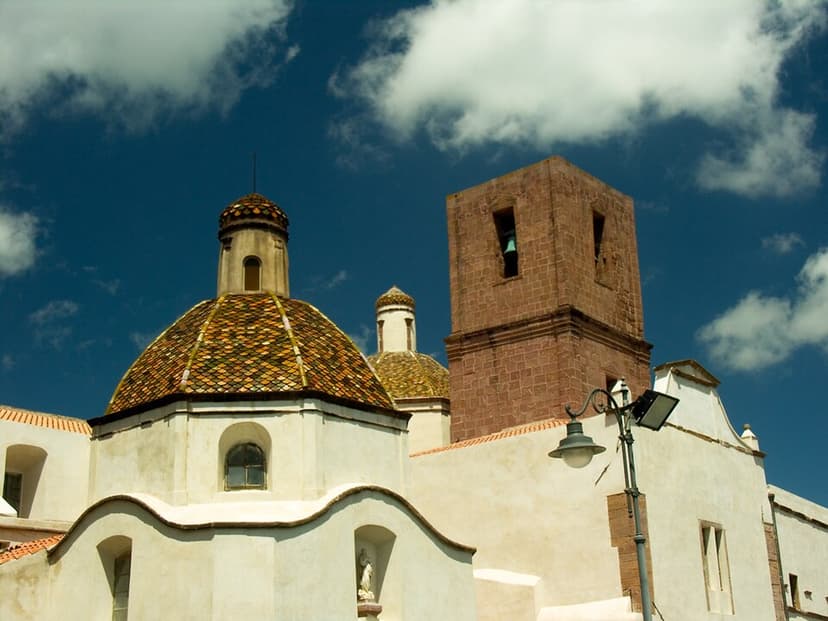
Bosa Cathedral
Bosa Cathedral, officially the Concattedrale dell'Immacolata Concezione, is a Roman Catholic cathedral located in the historic center of Bosa, Sardinia, Italy. It currently serves as a co-cathedral for the Diocese of Alghero-Bosa and was formerly the seat of the Bishop of Bosa. The building showcases significant alterations from its 12th-century origins, with major renovations occurring in the 15th and early 19th centuries.

Alatri Cathedral
Alatri Cathedral, officially the Basilica of Saint Paul, is a Roman Catholic cathedral in Alatri, Lazio, Italy. Originally the cathedral of the Diocese of Alatri, it is now a co-cathedral of the Diocese of Anagni-Alatri. It holds significant relics, including those of Saint Sixtus I and the Ostia incarnata from the Eucharistic miracle of Alatri, making it a site of considerable religious importance.

Belluno Cathedral
Belluno Cathedral, officially the Basilica Cathedral of Saint Martin, is the principal Roman Catholic church in Belluno, Veneto, Italy. It serves as the episcopal seat for the Diocese of Belluno-Feltre and was elevated to a minor basilica in 1980. The current Renaissance structure was built between 1517 and 1624, replacing an earlier church.