
Besançon Cathedral
Archdiocese of Besançon·Roman Catholic·France
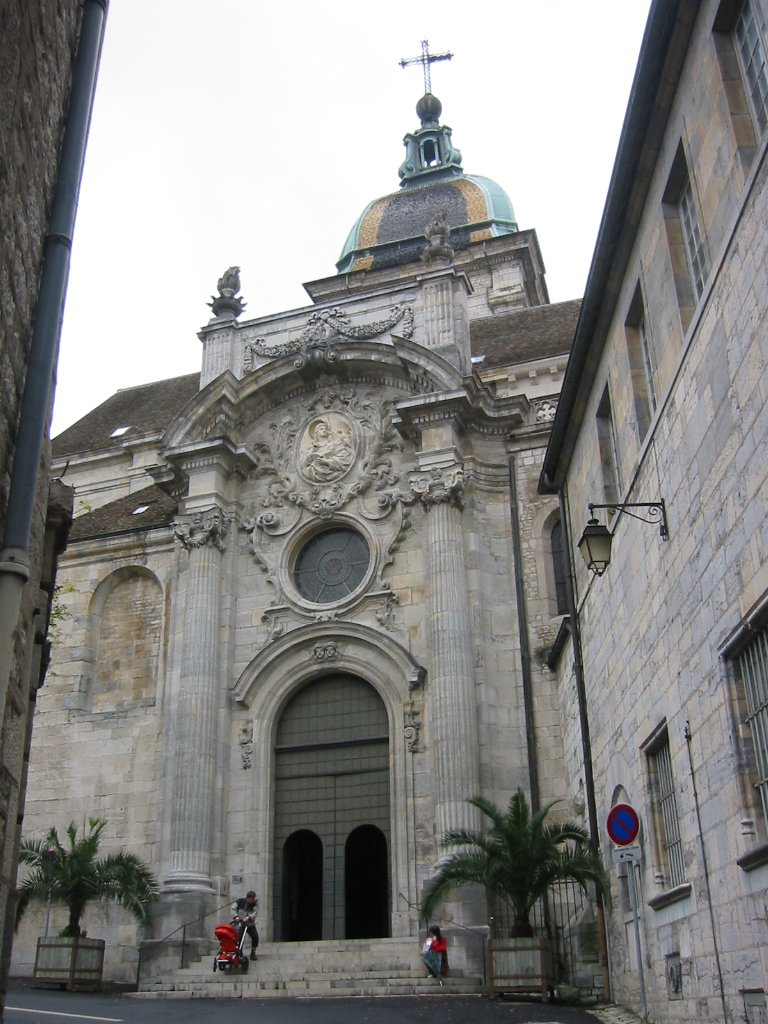
Besançon Cathedral, officially Cathédrale Saint-Jean de Besançon, is a Roman Catholic cathedral serving as the seat of the Archbishop of Besançon in France. Its construction spans from the 11th to the 13th century, featuring unique architectural elements like twin apses and Romanesque arches, with later additions and modifications throughout its history.
Key Facts
- ›The cathedral's main structure dates from the 11th to the 13th century, with a nave between two aisles.
- ›It features two facing apses, a design characteristic of contemporary German cathedrals, and Romanesque arches from the 13th century.
- ›A fire in 1212 destroyed its timber frame, necessitating rebuilding efforts.
- ›The eastern apse was reconstructed in 1730 after the bell tower collapsed, decorated in the Louis XV style.
- ›Notable artworks include paintings by Natoire, de Troy, and van Loo, as well as a Pietà by Conrad Meit and a Madonna in Glory with Saints by Fra Bartolomeo.
- ›Besançon Cathedral was declared a historic monument in 1875.
- Twin Facing Apses
- Astronomical Clock
- Tomb of Ferry Carondelet
- Paintings By Natoire, De Troy, and Van Loo
- Pietà By Conrad Meit
- Madonna In Glory With Saints By Fra Bartolomeo
- Rose of Saint John Altar Table
- Porte Noire
About Besançon Cathedral
Besançon Cathedral, officially known as Cathédrale Saint-Jean de Besançon, stands as the principal church and the seat of the Archbishop of Besançon in the city of Besançon, France. Its origins trace back to a basilica founded in the 9th century, with the current cathedral structure largely dating from the 11th to the 13th centuries. The building showcases a distinctive architectural layout, featuring a broad nave flanked by two aisles and notably, two facing apses, a design element that parallels contemporary German cathedral construction. The cathedral's Romanesque arches are from the 13th century, and it notably lacks a prominent main doorway.
Throughout its history, Besançon Cathedral has undergone significant transformations and faced considerable challenges. A devastating fire in 1212 destroyed its timber frame, prompting substantial rebuilding efforts. Later centuries saw further modifications, including the collapse of the bell tower in 1724, leading to the construction of the eastern apse of the Holy Shroud in 1730, which was adorned in the Louis XV style with stucco, marble, and gilded wood. The cathedral was declared a historic monument in 1875.
The interior of Besançon Cathedral is enriched with numerous artistic treasures. Among its notable features are the tomb of Ferry Carondelet, a canon and abbot, crafted in Flanders with Italian Renaissance influences. The eastern apse contains significant paintings depicting the Passion and Resurrection of Christ by renowned artists such as Charles-Joseph Natoire, Jean François de Troy, and Charles-André van Loo. The floor of this apse is a marble representation of Jerusalem. Other significant artworks include an unfinished alabaster Pietà by Conrad Meit, the 'Our Lady of the Jacobins' painting by Domenico Passignano, and 'Madonna in Glory with Saints' by Fra Bartolomeo. The cathedral also houses a complex astronomical clock with numerous moving parts and animated functions.
Surrounding the cathedral are historical elements that contribute to its setting. To the east lies the 16th-century Porte Rivotte, a fortified gateway with two round towers. To the west is the Porte Noire, a well-preserved Roman triumphal arch from the 2nd century, celebrated for its elaborate sculptural decoration. The cathedral's location is at the base of Mont Saint-Étienne, below the imposing citadel of Besançon.
Source: Wikipedia ↗
Frequently Asked Questions
What is Besançon Cathedral dedicated to?
Besançon Cathedral is dedicated to Saint John. It serves as the principal church and seat of the Archbishop of Besançon.
When was Besançon Cathedral built?
The primary construction of Besançon Cathedral took place between the 11th and 13th centuries. It was rebuilt on the foundation of a 9th-century basilica between 1127 and 1161.
What are the notable architectural features of Besançon Cathedral?
The cathedral is characterized by its large nave, two aisles, and two facing apses, a design similar to contemporary German cathedrals. It also features Romanesque arches dating from the 13th century and lacks a main doorway.
Are there any significant artworks within Besançon Cathedral?
Yes, the cathedral houses several important artworks. These include paintings by Charles-Joseph Natoire, Jean François de Troy, and Charles-André van Loo in the eastern apse, as well as an unfinished Pietà by Conrad Meit and 'Madonna in Glory with Saints' by Fra Bartolomeo.
What is the historical significance of the Porte Noire near the cathedral?
The Porte Noire, located to the west of the cathedral, is a Roman triumphal arch from the 2nd century. It is noted for its extensive sculptural decoration and represents an ancient Roman presence in the city.
Related Cathedrals

Bordeaux Cathedral
Bordeaux Cathedral, officially the Primatial Cathedral of St Andrew of Bordeaux, is a Roman Catholic cathedral in Bordeaux, France, serving as the seat of the Archbishop of Bordeaux. It is a significant landmark included in the UNESCO World Heritage Site of the Routes of Santiago de Compostela in France. The cathedral showcases a rich architectural history, evolving from Romanesque to Gothic styles and incorporating Renaissance elements, making it a vital historical and religious site.

Amalfi Cathedral
Amalfi Cathedral, officially the Cathedral of Saint Andrew, is a medieval Roman Catholic cathedral located in Amalfi, Italy. It is renowned for its elaborate architecture, a blend of various historical styles, and for housing the relics of the Apostle Saint Andrew. The cathedral has been an important religious center and a significant landmark of the Amalfi Coast for centuries.
Amelia Cathedral
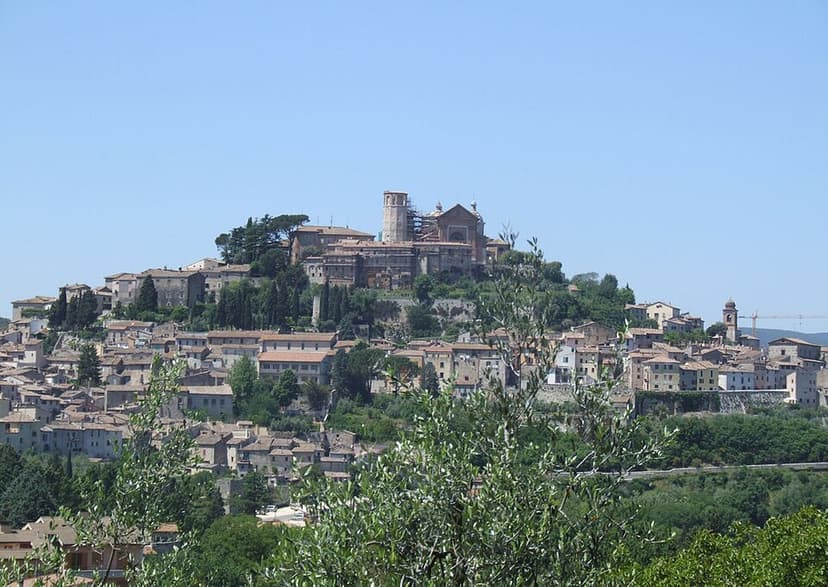
Amelia Cathedral, also known as Duomo di Amelia or Cattedrale di Santa Firmina, is a Roman Catholic cathedral located in Amelia, Italy. Originally the seat of the Bishop of Amelia since at least the 5th century, it has served as a co-cathedral in the Diocese of Terni-Narni-Amelia since 1983. The cathedral has undergone extensive rebuilding and stylistic changes throughout its history, reflecting periods of destruction and reconstruction.