
Amalfi Cathedral
Amalfi-Cava de' Tirreni·Roman Catholic·Italy
Amalfi Cathedral, officially the Cathedral of Saint Andrew, is a medieval Roman Catholic cathedral located in Amalfi, Italy. It is renowned for its elaborate architecture, a blend of various historical styles, and for housing the relics of the Apostle Saint Andrew. The cathedral has been an important religious center and a significant landmark of the Amalfi Coast for centuries.
Key Facts
- ›Construction began in the 9th and 10th centuries, with significant additions and redecorations throughout subsequent centuries.
- ›The cathedral showcases a blend of Arab-Norman, Gothic, Renaissance, and Baroque architectural styles.
- ›It houses the relics of the Apostle Saint Andrew, which were brought to Amalfi in 1206.
- ›The current facade was rebuilt in the late 19th century in a rich Italian Gothic and Arab-Norman style.
- ›The cathedral includes the adjoining 9th-century Basilica of the Crucifix and the Crypt of St. Andrew.
- ›The bronze doors, cast in Constantinople before 1066, are the earliest in Italy of post-Roman manufacture.

Arab-Norman, Gothic, Renaissance, Baroque, Norman-Arab-Byzantine
Relics of Saint Andrew, Arab-Norman Bell Tower, Bronze Doors From Constantinople, Basilica of the Crucifix, Crypt of St. Andrew, Manna From Saint Andrew's Relics
Errico Alvino
About Amalfi Cathedral
Amalfi Cathedral, known in Italian as the Duomo di Amalfi and Cattedrale di Sant'Andrea, stands as a prominent medieval Roman Catholic cathedral in the Piazza del Duomo of Amalfi, Italy. Its significance lies not only in its impressive architectural evolution but also as the repository for the relics of the Apostle Saint Andrew. Formerly the seat of the Archdiocese of Amalfi, it now serves as the cathedral for the Diocese of Amalfi-Cava de' Tirreni, continuing its role as a vital religious and historical center on the Amalfi Coast.
History and Evolution
The history of Amalfi Cathedral spans over a millennium, with its origins tracing back to the 9th century when the first church was erected on the foundations of an ancient temple. This was followed by a second church built to the south in the 10th century, which eventually became the core of the present cathedral. By the 12th century, these structures had coalesced into a single six-aisle Romanesque church, later reduced to five aisles in the 13th century to accommodate the construction of the Paradise Cloister, a notable example of Arab-Norman design. A pivotal event in its history was the reported arrival of the remains of Saint Andrew from Constantinople in 1206, following the Fourth Crusade. These relics were enshrined in the crypt, completed in 1208, and are central to the cathedral's religious importance, with local legends speaking of a miraculous 'manna' that issues from them.
The cathedral's architectural character is a testament to its long construction and renovation periods. The bell tower, built between the 12th and 13th centuries, is a distinguished example of the Arab-Norman style, adorned with marble and majolica. Interior chapels exhibit Gothic and Renaissance influences, while the nave was embellished in the Baroque style during the 18th century. A significant structural event occurred in 1861 when part of the facade collapsed. This led to the comprehensive rebuilding of the entire front of the church by architect Errico Alvino, completed in 1891. The new facade masterfully incorporated Italian Gothic and particularly Arab-Norman motifs, creating a design that, while inspired by the original, is more ornate.
Architectural Features and Notable Elements
The exterior of Amalfi Cathedral is characterized by its late 19th-century facade, constructed of striped marble and stone. It features a high pediment adorned with mosaics depicting 'The Triumph of Christ,' with original designs preserved in the Town Hall. A deep porch with delicate Arab-Moorish tracery windows leads to the main entrance. Sixty-two wide, steep steps ascend to the cathedral doors, which are themselves historically significant. Cast in Constantinople before 1066 and signed by Simeon of Syria, these bronze doors represent the earliest example of post-Roman manufacture in Italy.
The bell tower, a Romanesque structure begun in 1180 and completed over a century later, is topped by a distinctive cluster of towers decorated with vibrant majolica tiles and interlaced Gothic arches in the Arab-Norman style. This bell tower is considered the most ornate of its kind, a type found exclusively in southern Italy, and historically served a defensive purpose during times of conflict. The cathedral's interior houses a 13th-century wooden Crucifix and another made of mother-of-pearl, brought from the Holy Land. The high altar is formed from the sarcophagus of Peter of Capua, who died in 1214. The boxed ceiling, dating to 1702, contains artwork by Andrea dell'Asta, including scenes of the Flagellation, the Crucifixion of the Apostle, and the 1710 Miracle of the Manna. The triumphal arch is supported by ancient Egyptian granite columns, complemented by additional twisted columns and pulpits from the 12th-century ambo, showcasing remnants of the original Romanesque structure.
Source: Wikipedia ↗
Frequently Asked Questions
What is Amalfi Cathedral dedicated to?
Amalfi Cathedral is dedicated to the Apostle Saint Andrew. His relics are kept within the cathedral, and local tradition holds that a miraculous 'oil of the saints' called 'manna' drips from the area where his relics are housed.
What architectural styles can be found at Amalfi Cathedral?
The cathedral is a fascinating amalgamation of styles, featuring Arab-Norman, Gothic, Renaissance, and Baroque elements. The facade, in particular, displays a richly decorated Italian Gothic and Arab-Norman design.
When was Amalfi Cathedral built?
The construction of Amalfi Cathedral began in the 9th and 10th centuries. It has undergone numerous additions and redecorations over the centuries, with a significant rebuilding of the facade completed in 1891.
Are Saint Andrew's relics kept at Amalfi Cathedral?
Yes, the relics of Saint Andrew are housed in the Crypt of St. Andrew within Amalfi Cathedral. They were reportedly brought to Amalfi from Constantinople in 1206.
What is notable about the bronze doors of Amalfi Cathedral?
The cathedral's bronze doors are significant as they are the earliest post-Roman doors in Italy, cast in Constantinople before 1066 and signed by Simeon of Syria. They were begun in 1180 and completed over a century later.
What is the 'manna' associated with Amalfi Cathedral?
Local Catholic tradition speaks of a gelatinous liquid, an 'oil of the saints' called 'manna,' that drips from the crypt where Saint Andrew's relics are kept. This manna is collected in a glass during celebrations held twice a year.
Related Cathedrals

Bordeaux Cathedral
Bordeaux Cathedral, officially the Primatial Cathedral of St Andrew of Bordeaux, is a Roman Catholic cathedral in Bordeaux, France, serving as the seat of the Archbishop of Bordeaux. It is a significant landmark included in the UNESCO World Heritage Site of the Routes of Santiago de Compostela in France. The cathedral showcases a rich architectural history, evolving from Romanesque to Gothic styles and incorporating Renaissance elements, making it a vital historical and religious site.

Ardmore
Ardmore Cathedral, officially the ruins of St. Declan's Monastery, is a significant historical and architectural site in County Waterford, Ireland. Traditionally founded in the 5th century by St. Declan, it served as the seat of the Bishop of Ardmore before its diocese was merged into Lismore by the 13th century. The site features a remarkable collection of medieval structures, including a round tower, an oratory, and the remains of the cathedral itself, showcasing centuries of architectural development.
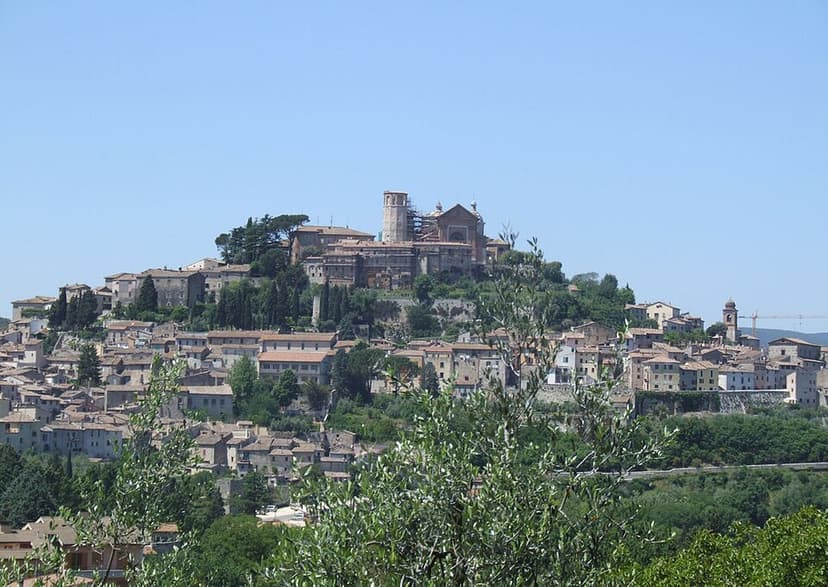
Amelia Cathedral
Amelia Cathedral, also known as Duomo di Amelia or Cattedrale di Santa Firmina, is a Roman Catholic cathedral located in Amelia, Italy. Originally the seat of the Bishop of Amelia since at least the 5th century, it has served as a co-cathedral in the Diocese of Terni-Narni-Amelia since 1983. The cathedral has undergone extensive rebuilding and stylistic changes throughout its history, reflecting periods of destruction and reconstruction.