
Amelia Cathedral
Terni-Narni-Amelia·Roman Catholic·Italy
Amelia Cathedral, also known as Duomo di Amelia or Cattedrale di Santa Firmina, is a Roman Catholic cathedral located in Amelia, Italy. Originally the seat of the Bishop of Amelia since at least the 5th century, it has served as a co-cathedral in the Diocese of Terni-Narni-Amelia since 1983. The cathedral has undergone extensive rebuilding and stylistic changes throughout its history, reflecting periods of destruction and reconstruction.
Key Facts
- ›The cathedral is dedicated to Saint Firmina, whose relics are preserved within.
- ›Its original construction dates back to 872, though it was destroyed and rebuilt multiple times.
- ›Significant rebuilding occurred in the 13th century in Gothic style and again in the Baroque form after a 1629 fire.
- ›The campanile was erected in 1050 using fragments from Roman buildings.
- ›Notable artworks include a depiction of the Last Supper by Giovanni Francesco Perini and the tomb of the Geraldini by Agostino DI Duccio.
- ›Two Turkish banners captured at the Battle of Lepanto in 1571 are housed in a side-chapel.
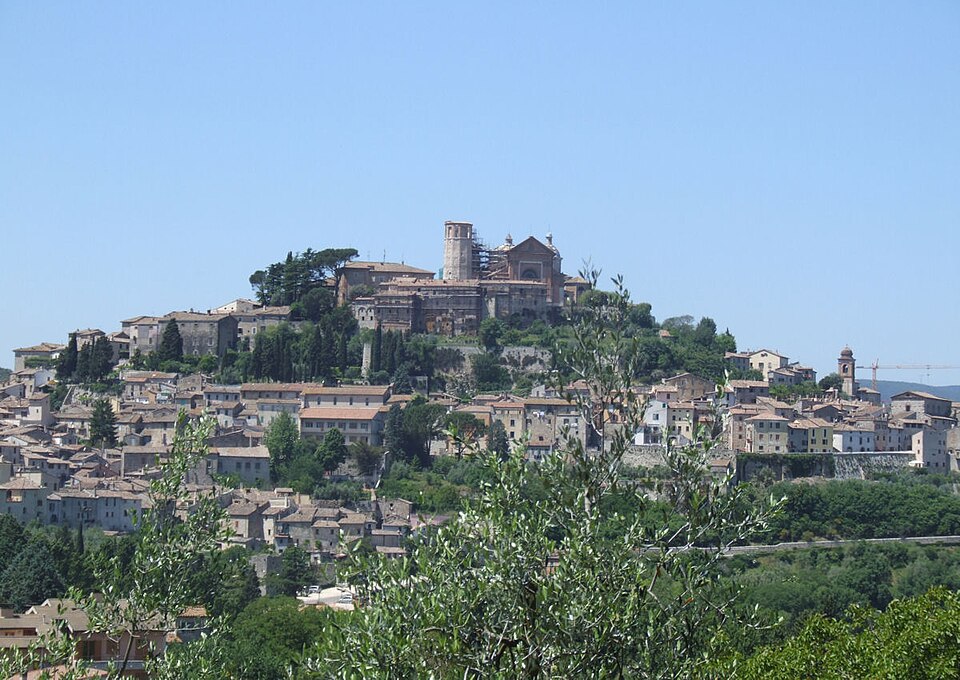
Relics of Saints Firmina and Olimpiade, Turkish Banners From the Battle of Lepanto, Giovanni Francesco Perini's 'Last Supper', Tomb of the Geraldini By Agostino Di Duccio, Campanile From 1050, Chapel of the Farattini
Agostino Di Duccio, Ippolito Scalza, Niccolò Circignani, Federico Zuccari, Taddeo Zuccari, Lavinia Fontana
About Amelia Cathedral
Amelia Cathedral, known in Italian as Duomo di Amelia or Cattedrale di Santa Firmina, stands as a significant religious edifice in the town of Amelia, located in the province of Terni within the Umbria region of Italy. Historically, it served as the principal seat of the Bishop of Amelia, a role it fulfilled from at least the 5th century until its designation as a co-cathedral within the Diocese of Terni-Narni-Amelia in 1983. The cathedral's long and complex history is marked by multiple destructions and reconstructions, resulting in a layering of architectural styles and artistic contributions.
Historical Development and Architectural Evolution
The earliest recorded construction of Amelia Cathedral dates to 872. This initial structure met its demise at the hands of Emperor Frederick II's troops in the 13th century. Following this destruction, the cathedral was rebuilt in the Gothic style. However, this Gothic iteration was itself lost to a devastating fire in 1629, prompting a subsequent reconstruction in the Baroque style. The present-day façade, notable for its pink cotto, was a later addition, completed in the 19th century after the town was affected by a destructive earthquake in 1822. The campanile, or bell tower, predates much of the cathedral's rebuilding, having been erected in 1050 using salvaged fragments from Roman structures.
Artistic and Spiritual Significance
Internally, Amelia Cathedral features a Latin cross ground plan and a single nave. It holds significant spiritual importance as the repository for the relics of Saints Firmina and Olimpiade, the city's patron saints. The cathedral also houses historical artifacts, including two Turkish banners captured during the pivotal Battle of Lepanto in 1571, displayed in a side-chapel. The interior is further enriched by a collection of notable artworks. These include Giovanni Francesco Perini's depiction of the "Last Supper" from 1538, the tomb of the Geraldini sculpted by Agostino di Duccio in 1476, and a "Madonna and Child" attributed to Antoniazzo Romano. The Chapel of the Farattini contains the funerary monument of Bishop Baldo Farrattini, created by Ippolito Scalza. Works by other prominent artists such as Niccolò Circignani and Federico or Taddeo Zuccari are also present, alongside a modern copy of Lavinia Fontana's "Martyrdom of Saint Firmina." An organ dating from 1600 adds to the cathedral's historical and artistic inventory.
Source: Wikipedia ↗
Frequently Asked Questions
When was Amelia Cathedral first built?
The original construction of Amelia Cathedral dates back to 872. However, this building was later destroyed and subsequently rebuilt.
What is Amelia Cathedral dedicated to?
Amelia Cathedral is dedicated to Saint Firmina, who is also one of the patron saints of the city. Her relics are preserved within the cathedral.
What architectural styles are present in Amelia Cathedral?
The cathedral has seen several stylistic transformations. It was rebuilt in Gothic style in the 13th century and later reconstructed in Baroque form after a fire in 1629. The present façade, completed in the 19th century, is noted for its pink cotto.
Are there any significant artworks housed in Amelia Cathedral?
Yes, Amelia Cathedral contains several notable works of art. These include a depiction of the Last Supper by Giovanni Francesco Perini, the tomb of the Geraldini by Agostino di Duccio, and a Madonna and Child attributed to Antoniazzo Romano.
What is the history of the Bishopric of Amelia?
The Bishopric of Amelia existed from at least the 5th century. Since 1983, Amelia Cathedral has served as a co-cathedral within the Diocese of Terni-Narni-Amelia.
Related Cathedrals

Amalfi Cathedral
Amalfi Cathedral, officially the Cathedral of Saint Andrew, is a medieval Roman Catholic cathedral located in Amalfi, Italy. It is renowned for its elaborate architecture, a blend of various historical styles, and for housing the relics of the Apostle Saint Andrew. The cathedral has been an important religious center and a significant landmark of the Amalfi Coast for centuries.

Bordeaux Cathedral
Bordeaux Cathedral, officially the Primatial Cathedral of St Andrew of Bordeaux, is a Roman Catholic cathedral in Bordeaux, France, serving as the seat of the Archbishop of Bordeaux. It is a significant landmark included in the UNESCO World Heritage Site of the Routes of Santiago de Compostela in France. The cathedral showcases a rich architectural history, evolving from Romanesque to Gothic styles and incorporating Renaissance elements, making it a vital historical and religious site.
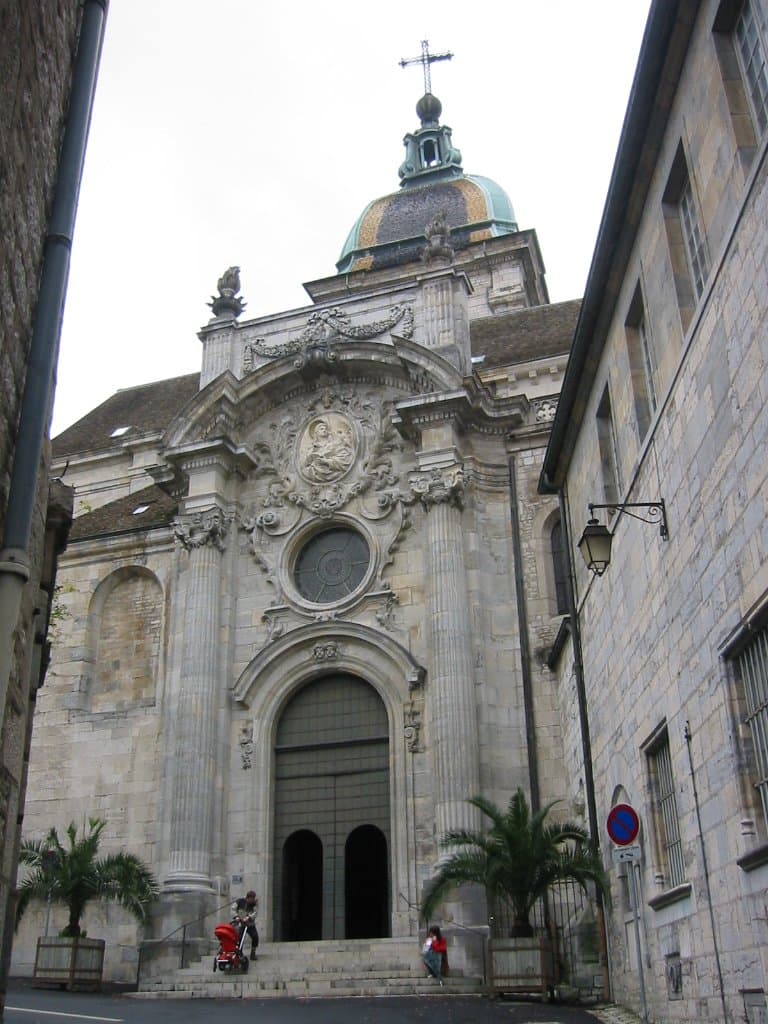
Besançon Cathedral
Besançon Cathedral, officially Cathédrale Saint-Jean de Besançon, is a Roman Catholic cathedral serving as the seat of the Archbishop of Besançon in France. Its construction spans from the 11th to the 13th century, featuring unique architectural elements like twin apses and Romanesque arches, with later additions and modifications throughout its history.