
Aversa Cathedral
Diocese of Aversa·Roman Catholic·Italy
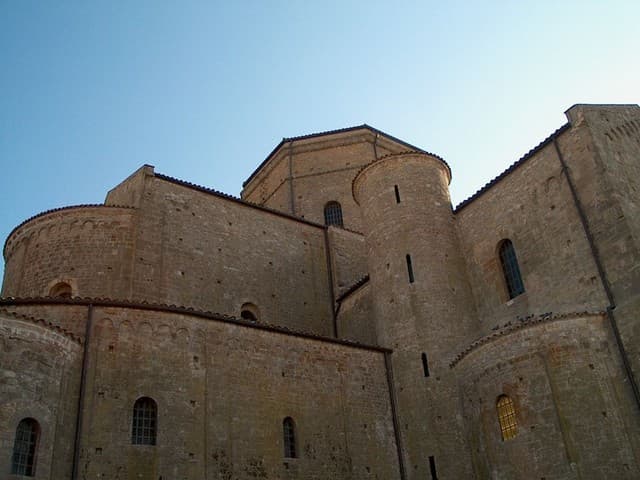
Aversa Cathedral, also known as the Duomo di Aversa or Cattedrale di San Paolo, is a Roman Catholic cathedral serving as the episcopal see for the Diocese of Aversa. Founded under Norman rule in 1053, it is a significant historical and architectural landmark in the city of Aversa, Italy.
Key Facts
- ›Established as the seat of the Bishop of Aversa in 1053.
- ›Originally a Romanesque structure dedicated to Saint Paul.
- ›Features a spectacular ambulatory and an octagonal dome.
- ›Houses Francesco Solimena's Madonna of the Gonfalone.
- ›Contains the pre-Romanesque sculpture of Saint George and the Dragon.
- ›Boasts an outstanding collection of Baroque liturgical silver in its treasury.

- Ambulatory
- Octagonal Dome
- Madonna of the Gonfalone By Francesco Solimena
- Saint George and the Dragon Sculpture
- Baroque Liturgical Silver
About Aversa Cathedral
Aversa Cathedral, officially the Duomo di Aversa and also known as the Cattedrale di San Paolo, stands as a significant Roman Catholic cathedral in the city of Aversa, located in the province of Caserta, Campania, Italy. Its history is deeply intertwined with the ecclesiastical structure of the region, having served as the episcopal seat for the Diocese of Aversa since its foundation.
History and Architecture
The cathedral's origins date back to 1053, established under Norman rule. The original Romanesque structure, dedicated to Saint Paul, is characterized by its striking architectural elements, including a spectacular ambulatory and a distinctive octagonal dome. While specific construction dates for later modifications are not detailed, the Romanesque period marks its foundational architectural style.
Notable Treasures and Significance
Aversa Cathedral is a repository of important artistic and historical artifacts. It houses Francesco Solimena's renowned painting, the Madonna of the Gonfalone. Furthermore, the pre-Romanesque sculpture of Saint George and the Dragon is a rare surviving example of free-standing sculpture from its era. The cathedral's treasury also holds an outstanding collection of Baroque liturgical silver, highlighting its historical wealth and artistic importance.
While the Martyrdom of Saint Sebastian by Angiolillo Arcuccio was formerly housed here, it is now located in the seminary. Despite this, Aversa Cathedral remains a vital center of worship and a custodian of significant cultural heritage in Southern Italy.
Source: Wikipedia ↗
Frequently Asked Questions
When was Aversa Cathedral founded?
Aversa Cathedral was founded in 1053 under Norman rule. It has served as the seat of the Bishop of Aversa since the bishopric's establishment.
What is Aversa Cathedral dedicated to?
The cathedral is dedicated to Saint Paul. It is also known as the Cattedrale di San Paolo.
What are some notable artworks and features within Aversa Cathedral?
The cathedral is home to Francesco Solimena's painting, the Madonna of the Gonfalone. It also houses the pre-Romanesque sculpture of Saint George and the Dragon and an impressive collection of Baroque liturgical silver.
What architectural elements are characteristic of Aversa Cathedral?
The Romanesque cathedral is noted for its spectacular ambulatory and an octagonal dome. These features contribute to its distinct architectural profile.
Related Cathedrals
Acerenza Cathedral
Acerenza Cathedral, dedicated to the Assumption of the Blessed Virgin Mary and Saint Canius, is a significant Romanesque structure in Acerenza, Italy. It serves as the seat of the Archbishop of Acerenza and is recognized as a minor basilica, standing as one of the most notable Romanesque buildings in its region.

Alatri Cathedral
Alatri Cathedral, officially the Basilica of Saint Paul, is a Roman Catholic cathedral in Alatri, Lazio, Italy. Originally the cathedral of the Diocese of Alatri, it is now a co-cathedral of the Diocese of Anagni-Alatri. It holds significant relics, including those of Saint Sixtus I and the Ostia incarnata from the Eucharistic miracle of Alatri, making it a site of considerable religious importance.

Albenga Cathedral
Albenga Cathedral, officially the Cathedral of Saint Michael the Archangel, is a Roman Catholic cathedral in Albenga, Italy, serving as the seat of the Diocese of Albenga-Imperia. Occupying a site with a church since the late 4th or early 5th century, its present medieval structure dates primarily from around 1100, with significant rebuilding in the late 12th century and later modifications, notably in 1582. A restoration in the 1970s aimed to restore its medieval appearance, and the bell tower was substantially rebuilt in the late 14th century.