
Acerenza Cathedral
Archdiocese of Acerenza·Roman Catholic·Italy
Acerenza Cathedral, dedicated to the Assumption of the Blessed Virgin Mary and Saint Canius, is a significant Romanesque structure in Acerenza, Italy. It serves as the seat of the Archbishop of Acerenza and is recognized as a minor basilica, standing as one of the most notable Romanesque buildings in its region.
Key Facts
- ›Construction of the present Romanesque cathedral began in 1080 under Archbishop Arnald of Cluny.
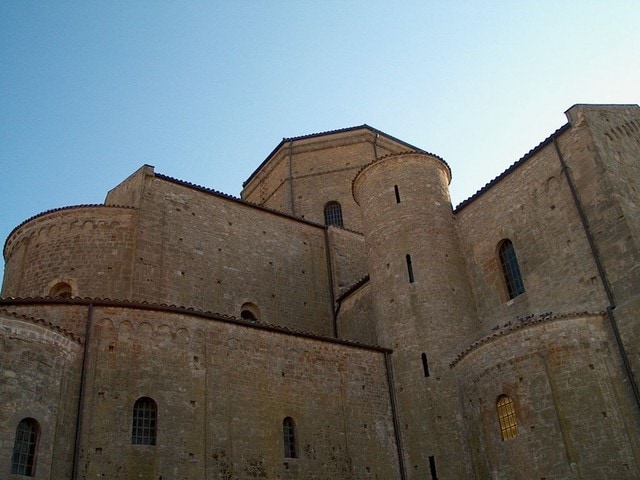
- ›The cathedral's design includes a Latin cross ground plan with three aisles and a raised presbytery featuring an apse with an ambulatory and radiating chapels.
- ›The ambulatory houses the relics of Saint Canius, and the crypt, dating from 1524, contains what is believed to be his sarcophagus.
- ›The campanile was added in 1555 and incorporates ancient stonework, including Roman sarcophagi and a sacrificial altar.
- ›The interior displays zoomorphic and floral carvings in the Cluniac style, whose symbolic meanings are subject to speculation.
- ›Notable artworks include a polyptych by Antonio Stabile and a marble portrait bust of Emperor Julian the Apostate.
Romanesque
- Relics of Saint Canius
- Apse With Ambulatory and Radiating Chapels
- Crypt Containing Sarcophagus of Saint Canius
- Campanile With Ancient Stonework
- Zoomorphic and Floral Carvings
- Polyptych By Antonio Stabile
- Marble Portrait Bust of Emperor Julian the Apostate
11th Century, 16th Century
Arnald of Cluny
About Acerenza Cathedral
Acerenza Cathedral, officially known as the Cattedrale di Santa Maria Assunta e San Canio, is a significant Roman Catholic cathedral located in the town of Acerenza, within the province of Potenza in the Basilicata region of Italy. It serves as the ecclesiastical seat for the Archbishop of Acerenza and was recognized as a minor basilica in 1956. The cathedral is particularly noted for its Romanesque architecture, standing as one of the most prominent examples of this style in its part of Italy.
History and Architecture
The diocese of Acerenza was established by the late 5th century. However, the current structure of the Romanesque cathedral building dates back to 1080, when construction commenced under the direction of Archbishop Arnald of Cluny. The site itself boasts a much deeper history, with remnants of an ancient pagan temple dedicated to Hercules Acheruntinus and an earlier Christian church incorporated into the present edifice.
The cathedral is designed with a Latin cross ground plan and features three aisles. A distinctive element is its raised presbytery, which leads to an apse that includes an ambulatory and three radiating chapels—an architectural arrangement considered unusual in Italian church design. The transept also terminates at each end with a semi-circular chapel. Within the ambulatory lies the altar that holds the relics of Saint Canius (San Canio).
The crypt of the cathedral was added in 1524 and is believed to contain the sarcophagus of Saint Canius. The campanile, or bell tower, was erected in 1555 and incorporates a variety of interesting fragments of ancient stonework, including two Roman sarcophagi and a sacrificial altar adorned with bull heads.
Artistic and Decorative Elements
The interior of Acerenza Cathedral is characterized by numerous unique zoomorphic and floral carvings executed in the Cluniac manner. The potential symbolic meanings behind these carvings have been a subject of historical speculation.
Among the significant works of art housed within the cathedral is a polyptych by Antonio Stabile, created in 1583, which depicts Our Lady of the Rosary and the Fifteen Mysteries, accompanied by Saints Dominic and Thomas. Additionally, four frescos by Giovanni Todisco di Abriola can be found in the cloister. The cathedral also preserves a notable marble portrait bust of Emperor Julian the Apostate, which was historically misidentified as representing Saint Canius.
Source: Wikipedia ↗
Frequently Asked Questions
What is Acerenza Cathedral dedicated to?
Acerenza Cathedral is dedicated to the Assumption of the Blessed Virgin Mary and to Saint Canius. It is also known as the Duomo di Acerenza.
When was the current cathedral building constructed?
Construction of the present Romanesque cathedral building began in 1080 under Archbishop Arnald of Cluny. The site itself has a much older history, with traces of a pagan temple and an earlier Christian church found within the present structure.
What are some of the unique architectural features of Acerenza Cathedral?
The cathedral has a Latin cross plan with three aisles. An unusual feature for Italian church design is its apse with an ambulatory and three radiating chapels. The transept also ends in semi-circular chapels, and the interior is known for its zoomorphic and floral carvings.
Where are the relics of Saint Canius kept?
The relics of Saint Canius are housed in the altar within the ambulatory of Acerenza Cathedral. The crypt, dating from 1524, contains what is believed to be his sarcophagus.
What notable artworks can be found in Acerenza Cathedral?
Among the notable artworks are a polyptych depicting Our Lady of the Rosary and the Fifteen Mysteries by Antonio Stabile from 1583, and four frescos in the cloister by Giovanni Todisco di Abriola. The cathedral also possesses a marble portrait bust of Emperor Julian the Apostate.
Related Cathedrals
Acquaviva Cathedral
Acquaviva delle Fonti Cathedral, also known as the Concattedrale di Sant'Eustachio, is the principal church of Acquaviva delle Fonti and serves as a co-cathedral within the Diocese of Altamura-Gravina-Acquaviva delle Fonti. Originally a Romanesque structure from the 12th century, it was significantly rebuilt in a Renaissance style in the 16th century and consecrated in 1623.

Alatri Cathedral
Alatri Cathedral, officially the Basilica of Saint Paul, is a Roman Catholic cathedral in Alatri, Lazio, Italy. Originally the cathedral of the Diocese of Alatri, it is now a co-cathedral of the Diocese of Anagni-Alatri. It holds significant relics, including those of Saint Sixtus I and the Ostia incarnata from the Eucharistic miracle of Alatri, making it a site of considerable religious importance.
Alghero Cathedral
Alghero Cathedral, officially the Cathedral of St. Mary the Immaculate, is a Roman Catholic cathedral located in the historic center of Alghero, Sardinia, Italy. It served as the seat of the Bishop of Alghero from 1503 to 1986 and has been the seat of the Bishop of Alghero-Bosa since then. The cathedral is notable for its blend of architectural styles, reflecting its long construction and restoration history.