
Angoulême Cathedral
Angoulême·Roman Catholic·France
Angoulême Cathedral, officially Cathédrale Saint-Pierre d'Angoulême, is a Romanesque Roman Catholic cathedral located in Angoulême, France. It is distinguished by its facade adorned with over 70 sculptures depicting biblical scenes and everyday life, and its interior featuring unique dome-covered naves.
Key Facts
- ›The cathedral's facade is a significant example of Romanesque sculpture, featuring over 70 detailed carvings.
- ›Key sculptural themes include the Ascension of Christ and the Last Judgement, with Christ depicted in mandorlas.
- ›The interior boasts three dome-covered naves and a long transept with towers, a design characteristic of high medieval domes.
- ›A major dome at the transept crossing was replaced after being destroyed during the Protestant siege of 1568.
- ›The cathedral has undergone restoration, notably by Paul Abadie, who also modified a transept lantern tower.

Facade Sculptures, Three Dome-Covered Naves, Transept With Lofty Towers, Apsidal Choir With Four Chevet Chapels, Restoration By Paul Abadie
Paul Abadie
About Angoulême Cathedral
Angoulême Cathedral, officially known as Cathédrale Saint-Pierre d'Angoulême, stands as a significant monument of Romanesque architecture and sculpture in the city of Angoulême, France. Serving as the seat of the Bishop of Angoulême, the cathedral is celebrated for its richly decorated facade and its distinctive interior.
Architecture and Sculpture
The cathedral's facade is a remarkable display of Romanesque artistry, featuring over 70 sculptures organized into two primary thematic cycles: the Ascension of Christ and the Last Judgement. These narratives are intricately interwoven, with Christ centrally depicted within mandorlas, flanked by angels. The sculptures portray the devotion of the faithful looking towards the Redeemer, contrasted with the damned succumbing to Satan's influence in the side arches. Beyond these theological scenes, the artistry extends to depictions of everyday life, including scenes of hunting, which do not shy away from illustrating hardship and labor.
The interior of Angoulême Cathedral is characterized by its three dome-covered naves, a feature that places it within the tradition of high medieval dome construction. The transept is notably long, with tall towers at its north and south ends. The apsidal choir is accompanied by four chevet chapels. A larger dome, situated at the crossing of the transept, is a replacement for the original structure that was destroyed during the Protestant siege of 1568. While the transept was once illuminated by two lantern towers, only the northern one remains, having been modified by the restorer Paul Abadie, who also relocated medieval sculptures to other parts of the building. The semicircular choir is bordered by small apses and covered by a half-dome.
Source: Wikipedia ↗
Frequently Asked Questions
What is Angoulême Cathedral famous for?
Angoulême Cathedral is renowned for its Romanesque facade, which is adorned with over 70 sculptures depicting the Ascension and the Last Judgement. Its interior is also notable for its three dome-covered naves.
What architectural style is Angoulême Cathedral?
The cathedral is primarily in the Romanesque architectural and sculptural tradition. Its interior features domes, which are characteristic of high medieval dome construction.
What historical events affected Angoulême Cathedral?
The cathedral's original dome at the transept crossing was destroyed during the Protestant siege of 1568. It has also undergone restoration, with Paul Abadie being a notable figure in its renovation.
What are the main sculptural themes on the facade?
The facade's sculptures are organized around two main themes: the Ascension of Christ and the Last Judgement. These biblical scenes are intermingled with depictions of everyday life, such as hunting.
Related Cathedrals

Agde Cathedral
Agde Cathedral, dedicated to Saint Stephen, is a Roman Catholic church located in Agde, southern France, situated on the bank of the river Hérault. Originally the seat of the Bishops of Agde, it is notable for its construction from black basalt, giving it a fortress-like appearance with exceptionally thick walls and defensive architectural features. The see was not restored after the French Revolution and its parishes were incorporated into the Diocese of Montpellier.

Agen Cathedral
Agen Cathedral, dedicated to Saint Caprasius, is a Roman Catholic cathedral located in Agen, France. Originally built as a collegiate church in the 12th century, it was later elevated to the status of a cathedral and is recognized as a UNESCO World Heritage Site as part of the Routes of Santiago de Compostela in France.
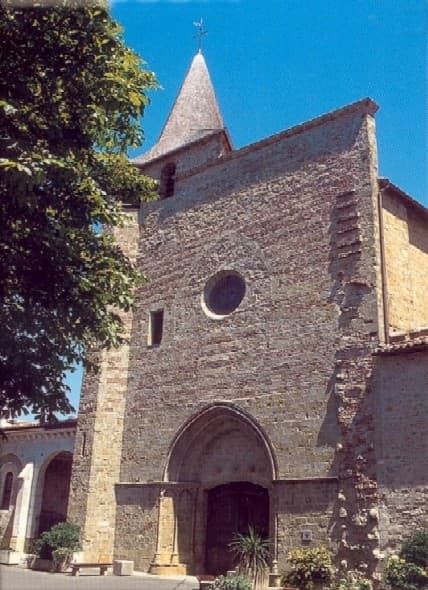
Aire Cathedral
Aire Cathedral, officially known as the Cathédrale Saint-Jean-Baptiste d'Aire, is a Roman Catholic church located in Aire-sur-l'Adour, France. It served as the episcopal seat for the Bishops of Aire for centuries, and although its status has shifted, it remains a significant historical and religious site on a major pilgrimage route.