
Agde Cathedral
Diocese of Montpellier·Roman Catholic·France
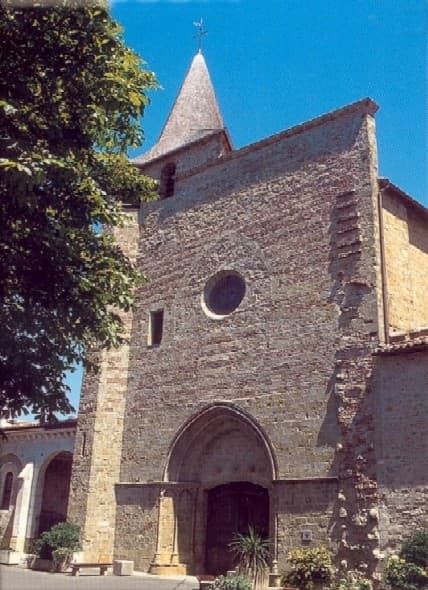
Agde Cathedral, dedicated to Saint Stephen, is a Roman Catholic church located in Agde, southern France, situated on the bank of the river Hérault. Originally the seat of the Bishops of Agde, it is notable for its construction from black basalt, giving it a fortress-like appearance with exceptionally thick walls and defensive architectural features. The see was not restored after the French Revolution and its parishes were incorporated into the Diocese of Montpellier.
Key Facts
- ›Built primarily of black basalt from the Mont St. Loup quarries.
- ›Designed with walls between 2 and 3 meters thick, resembling a fortress.
- ›Features a 35-meter high square tower that could function as a keep.
- ›The Romanesque cloister, once adjoining the cathedral, was demolished in 1857.
- ›Declared a monument historique in 1840.
- ›The 17th-century high altar is made of polychromatic marble.

Romanesque, Fortress-Like
Black Basalt Construction, Thick Defensive Walls, Square Tower Functioning As A Keep, Crenellations and Machicolations, 17th-Century Polychromatic Marble High Altar, Baroque Organ
About Agde Cathedral
Agde Cathedral, officially known as Cathédrale Saint-Étienne d'Agde, is a significant Roman Catholic church situated in the city of Agde, within the Hérault department of southern France. It stands prominently on the banks of the Hérault River and is dedicated to Saint Stephen.
History and Construction
The current edifice of Agde Cathedral dates back to the 12th century, with construction beginning in 1173 under Bishop William II of Agde. This structure replaced a 9th-century Carolingian church, which itself was built upon the foundations of a 5th-century Roman church, believed to be located on the site of an ancient temple to Diana. The cathedral is particularly distinguished by its construction material: black basalt quarried from the nearby volcanic Mont St. Loup. This choice of material, combined with its design, results in an exceptionally strong building intended to serve as a fortress as much as a place of worship. Its walls measure between 2 and 3 meters in thickness, and the imposing 35-meter-high square tower was designed to function as a keep.
Architectural Significance and Features
The fortress-like characteristics of Agde Cathedral are evident in its prominent crenellations and machicolations, elements more typically associated with military fortifications than ecclesiastical buildings. The cathedral was officially recognized for its historical importance and declared a monument historique in 1840. The Romanesque cloister that once adjoined the cathedral was demolished in 1857, with many of its materials, including capitals and columns, later repurposed for the construction of the lady chapel, which now serves as the cathedral's entrance. The interior features a striking 17th-century high altar crafted from polychromatic marble, which contrasts with the generally austere atmosphere of the sanctuary. The organ also contributes to the interior's aesthetic with its Baroque architectural style.
Later History and Diocese
Agde Cathedral served as the seat of the Bishops of Agde until the French Revolution. The last bishop, Charles-François-Siméon de Rouvroy de Saint-Simon de Vermandois de Sandricourt, was guillotined during the period known as the Terror. Following the revolution, the bishopric of Agde was not restored. By the Concordat of 1801, its former parishes were incorporated into the larger Diocese of Montpellier. The cathedral's five bells include four in the belltower, cast by Burdin-Aîné of Lyon in the late 19th century, and a fifth bell atop the tower, cast in 1665 by Damiac Fulcrand at Béziers, which is used solely for chiming the clock. This latter bell was also declared a monument historique in 1959.
Source: Wikipedia ↗
Frequently Asked Questions
What is Agde Cathedral dedicated to?
Agde Cathedral is dedicated to Saint Stephen. It was formerly the seat of the Bishops of Agde.
What is unique about Agde Cathedral's construction?
The cathedral is remarkable for being built of black basalt from nearby volcanic quarries. Its design is exceptionally strong, with walls between 2 and 3 meters thick, and features like crenellations and machicolations, giving it a fortress-like appearance.
When was Agde Cathedral built?
The present building began construction in the 12th century, starting in 1173. It replaced earlier churches on the site, including a 9th-century Carolingian church and a 5th-century Roman church.
What happened to the Bishopric of Agde?
The last Bishop of Agde was guillotined during the French Revolution. The see was not restored, and its parishes were added to the Diocese of Montpellier by the Concordat of 1801.
What are some notable interior features of Agde Cathedral?
The 17th-century high altar, made of polychromatic marble, stands out against the austere interior. The organ also features Baroque architectural style.
Related Cathedrals

Agen Cathedral
Agen Cathedral, dedicated to Saint Caprasius, is a Roman Catholic cathedral located in Agen, France. Originally built as a collegiate church in the 12th century, it was later elevated to the status of a cathedral and is recognized as a UNESCO World Heritage Site as part of the Routes of Santiago de Compostela in France.
Aire Cathedral
Aire Cathedral, officially known as the Cathédrale Saint-Jean-Baptiste d'Aire, is a Roman Catholic church located in Aire-sur-l'Adour, France. It served as the episcopal seat for the Bishops of Aire for centuries, and although its status has shifted, it remains a significant historical and religious site on a major pilgrimage route.

Aix Cathedral
Aix Cathedral, officially Cathédrale Saint-Sauveur d'Aix-en-Provence, is a Roman Catholic cathedral in Aix-en-Provence, France. Situated on the site of the ancient Roman forum and a 6th-century Christian church, it showcases a remarkable blend of Romanesque, Gothic, and Neo-Gothic architectural styles, with elements dating back to its earliest Christian foundations. The cathedral serves as the seat of the Archbishop of Aix-en-Provence and Arles and is recognized as a national monument of France.