
Aire Cathedral
Aire Cathedral, officially known as the Cathédrale Saint-Jean-Baptiste d'Aire, is a Roman Catholic church located in Aire-sur-l'Adour, France. It served as the episcopal seat for the Bishops of Aire for centuries, and although its status has shifted, it remains a significant historical and religious site on a major pilgrimage route.
Key Facts
- ›The cathedral is dedicated to Saint John the Baptist.
- ›It was the seat of the Bishops of Aire until the diocese was abolished and later restored.
- ›Significant alterations occurred between the 14th and 17th centuries, resulting in a variety of architectural styles.
- ›Parts of the cathedral, including three bays and an apse, date back to the 12th century.
- ›Aire Cathedral is a notable stop on the Via Podiensis, a pilgrimage route of the Way of St. James of Compostela.
- ›It was listed as a national monument in 1906.
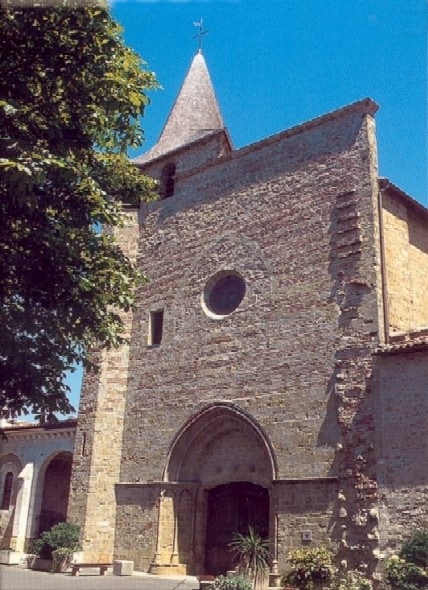
Rotunda On the Chevet, 12th-Century Bays and Apse, 13th-Century FaçAde, 14th-Century Chapter House, 14th-Century Nave Vaulting, Via Podiensis Pilgrimage Route
About Aire Cathedral
Aire Cathedral, officially known as the Cathédrale Saint-Jean-Baptiste d'Aire, is a significant Roman Catholic church situated in the town of Aire-sur-l'Adour, within the Landes department of France. Historically, it served as the episcopal seat for the Bishops of Aire, a role it held for many centuries. While the diocese was abolished in 1801 and later restored, the cathedral's function evolved; by 1933, with the bishop's move to Dax, it became a co-cathedral.
History and Architecture
The cathedral's origins are rooted in structures from the 11th and 12th centuries. However, it underwent substantial alterations between the 14th and 17th centuries, resulting in a complex architectural profile that displays a variety of styles. From the 12th century, portions of the structure remain, including three bays and an apse. The façade, dating from the 13th century, is characterized by its severe design and is topped by a tower with a slate roof; it features a simple vaulted portal with a pointed arch. The present sacristy was originally a 14th-century chapter house, notable for its Gothic vaulting supported by central pillars, a design reminiscent of the 'palm trees' associated with the Dominicans. The nave is adorned with ogive vaults from the 14th century. The quire is flanked by four apsidioles that open onto the transept. Furnishings such as the organs, side-altars, stalls, and the high altar largely date from the late 18th century. The cathedral's overall dimensions are approximately 48 meters in length, with a nave width of 8 meters, and a height of 15 meters to the highest point of the vault.
Pilgrimage Significance
Aire Cathedral holds importance as a waypoint on the Via Podiensis, one of the principal pilgrimage routes of the Way of St. James of Compostela. This ancient path guides pilgrims from Le Puy-en-Velay towards Santiago de Compostela in Spain, passing through the Pass of Roncevaux.
Recognition
In recognition of its historical and cultural value, Aire Cathedral was officially listed as a national monument in 1906.
Source: Wikipedia ↗
Frequently Asked Questions
What is the history of Aire Cathedral's episcopal status?
Aire Cathedral was the seat of the Bishops of Aire until the diocese was abolished in 1801. It was restored in 1822, and in 1933, the bishop moved to Dax, making the cathedral at Aire a co-cathedral.
What are the main architectural periods of Aire Cathedral?
The cathedral has origins in the 11th and 12th centuries, with significant alterations occurring between the 14th and 17th centuries. The present appearance reflects a variety of styles from these periods.
Is Aire Cathedral a pilgrimage site?
Yes, Aire Cathedral is a stage on the Via Podiensis, one of the pilgrimage routes of the Way of St. James of Compostela. This route leads from Le Puy-en-Velay to Santiago de Compostela.
When was Aire Cathedral listed as a national monument?
Aire Cathedral was listed as a national monument in 1906, recognizing its historical and architectural importance.
What are some notable architectural features of Aire Cathedral?
Notable features include a great rotunda on the chevet, 12th-century bays and apse, a severe 13th-century façade with a vaulted portal, and 14th-century ogive vaults in the nave. The sacristy, originally a 14th-century chapter house, features Gothic vaulting.
Related Cathedrals

Bordeaux Cathedral
Bordeaux Cathedral, officially the Primatial Cathedral of St Andrew of Bordeaux, is a Roman Catholic cathedral in Bordeaux, France, serving as the seat of the Archbishop of Bordeaux. It is a significant landmark included in the UNESCO World Heritage Site of the Routes of Santiago de Compostela in France. The cathedral showcases a rich architectural history, evolving from Romanesque to Gothic styles and incorporating Renaissance elements, making it a vital historical and religious site.

Angers Cathedral
Angers Cathedral, officially Cathédrale Saint-Maurice d'Angers, is a Catholic cathedral in Angers, France, serving as the seat of the Bishops of Angers. Renowned for its blend of Romanesque and Gothic architectural styles, it also features significant Baroque elements and an exceptional collection of stained-glass windows, some dating back to the late 12th century.

Agen Cathedral
Agen Cathedral, dedicated to Saint Caprasius, is a Roman Catholic cathedral located in Agen, France. Originally built as a collegiate church in the 12th century, it was later elevated to the status of a cathedral and is recognized as a UNESCO World Heritage Site as part of the Routes of Santiago de Compostela in France.