
Anagni Cathedral
Anagni Cathedral, an important Catholic cathedral in Anagni, Lazio, Italy, serves as the seat of the Diocese of Anagni-Alatri. Originally built in the Romanesque style, its interior was later refurbished in a Gothic-Lombard style. The cathedral holds historical significance as a former summer residence for Popes and a site for significant religious and political events.
Key Facts
- ›Built in Romanesque style between 1072 and 1104, patronized by Byzantine Emperor Michele VII Ducas.
- ›Served as a papal summer residence in the 12th and 13th centuries.
- ›Site of the canonization of Bernard of Clairvaux (1174) and Clare of Assisi (1255).
- ›Frederick Barbarossa was excommunicated here by Pope Alexander III in 1160.
- ›Interior underwent Gothic-Lombard refurbishment in 1250, featuring Cosmatesque mosaic pavement from 1231.
- ›Crypt is dedicated to St Magnus and features extensive biblical frescoes.

Romanesque, Gothic-Lombard
Cosmatesque Mosaic Pavement, Crypt With Frescoes Dedicated To St Magnus, Ciborium By Vassalletto, Oratory of St Thomas Beckett
11th Century, 12th Century, 13th Century
Vassalletto, Pietro Cavallini, Giovanni Gagliardi, Pietro Gagliardi
About Anagni Cathedral
Anagni Cathedral, officially the Cattedrale di Santa Maria Annunziata, is a significant Catholic cathedral located in the city of Anagni, Lazio, Italy. It serves as the episcopal seat for the Diocese of Anagni-Alatri and is dedicated to the Annunciation of the Blessed Virgin Mary. The cathedral is a notable example of religious architecture, blending Romanesque and Gothic-Lombard styles, and holds considerable historical importance.
History and Significance
The construction of Anagni Cathedral began in 1072 and was completed in 1104, showcasing Romanesque architectural principles with patronage from the Byzantine emperor Michele VII Ducas. For centuries, Anagni served as a favored summer residence for the Popes, particularly during the 12th and 13th centuries, a period when the cathedral witnessed crucial religious and political events. It was within these walls that Bernard of Clairvaux was canonized in 1174 and Clare of Assisi in 1255. In a dramatic turn of events, Pope Alexander III excommunicated Frederick Barbarossa here in 1160, highlighting the cathedral's role in medieval European affairs.
Architectural Features
The interior of Anagni Cathedral underwent a significant refurbishment in 1250, adopting a Gothic-Lombard style. A prominent feature is the pavement, laid in 1231, which is a masterful example of Cosmatesque mosaic work. The main altar is crowned by a ciborium completed by Vassalletto in 1267. The apse walls are adorned with frescoes of the apostles, painted in the 17th century by Borgogna, with the half-dome apse frescoes completed in the 19th century by Giovanni and Pietro Gagliardi. A wooden triptych of the Saviour is located in the right nave.
The Crypt
A stairwell on the left side of the church leads to the cathedral's crypt, which is dedicated to St Magnus, the patron saint of Anagni. During the episcopate of Pandulf (1237-1256), the crypt's walls were covered with frescoes depicting biblical scenes, many of which are now severely damaged. It is believed that several artists, possibly followers of Pietro Cavallini, contributed to these works. Behind the altar, depictions of Christ, the Madonna, St Thomas, and other bishops can be found. Various other altars within the crypt are dedicated to Saints Secondina, Aurelia, Neomisia, Holy Martyrs, and Bishop Pietro da Salerno, along with the Holy Virgin Oliva. The mosaic pavement of the crypt was completed by the Cosma family in 1231. A narrow passageway also leads to the frescoed oratory of St Thomas Beckett.
Source: Wikipedia ↗
Frequently Asked Questions
What is the history of Anagni Cathedral?
Anagni Cathedral was constructed in the Romanesque style between 1072 and 1104, with patronage from Byzantine Emperor Michele VII Ducas. It later served as a papal summer residence and saw its interior renovated in the Gothic-Lombard style in 1250.
What significant historical events took place at Anagni Cathedral?
The cathedral has hosted important events, including the canonization of Bernard of Clairvaux and Clare of Assisi. It was also the location where Pope Alexander III excommunicated Frederick Barbarossa in 1160.
What are the notable architectural features of Anagni Cathedral?
The cathedral exhibits Romanesque origins with a later Gothic-Lombard interior. Its interior pavement from 1231 is a notable example of Cosmatesque mosaic work, and the crypt is adorned with extensive biblical frescoes.
What is the significance of the crypt in Anagni Cathedral?
The crypt is dedicated to St Magnus, the patron saint of Anagni, and was extensively decorated with frescoes during the episcopate of Pandulf (1237-1256). These biblical scenes, though damaged, offer insight into medieval art.
Related Cathedrals

Alatri Cathedral
Alatri Cathedral, officially the Basilica of Saint Paul, is a Roman Catholic cathedral in Alatri, Lazio, Italy. Originally the cathedral of the Diocese of Alatri, it is now a co-cathedral of the Diocese of Anagni-Alatri. It holds significant relics, including those of Saint Sixtus I and the Ostia incarnata from the Eucharistic miracle of Alatri, making it a site of considerable religious importance.
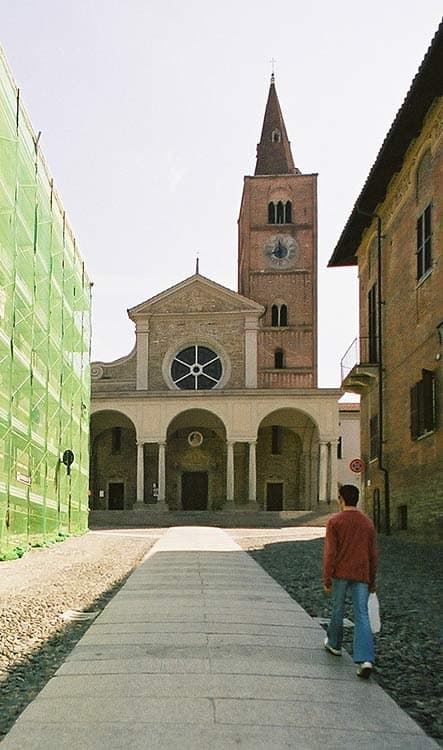
Acqui Cathedral
Acqui Cathedral, officially the Cathedral of Santa Maria Assunta, is a Catholic cathedral in Acqui Terme, Italy, serving as the seat of the Bishop of Acqui. Its origins trace back to at least the 4th century, with the current Romanesque structure initiated in the late 10th century and consecrated in 1067.

Adria-Rovigo
The Diocese of Adria-Rovigo is a Latin Catholic diocese in Triveneto, Italy, formed in its current iteration in 1986. It is a suffragan of the Patriarchate of Venice and encompasses the northeastern Italian Province of Rovigo and a portion of the Province of Padua. The diocese holds historical roots stretching back to the 7th century with the establishment of the Diocese of Adria, with its primary cathedral in Adria and a co-cathedral in Rovigo.