
Acqui Cathedral
Acqui Cathedral, officially the Cathedral of Santa Maria Assunta, is a Catholic cathedral in Acqui Terme, Italy, serving as the seat of the Bishop of Acqui. Its origins trace back to at least the 4th century, with the current Romanesque structure initiated in the late 10th century and consecrated in 1067.
Key Facts
- ›The present cathedral building was initiated under Bishop Primo (989-1018).
- ›It was consecrated in 1067 by Bishop Guido.
- ›The Romanesque structure's surviving elements include the apses, transept, and crypt.
- ›The terracotta bell tower was completed in 1479.
- ›The main entrance in marble by Giovanni Antonio Pilacorte dates from 1481.
- ›A significant artwork within the cathedral is the Retable of the Virgin of Montserrat.
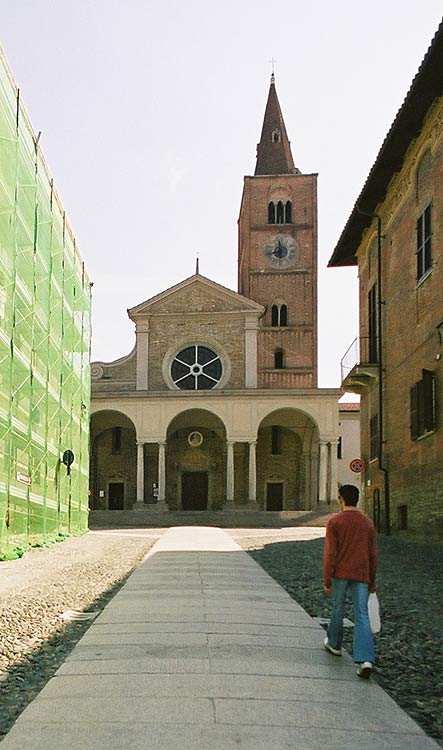
- Romanesque Apses, Transept, and Crypt
- Terracotta Bell Tower
- Marble Main Entrance By Giovanni Antonio Pilacorte
- Rose Window
- Retable of the Virgin of Montserrat
- 19th-Century Pulpit
- Baroque Altar of Saint Guido
- Late 15th-Century Cloisters
- Roman Ruins
Giovanni Antonio Pilacorte
About Acqui Cathedral
Acqui Cathedral, formally known as the Cathedral of Santa Maria Assunta, stands as the principal Roman Catholic church in Acqui Terme, a city located in the province of Alessandria within the Piedmont region of Italy. It serves as the episcopal see for the Bishop of Acqui. The history of the bishopric in Acqui extends back to at least the 4th century, with the current cathedral structure representing a significant development from the late 10th and 11th centuries.
History and Architecture
The foundations for the present cathedral building were laid under Bishop Primo, who served from 989 to 1018. The structure was officially consecrated in 1067 by Bishop Guido. The original design followed a Latin cross plan and featured five aisles, though this was later reduced to three by the 18th century. The cathedral's Romanesque heritage is still visible in its surviving apses, transept, and the crypt that lies beneath the transept and choir. Subsequent centuries brought further architectural interventions and modifications.
The terracotta bell tower was completed in 1479, and its bells were relocated from an older campanile. The prominent marble main entrance, a work by Giovanni Antonio Pilacorte, was finished in 1481, around the same time the rose window above it was created. The portico of the cathedral dates from the 17th century. The interior underwent a significant re-fitting with Baroque woodwork, and was further adorned with frescos and stucco work between the 17th and 19th centuries. Adjacent to the cathedral are the cloisters of the canons, dating to the late 15th century, alongside remnants of Roman ruins, highlighting the layered history of the site.
Notable Works of Art
Among the significant artistic treasures within Acqui Cathedral is the Retable of the Virgin of Montserrat. The central panel of this work was created around 1485 by the esteemed 15th-century Spanish painter Bartolomé Bermejo. The side panels were painted by Rodrigo and Francisco de Osona and are housed in the chapter house. Additionally, the 19th-century pulpit and the Baroque altar dedicated to Saint Guido, located in the transept, are notable features.
Significance
Acqui Cathedral is a central religious and historical landmark in Acqui Terme. Its long history, spanning from early Christian times through Romanesque, medieval, and later periods, reflects the evolving architectural and artistic trends of the region. The presence of Roman ruins and the significant Renaissance artwork further underscore its importance as a site of cultural and historical value.
Source: Wikipedia ↗
Frequently Asked Questions
When was Acqui Cathedral built?
The present cathedral building was initiated under Bishop Primo between 989 and 1018, and was consecrated in 1067 by Bishop Guido. While the Romanesque structure's apses, transept, and crypt remain, much of the cathedral has undergone modifications in later centuries.
What is the architectural style of Acqui Cathedral?
The original structure of Acqui Cathedral is Romanesque. Later additions and modifications have incorporated elements from other periods, including Baroque woodwork in the interior and a 17th-century portico.
What are the notable artworks in Acqui Cathedral?
The most significant work of art is the Retable of the Virgin of Montserrat, featuring a central panel by the 15th-century Spanish painter Bartolomé Bermejo and side panels by Rodrigo and Francisco de Osona. The 19th-century pulpit and the Baroque altar of Saint Guido are also noteworthy.
What is the history of the bishopric of Acqui?
The bishopric of Acqui has been established since at least the 4th century. The current cathedral building represents a significant phase of its history, with its Romanesque foundations consecrated in 1067.
Are there any Roman ruins near Acqui Cathedral?
Yes, adjacent to the cathedral are the canons' cloisters, dating from the late 15th century, and some Roman ruins, indicating the historical depth of the site.
Related Cathedrals

Ariano Irpino Cathedral
Ariano Irpino Cathedral, originally known as Ariano Cathedral, is a Roman Catholic cathedral dedicated to the Assumption of the Virgin Mary. Located in Ariano Irpino, Italy, it has a history marked by destruction and rebuilding, evolving from its 10th-century Romanesque origins to its current Baroque-influenced form. The cathedral serves as the seat for the Diocese of Ariano Irpino-Lacedonia and is noted for housing a relic believed to be a thorn from Christ's crown.

Angers Cathedral
Angers Cathedral, officially Cathédrale Saint-Maurice d'Angers, is a Catholic cathedral in Angers, France, serving as the seat of the Bishops of Angers. Renowned for its blend of Romanesque and Gothic architectural styles, it also features significant Baroque elements and an exceptional collection of stained-glass windows, some dating back to the late 12th century.

Bordeaux Cathedral
Bordeaux Cathedral, officially the Primatial Cathedral of St Andrew of Bordeaux, is a Roman Catholic cathedral in Bordeaux, France, serving as the seat of the Archbishop of Bordeaux. It is a significant landmark included in the UNESCO World Heritage Site of the Routes of Santiago de Compostela in France. The cathedral showcases a rich architectural history, evolving from Romanesque to Gothic styles and incorporating Renaissance elements, making it a vital historical and religious site.