
Alessandria Cathedral
Alessandria·Roman Catholic·Italy
Alessandria Cathedral, officially the Cathedral of Saints Peter and Mark, serves as the episcopal see for the Roman Catholic Diocese of Alessandria in Piedmont, Italy. Its history is marked by multiple constructions and demolitions, with the current Neo-classical structure dating from the early 19th century after the previous cathedral was ordered destroyed by Napoleon.
Key Facts
- ›The diocese of Alessandria was established in 1175 by Pope Alexander III, with an initial cathedral dedicated to Saint Peter.
- ›The first cathedral was rebuilt between 1288 and 1297 but was later demolished in 1803 by order of Napoleon Bonaparte.
- ›The current cathedral is housed in a former Dominican church of St. Mark, consecrated in 1879 after significant rebuilding from 1807-1810.
- ›The Neo-classical structure was extensively refurbished between 1925 and 1929 following fire damage in 1925.
- ›It is dedicated to both Saints Peter and Mark, reflecting its historical lineage and current status.
- ›The cathedral underwent a major restoration between 1875 and 1879.
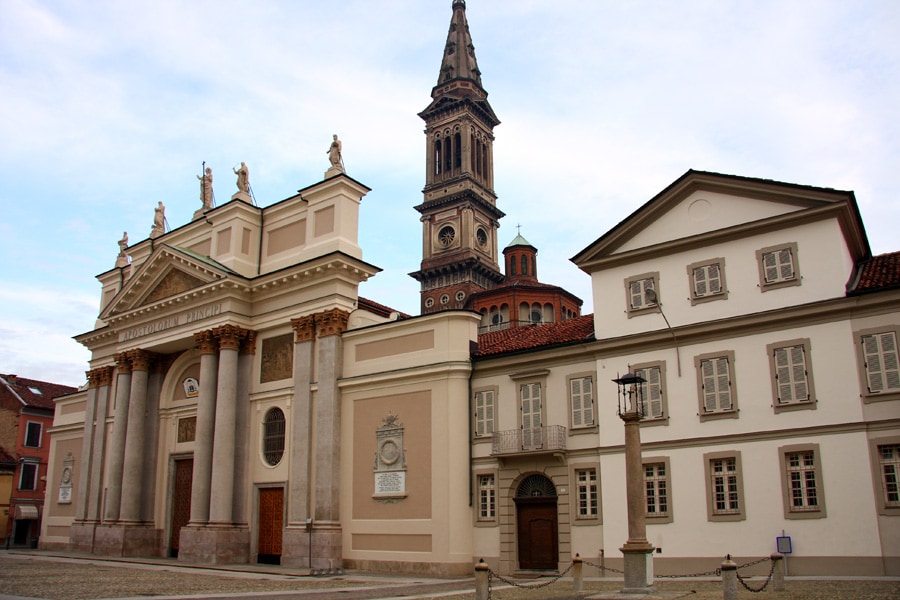
Dedicated To Saints Peter and Mark, Neo-Classical Architecture
About Alessandria Cathedral
Alessandria Cathedral, officially known as the Cathedral of Saints Peter and Mark (Duomo d'Alessandria, Cattedrale dei Santi Pietro e Marco), is a significant Roman Catholic cathedral situated in Alessandria, Piedmont, Italy. It holds the status of being the episcopal see for the Bishop of Alessandria, serving as the principal church of the diocese.
History and Construction
The ecclesiastical history of Alessandria began in 1175 when Pope Alexander III established a diocese centered on the city and commissioned a cathedral dedicated to Saint Peter. This initial structure proved too small and was subsequently demolished and rebuilt between 1288 and 1297. However, this second cathedral met a dramatic end in 1803 when it was ordered demolished by Napoleon Bonaparte for military strategic reasons.
Following the disestablishment of the previous cathedral, the bishop and chapter received permission to elevate the church of St. Mark to cathedral status. This church, originally built in the 13th century for the Dominican Order, had been commandeered by French troops in 1797. The necessary rebuilding and adaptation of the church of St. Mark into the new cathedral took place between 1807 and 1810. The Neo-classical structure, now bearing the dedication to both Saints Peter and Mark, was opened in December 1810.
Further significant work was undertaken with a major restoration carried out from 1875 to 1879. It was at the conclusion of these works, in 1879, that the cathedral was finally consecrated. The interior of Alessandria Cathedral suffered extensive damage from a fire in 1925, necessitating another period of extensive refurbishment between 1925 and 1929.
Source: Wikipedia ↗
Frequently Asked Questions
When was the diocese of Alessandria established?
The diocese centered on Alessandria was created in 1175 by Pope Alexander III. This marked the beginning of the city's ecclesiastical significance.
Why was the original cathedral demolished?
The first cathedral, built as the bishop's seat, was demolished in 1803 on the order of Napoleon Bonaparte for military tactical reasons. This led to the relocation of the episcopal seat.
What is the history of the current cathedral building?
The current cathedral is housed in a church originally built in the 13th century for the Dominicans. After being commandeered by French troops, it was rebuilt between 1807 and 1810 to serve as the new cathedral.
When was Alessandria Cathedral consecrated?
The cathedral was officially consecrated in 1879, a year that marked the end of significant restoration works carried out from 1875 to 1879.
Has the cathedral suffered any damage?
Yes, the interior of the cathedral was badly damaged by fire in 1925. Extensive refurbishment took place between 1925 and 1929 to repair the damage.
Related Cathedrals
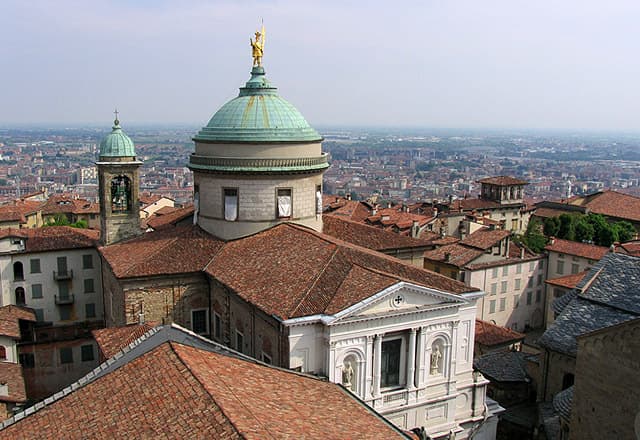
Bergamo Cathedral
Bergamo Cathedral, officially the Cathedral of Saint Alexander, is the principal Roman Catholic cathedral in Bergamo, Italy. It serves as the seat of the Bishop of Bergamo and is dedicated to the city's patron saint. The cathedral's history involves the unification of two earlier religious sites, with its current form resulting from various renovations and rebuildings over centuries.
Alghero Cathedral
Alghero Cathedral, officially the Cathedral of St. Mary the Immaculate, is a Roman Catholic cathedral located in the historic center of Alghero, Sardinia, Italy. It served as the seat of the Bishop of Alghero from 1503 to 1986 and has been the seat of the Bishop of Alghero-Bosa since then. The cathedral is notable for its blend of architectural styles, reflecting its long construction and restoration history.

Derby Cathedral
Derby Cathedral, originally All Saints' Church, achieved cathedral status in 1927, becoming the seat for the Bishop of Derby. While its origins trace back to a 10th-century royal collegiate church, its present form is largely a Georgian rebuilding, notable for its 16th-century tower and a 20th-century retroquire. It stands as a significant religious and historical landmark in Derby, England.