
Takuan Sōhō
Takuan Sōhō was a prominent Japanese Buddhist prelate of the Rinzai school of Zen Buddhism during the Sengoku and early Edo periods. Renowned for his calligraphy, poetry, and contributions to the tea ceremony, he also played a significant role in Zen Buddhist governance and faced political challenges from the Tokugawa shogunate. He is popularly credited with the invention of the pickled daikon radish known as 'takuan'.
Key Facts
- ›A major figure in the Rinzai school of Zen Buddhism in Japan.
- ›Noted for his skills in calligraphy, poetry, and the tea ceremony.
- ›Imprisoned and exiled by the Tokugawa shogunate during the 'Purple Robe Incident'.
- ›Advised Shogun Tokugawa Iemitsu and influenced the rescinding of the 'Purple Robes decree'.
- ›Popularly credited with inventing the pickled daikon radish, 'takuan'.
- ›His collected writings span six volumes and include over 100 poems.

Important Relationships
- Maeno Nagayasu
- Ishida Mitsunari
- Emperor Go-Mizunoo
- Tokugawa Iemitsu
- Yagyū Munenori
- Tenkai
- Itō Ittōsai
- Mikogami Tenzen
- Kuroda Nagamasa
the Unfettered Mind, Fudochishinmyoroku, Taiaki
Izushi, Kyoto, Sawayama Castle, Sakai, Daitoku-Ji, MyōShin-Ji, Kaminoyama, Edo, TōKai-Ji, Sukyō-Ji
Shunoku SōEn, Kaoru Sotada
Japanese
Prelate, Teacher, Poet, Calligrapher
About Takuan Sōhō
Takuan Sōhō (1573–1645) was a significant Japanese Buddhist prelate and a leading figure within the Rinzai school of Zen Buddhism during the turbulent Sengoku and early Edo periods. He is widely recognized for his profound intellectual contributions to Zen philosophy, his artistic talents in calligraphy and poetry, and his involvement in the cultural practice of the tea ceremony.
Life and Historical Context
Born into a samurai family, Takuan Sōhō entered monastic life at a young age. His early years were marked by the political upheavals of the era, including the defeat of the Yamana clan. He studied under several prominent Zen masters and eventually became the 154th head abbot of Daitoku-ji, though he relinquished the position shortly after, preferring a life of travel and fundraising for temple renovations.
Takuan's life was significantly shaped by the Tokugawa shogunate's increasing control over Buddhist institutions. In 1627, he became a central figure in the "Purple Robe Incident" when he and other senior monks of Daitoku-ji protested the shogunate's interference with imperial appointments. This led to his arrest and exile. However, he was later recalled to Edo, where he gained the respect and counsel of Shogun Tokugawa Iemitsu, who was deeply impressed by Takuan's insight. Iemitsu eventually rescinded the decree that had caused the conflict and established Tōkai-ji temple in Shinagawa specifically for Takuan's residence.
Teachings and Philosophy
Takuan Sōhō's teachings emphasized the concept of the "Mind of No-Mind" or "Right Mind," which he described as a state of freedom, unattached to any particular object or thought. He taught that the mind should not congeal or fixate in one place, as this leads to delusion and ignorance. For Takuan, a mind that is "put nowhere" is a mind that is "everywhere," capable of encompassing all phenomena simultaneously. He used analogies, such as gazing at a tree, to illustrate how a mind not detained by individual leaves can perceive the entire tree at once.
He cautioned against the practice of trying to suppress thoughts, noting that such an effort itself becomes a preoccupation. Instead, he advocated for a natural cessation of thoughts when the mind is not actively attempting to control them, leading to a state of "No-Mind" organically.
Legacy
Takuan Sōhō's influence extended beyond the monastic sphere, touching various aspects of Japanese culture, including swordsmanship, gardening, and sumi-e painting. He advised and befriended individuals from all social strata, including prominent samurai and even an abdicated emperor. His collected writings, totaling six volumes, and over 100 poems, including the influential treatise "The Unfettered Mind," continue to be studied.
He is popularly credited with the invention of the yellow pickled daikon radish, which bears his name, "takuan." While his teachings have been widely admired, some modern interpretations, such as Brian D. Victoria's "Zen at War," have critically examined Takuan's references to the emptiness of opponents, suggesting a potential transgression of Buddhist precepts against killing. Despite such controversies, Takuan Sōhō remains a pivotal figure in the history of Japanese Zen Buddhism and its cultural impact.
Source: Wikipedia ↗
Frequently Asked Questions
Who was Takuan Sōhō?
Takuan Sōhō was a significant Japanese Buddhist prelate of the Rinzai school of Zen Buddhism. He lived during the Sengoku and early Edo periods and was known for his intellectual depth, artistic talents, and engagement with political events of his time.
What is Takuan Sōhō known for besides his Buddhist teachings?
Beyond his religious role, Takuan Sōhō was celebrated for his calligraphy, poetry, and mastery of the tea ceremony. He is also popularly credited with the invention of the pickled daikon radish that bears his name, 'takuan'.
What was the 'Purple Robe Incident' and Takuan Sōhō's role in it?
The 'Purple Robe Incident' occurred in 1627 when the Tokugawa shogunate declared the Emperor's awarding of purple robes to senior monks of Daitoku-ji illegal. Takuan Sōhō, along with other senior monks, protested this action and was subsequently arrested and exiled.
How did Takuan Sōhō influence the Tokugawa shogunate?
After his exile, Takuan Sōhō was brought back to Edo and impressed Shogun Tokugawa Iemitsu with his intelligence. Iemitsu later rescinded the 'Purple Robes decree' and had a temple constructed for Takuan, allowing him to offer counsel.
What were Takuan Sōhō's views on Dharma transmission?
Takuan Sōhō refused to give Dharma transmission, believing that the Dharma was not something that could be passed on through an unbroken lineage. He famously stated that anyone claiming to be his heir after his death would be a 'Dharma thief'.
What are some of Takuan Sōhō's notable writings?
His collected writings comprise six volumes. Among his most well-known works is 'The Unfettered Mind,' which includes essays such as 'Fudochishinmyoroku' (written to Yagyū Munenori) and 'Taiaki'.
Related Buddhists
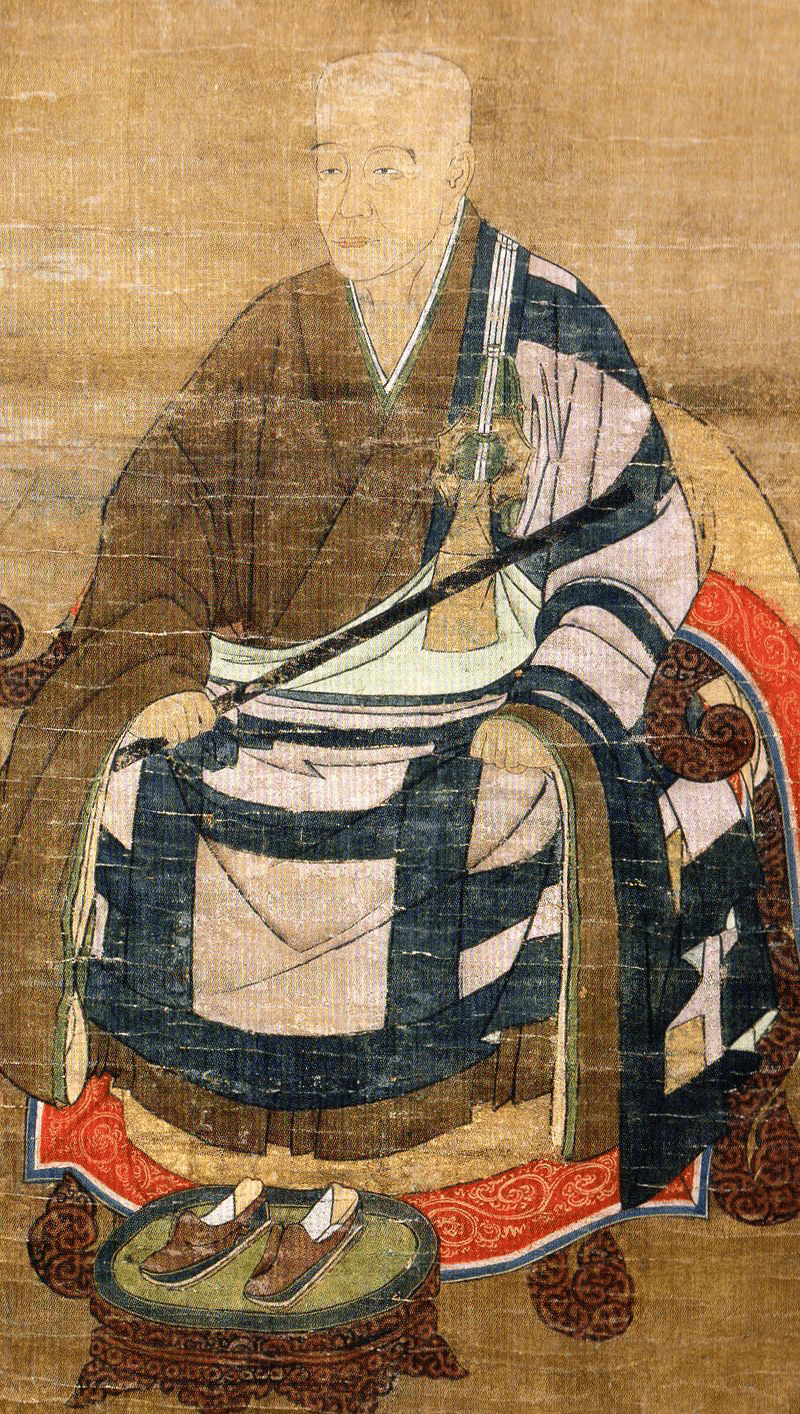
Eisai
Myōan Eisai was a Japanese Buddhist priest credited with founding the Rinzai school of Zen Buddhism in Japan. He introduced Zen practices and green tea to the country following trips to China, and authored significant texts advocating for Zen's role in national protection. Eisai is also recognized as the founding abbot of several important Zen temples.

Ingen
Ingen Ryūki was a Chinese poet, calligrapher, and Linji Chan Buddhist monk who founded the Ōbaku school of Zen in Japan. He is credited with introducing the Ming style of calligraphy and the common bean to Japan. His influence led to the establishment of the prominent Ōbaku head temple, Manpuku-ji, in Uji, Kyoto.
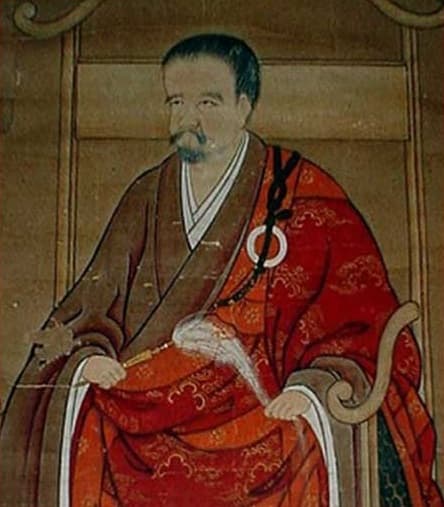
Bankei Yōtaku
Bankei Yōtaku (1622-1693) was a prominent Japanese Rinzai Zen master and abbot of Ryōmon-ji and Nyohō-ji. He is renowned for his minimalist approach to Zen, emphasizing the "unborn Buddha mind" and the concept of "fushō" (unborn). Bankei gained significant popularity through public talks delivered in colloquial Japanese, making his teachings accessible to laypeople.