
Śīlabhadra
Śīlabhadra (529–645) was a prominent Buddhist monk and philosopher who served as the abbot of Nālandā monastery in India. Renowned for his expertise in Yogācāra teachings, he became the personal tutor to the influential Chinese Buddhist monk Xuanzang, facilitating the transmission of Buddhist knowledge between India and China. His teachings, particularly his interpretation of the three turnings of the Dharma Wheel, significantly shaped Buddhist philosophical discourse.
Key Facts
- ›Served as the abbot of Nālandā monastery, a major center of Buddhist learning.
- ›Was a leading expert in YogāCāra philosophy.
- ›Taught the Chinese Buddhist monk Xuanzang for several years at Nālandā.
- ›Divided Buddhist teachings into three turnings of the Dharma Wheel, emphasizing the third turning (YogāCāra) as the highest.
- ›Authored the text Buddhabhūmivyākhyāna, which survives in Tibetan.
- ›Was ordained as a monk by Dharmapāla of Nālandā.
Important Relationships
- Xuanzang
- Prabhākaramitra
- Dharmapāla of Nālandā
- Jñānaprabha
BuddhabhūMivyāKhyāNa
NāLandā Monastery, Magadha, Samatata
DharmapāLa of NāLandā, AsaṅGa, Vasubandhu
Sanskrit
Buddhist Monk
About Śīlabhadra
Śīlabhadra (529–645 CE) was a highly respected Indian Buddhist monk and philosopher, renowned for his scholarly contributions and his role as a spiritual leader. He is most significantly known as the abbot of the prestigious Nālandā monastery, a major center of Buddhist learning in ancient India. His expertise in the Yogācāra school of thought made him a leading authority on its complex doctrines.
Life and Historical Context
Originally from the region of Magadha, or possibly Samatata according to some accounts, Śīlabhadra was ordained as a Buddhist monk by Dharmapāla of Nālandā. He gained considerable fame for his profound learning, which extended to foreign countries. At the age of 30, after a significant religious debate, a king endowed him with the revenues of a city, which Śīlabhadra used to establish and fund a monastery named Śīlabhadra Vihāra.
Tutelage of Xuanzang
Śīlabhadra's most enduring legacy stems from his role as the personal tutor to the Chinese Buddhist monk Xuanzang. Xuanzang traveled to India in the 7th century to study Buddhism and collect scriptures. For several years, Xuanzang resided at Nālandā, where the then 106-year-old Śīlabhadra imparted his knowledge of Yogācāra teachings. This tutelage was instrumental in Xuanzang's later translation of numerous Buddhist texts into Chinese, greatly influencing the development of Buddhism in East Asia.
Teachings and Philosophical Contributions
Śīlabhadra is credited with a significant interpretation of Buddhist doctrine, dividing the Buddha's teachings into three "turnings of the Dharma Wheel." Following the Saṃdhinirmocana Sūtra, he categorized the teachings based on their explicitness and audience. Śīlabhadra considered the third turning, which aligns with Yogācāra philosophy, to be the most complete and profound. He authored the text Buddhabhūmivyākhyāna, which survives today only in Tibetan translation. His philosophical stance, however, was met with opposition from proponents of the Mādhyamaka school, such as Jñānaprabha, who held a different view on the hierarchy of these teachings.
Source: Wikipedia ↗
Frequently Asked Questions
Who was Śīlabhadra?
Śīlabhadra was an Indian Buddhist monk and philosopher who lived from 529 to 645 CE. He is primarily known for being the abbot of the renowned Nālandā monastery and for his significant role as a teacher.
What is Śīlabhadra most famous for?
Śīlabhadra is most famous for his expertise in Yogācāra teachings and for being the personal tutor to the Chinese Buddhist pilgrim Xuanzang. His tutelage of Xuanzang was crucial for the transmission of Buddhist texts and philosophies from India to China.
What was Śīlabhadra's role at Nālandā?
Śīlabhadra served as the abbot of Nālandā monastery, which was one of the most important centers of Buddhist learning in ancient India. Under his leadership, Nālandā continued to flourish as a hub for philosophical study and monastic life.
What is the significance of Śīlabhadra's teachings on the three turnings of the Dharma Wheel?
Śīlabhadra interpreted Buddhist teachings into three successive turnings of the Dharma Wheel, following the framework of the Saṃdhinirmocana Sūtra. He considered the third turning, which encompasses Yogācāra philosophy, to be the supreme expression of the Buddha's teachings.
Who were some of Śīlabhadra's notable students?
The most notable student of Śīlabhadra was the Chinese monk Xuanzang, who studied under him for several years. Another student mentioned is Prabhākaramitra.
What philosophical school did Śīlabhadra champion?
Śīlabhadra was a strong proponent of the Yogācāra school of Buddhism, also known as the "mind-only" school. He believed its teachings, which elaborated on concepts like the three natures, represented the highest form of Buddhist doctrine.
Related Buddhists
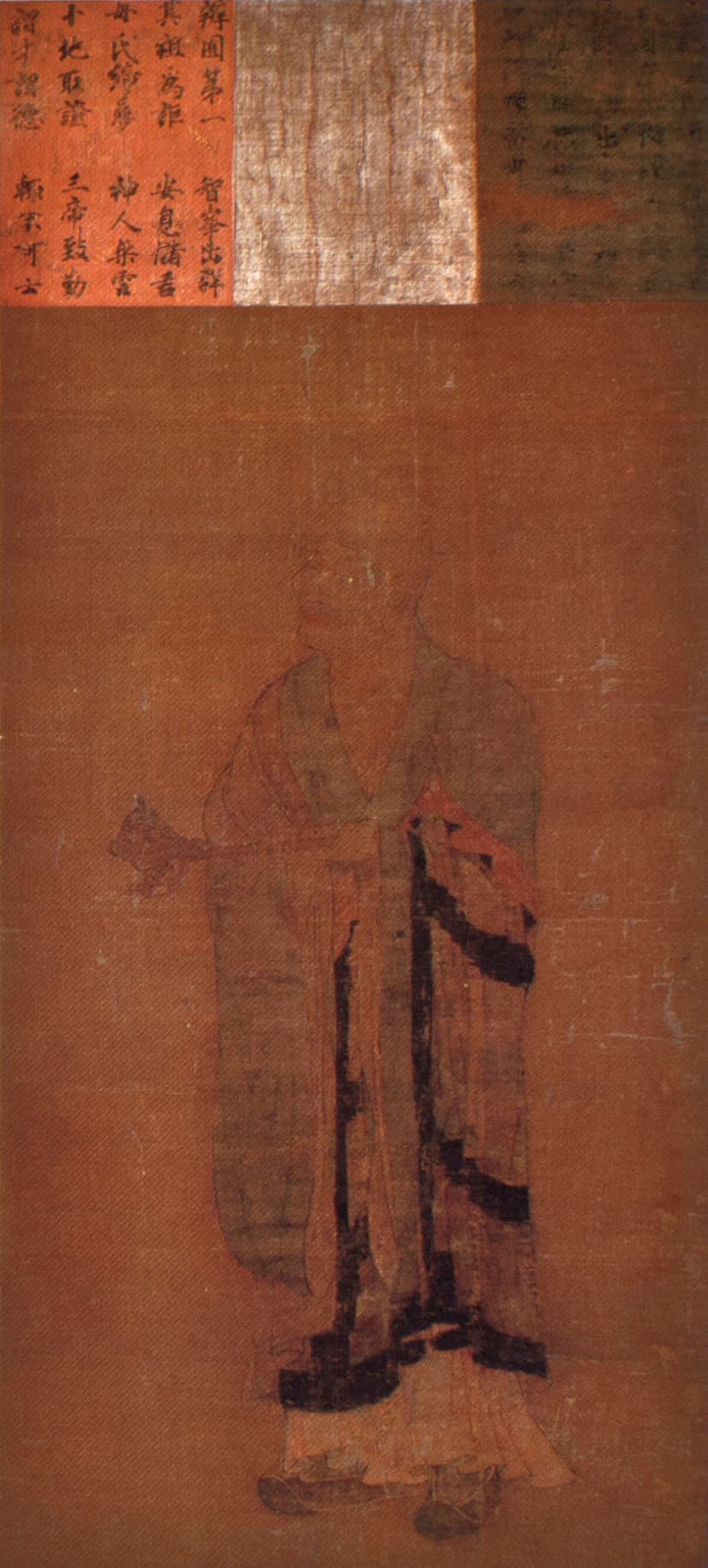
Jizang
Jizang (549–623 CE) was a Persian-Chinese Buddhist monk and scholar widely recognized as the founder of East Asian Mādhyamaka. He lived during a period of political transition in China and developed a nuanced philosophical approach to understanding Buddhist teachings, particularly the Madhyamaka treatises. His extensive writings and lectures significantly shaped the development of Mahayana Buddhism in East Asia.
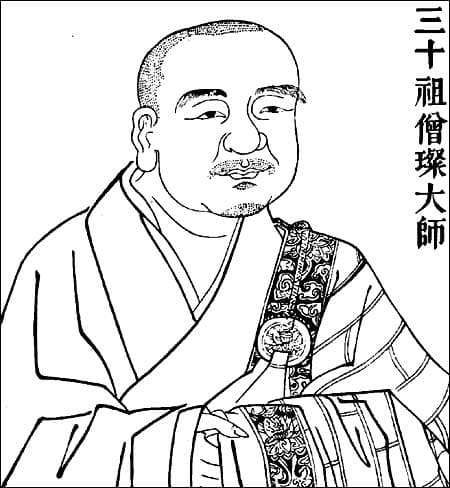
Sengcan
Jianzhi Sengcan is historically recognized as the Third Chinese Patriarch of Chán Buddhism, following Bodhidharma and Dazu Huike. He is primarily known for his putative authorship of the "Xinxin Ming" (Inscription on Faith in Mind), a significant Chan poem. Despite his importance in the lineage, detailed biographical information about Sengcan is scarce and often derived from traditional, later compiled texts.
Dignāga
Dignāga was an influential Indian Buddhist philosopher and logician active in the 5th-6th centuries CE. He is renowned for founding the first systematic Buddhist logic and epistemology, significantly shaping Indian philosophical thought. His work introduced concepts like "apoha" (exclusion) and established "perception" and "inference" as the sole valid means of knowledge, profoundly impacting subsequent Buddhist and Hindu philosophical traditions.