
Saraha
India·Vajrayana Buddhism, Mahāmudrā·Male·8th century
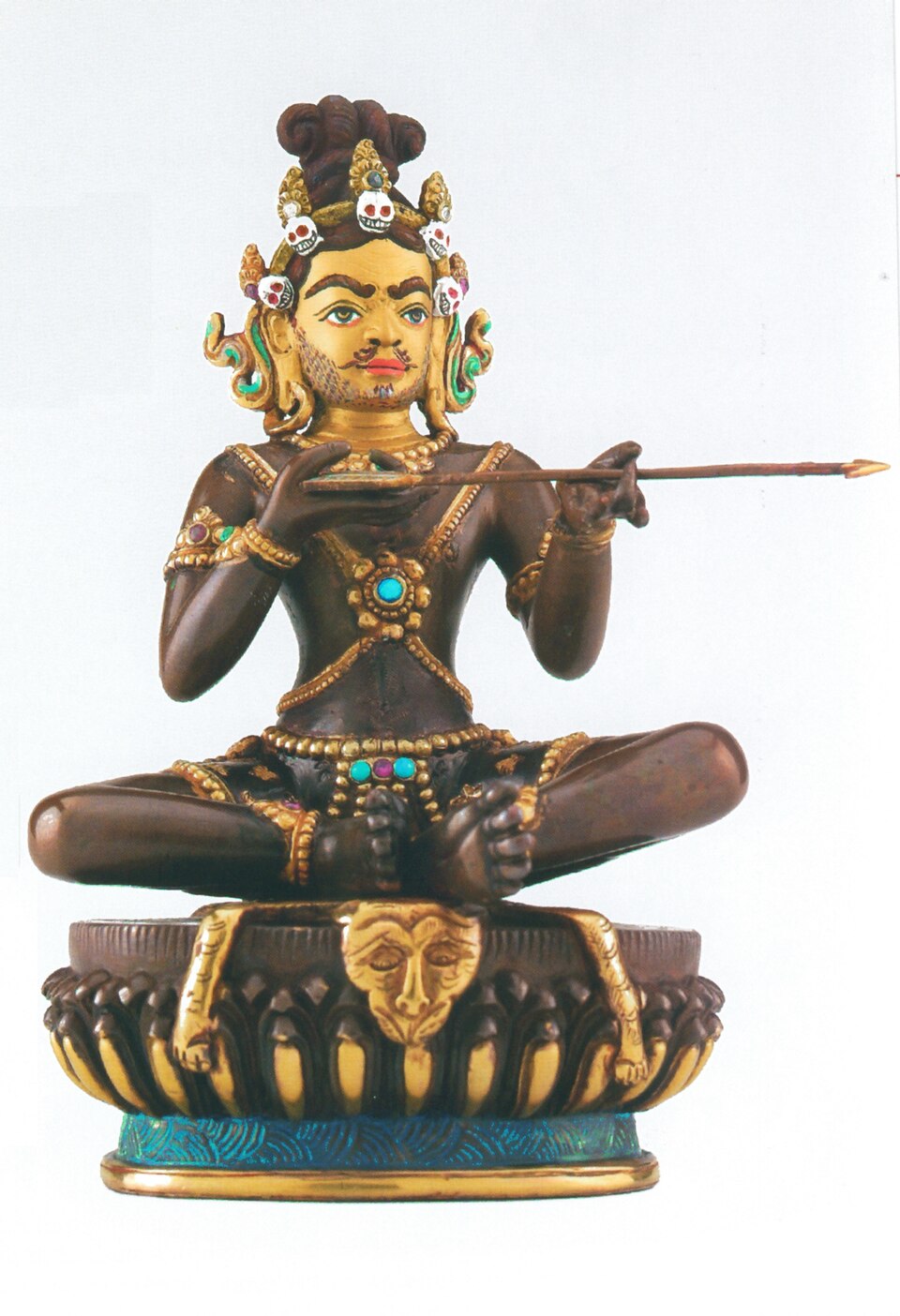
Saraha was an 8th-century Indian Buddhist Mahasiddha and poet, considered a founder of Vajrayana Buddhism and the Mahāmudrā tradition. Known as "the one who has shot the arrow," his teachings often used symbolic language, particularly in his doha poetic couplets, caryagiti songs, and vajragiti. He is renowned for his profound realization of Mahamudra, attained through the guidance of two wise female teachers, and his significant literary contributions to Buddhist thought.
Key Facts
- ›Considered a founder of Vajrayana Buddhism and the Mahāmudrā tradition.
- ›His name, Saraha, means 'the one who has shot the arrow,' referencing his teachings on non-duality and a biographical incident.
- ›Originally known as Rāhula or Rāhulabhadra, he studied at Nalanda.
- ›His teachings were deeply influenced by two unnamed female teachers, often called the Arrow Smith Dakini and the Radish Curry Dakini.
- ›Authored numerous doha (poetic couplets), caryagiti (performance songs), and vajragiti (adamantine songs).
- ›His 'Doha Trilogy,' including 'King and People' dohas, is among his most studied works.
Important Relationships
- Arrow Smith Dakini (teacher and consort)
- Radish Curry Dakini (teacher and consort)
- Luipa (disciple)
Doha Trilogy, DohakośA, CaryagīTikośA, Adamantine Songs
Nalanda, Roli
Apabhramsa
Monastic Vows
Founder, Poet Saint
About Saraha
Saraha, also known as Sarhappa, Sarahapa, or Sarahapāda, was a prominent Indian Buddhist Mahasiddha and poet who lived around the 8th century CE. His name, meaning "the one who has shot the arrow," is symbolic of his teachings on non-duality and his mastery in piercing the veil of illusion. Saraha is widely recognized as a pivotal figure in the development of Vajrayana Buddhism, particularly the Mahāmudrā tradition, which focuses on the direct realization of the nature of mind.
Life and Teachings
Originally named Rāhula or Rāhulabhadra, Saraha was born into a Shakya family in Roli, a region within the city-state of Rajni in eastern India. He studied at the renowned Buddhist monastic university of Nalanda. His spiritual journey was profoundly shaped by two significant teachers, both unnamed women referred to as dakinis. The first, often called the Arrow Smith Dakini, taught him the symbolic meaning of the arrow and the direct realization of Mahamudra. The second, known as the Radish Curry Dakini, guided him to transcend the limitations of conventional meditative practices and conceptual thinking.
Saraha's teachings emphasized the realization of ultimate reality through direct experience rather than solely through intellectual study or adherence to scripture. He is credited with abandoning his monastic vows to pursue a more unconventional path of practice, often depicted as living in cremation grounds with his consort, engaging in tantric practices.
Literary Contributions
Saraha is celebrated for his extensive corpus of tantric compositions, broadly categorized into doha (poetic couplets), caryagiti (performance songs), and vajragiti (adamantine songs). His doha, especially the 'Doha Trilogy' which includes the "King and People" dohas, are highly regarded for their esoteric verses that directly point to the nature of mind and reality. These works are written in Apabhramsa, an ancient Indo-Aryan language, and their influence is evident in the early development of languages such as Assamese, Bengali, Maithili, and Odia. His writings have been translated into numerous languages and continue to be subjects of scholarly study and spiritual contemplation.
Source: Wikipedia ↗
Frequently Asked Questions
Who was Saraha?
Saraha was an 8th-century Indian Buddhist Mahasiddha and poet. He is recognized as one of the founders of Vajrayana Buddhism and the Mahāmudrā tradition, known for his profound realization of the nature of mind and reality.
What is the meaning of Saraha's name?
Saraha's name means 'the one who has shot the arrow.' This refers to his teachings on non-duality and a symbolic incident in his life where he studied with a dakini disguised as an arrow smith. Metaphorically, it signifies one who has pierced the heart of duality with the arrow of non-duality.
What are Saraha's most notable teachings or works?
Saraha is known for his doha (poetic couplets), caryagiti (performance songs), and vajragiti (adamantine songs). His 'Doha Trilogy,' including 'King and People' dohas, is particularly famous and has been translated into many languages.
Who were Saraha's teachers?
Saraha had two significant teachers, both unnamed women referred to as dakinis. One is known as the Arrow Smith Dakini, who taught him about the symbolic meaning of the arrow and the nature of reality. The other is the Radish Curry Dakini, who guided him on the faults of excessive meditative absorption and the true nature of solitude.
What is Saraha's significance in Buddhism?
Saraha is considered a foundational figure in Vajrayana Buddhism, especially for the Mahāmudrā tradition in Tibet. His poetic teachings are celebrated for their direct insight into the nature of mind and reality, and his life story highlights the importance of unconventional teachers and practices.
Related Buddhists

Nadapada
Nāropā was an Indian Buddhist Mahasiddha, a highly realized practitioner within the Vajrayana tradition. He is renowned for being a direct disciple of Tilopa and for collating the Six Dharmas, a set of advanced yogic practices crucial for rapid enlightenment. His teachings and lineage are central to the Kagyu school of Tibetan Buddhism.
Shantideva
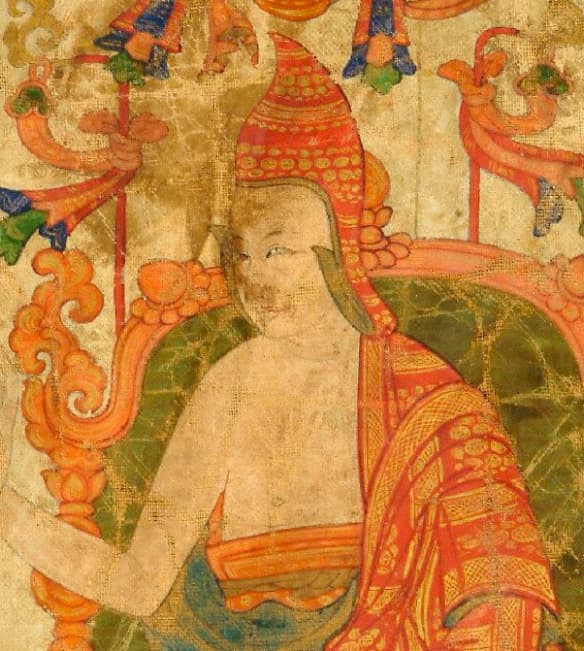
Shantideva was an 8th-century Indian Buddhist philosopher, monk, and poet renowned for his influential works on the bodhisattva path. He is particularly celebrated for authoring the Bodhisattvacaryāvatāra, a foundational text in Mahayana Buddhism that guides practitioners toward enlightenment. His philosophical contributions emphasized altruism, personal identity, and the cultivation of bodhicitta, making him a significant figure in Buddhist thought.

Kūkai
Kūkai was a pivotal Japanese Buddhist monk, calligrapher, and poet who founded the esoteric Shingon school of Buddhism. He traveled to Tang China, where he studied under Huiguo and became a master of Chinese Vajrayana Buddhism. Upon his return to Japan, Kūkai established Shingon, deeply influencing Japanese religious and cultural life, and is revered as a bodhisattva.