
Shantideva
India·Mādhyamaka·Male·8th century
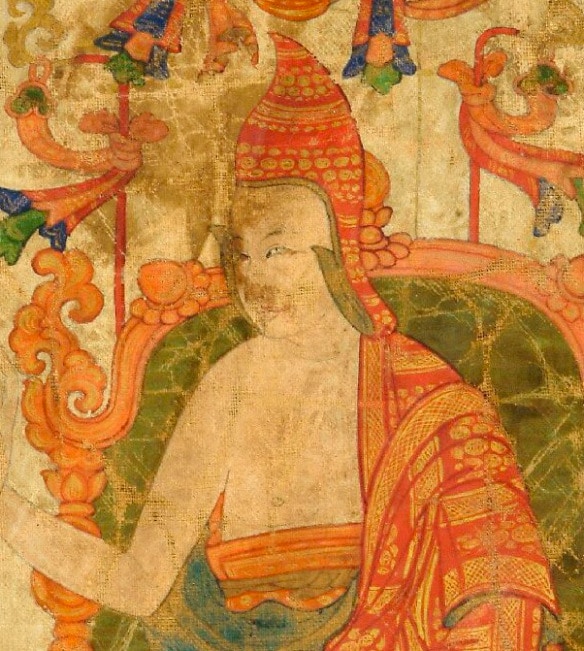
Shantideva was an 8th-century Indian Buddhist philosopher, monk, and poet renowned for his influential works on the bodhisattva path. He is particularly celebrated for authoring the Bodhisattvacaryāvatāra, a foundational text in Mahayana Buddhism that guides practitioners toward enlightenment. His philosophical contributions emphasized altruism, personal identity, and the cultivation of bodhicitta, making him a significant figure in Buddhist thought.
Key Facts
- ›An 8th-century Indian philosopher and Buddhist monk from the mahavihara of Nalanda.
- ›Known for his adherence to the Mādhyamaka philosophy.
- ›Authored two significant works: the Bodhisattvacaryāvatāra and the Śikṣāsamuccaya.
- ›The Bodhisattvacaryāvatāra is a key text on the bodhisattva path, studied by Mahayana and Vajrayana Buddhists.
- ›Legend attributes his discovery of his major works to a miraculous disappearance and reappearance.
- ›Considered one of the eighty-four mahasiddhas and known by the name Bhusuku Pa.
Important Relationships
- Mahavihara of Nalanda
- 14th Dalai Lama
BodhisattvacaryāVatāRa, śIkṣāSamuccaya, SūTrasamuccaya
Nalanda, Saurastra, Bengal, Magadha, Sringara
NāGāRjuna
Sanskrit
Bodhisattva Vows
About Shantideva
Shantideva was an 8th-century Indian philosopher, Buddhist monk, poet, and scholar who was a prominent figure at the mahavihara of Nalanda. He was an adherent of the Mādhyamaka philosophy, a central school of Mahayana Buddhism founded by Nāgārjuna. Shantideva is also recognized as one of the eighty-four mahasiddhas and was known by the name Bhusuku Pa.
Life and Historical Context
Historical accounts of Shantideva's life are primarily drawn from Tibetan historians like Buton Rinchen Drub and Taranatha, with a Sanskrit biography also emerging from a 14th-century Nepalese manuscript. There are differing accounts of his birth and parentage. One tradition suggests he was born in Saurastra as the son of King Kalyanavarman, while another states he was born in Southern India in the city of Sringara, the son of King Mañjuśrīvarman. According to this latter account, he traveled to Bengal and Magadha before arriving at Nalanda. At Nalanda, he was reportedly given the nickname Bhūsuku due to his meditative practice. Some accounts describe him as being perceived as idle by his fellow monks, with his primary activities seemingly being eating, sleeping, and defecating.
A legend recounts that Shantideva was challenged by his fellow monks to give a public talk. Upon ascending a lion throne, he recited a verse from the Bodhicaryāvatāra, after which the bodhisattva Manjushri is said to have appeared and then disappeared with Shantideva. When his cell was later searched, his three major works were discovered.
Major Contributions
Shantideva is most celebrated for his authorship of two seminal works, the Bodhisattvacaryāvatāra and the Śikṣāsamuccaya. Both texts are intended as comprehensive training manuals for individuals aspiring to follow the bodhisattva path, which is dedicated to the enlightenment of all sentient beings.
Bodhisattvacaryāvatāra
The Bodhisattvacaryāvatāra, often translated as 'A Guide to the Bodhisattva's Way of Life' or 'Entering the Path of Enlightenment,' is a long poem detailing the journey from the first thought of enlightenment to full Buddhahood. This work has been the subject of numerous Indian and Tibetan commentaries and continues to be widely studied by academics and practitioners of Mahayana and Vajrayana Buddhism. The 14th Dalai Lama, Tenzin Gyatso, has written introductions and commentaries on this text.
Śikṣāsamuccaya
The Śikṣāsamuccaya, or 'Training Anthology,' is another significant work that compiles quotations from various Mahayana sutras. It serves as a commentary on mnemonic verses and is organized into 19 chapters, providing guidance on Buddhist doctrine and practice.
Philosophical Views
Shantideva's philosophy, rooted in Mādhyamaka thought, critically examines the concept of personal identity, arguing that an inherent, independent self is groundless and detrimental. He also addressed the problem of free will, suggesting that actions arise from conditioning factors rather than independent volition. His ethical views are strongly altruistic, advocating for the cessation of all suffering and the promotion of happiness for all sentient beings. He posited that the pursuit of happiness for oneself is special only if happiness is not equally dear to others. Shantideva also extensively discussed the concept of bodhicitta, the mind aspiring to attain Buddhahood for the benefit of all, and the perfection of generosity (dāna), which he viewed as a state of renouncing possessions and the self, leading to liberation.
Legacy
Shantideva's works, particularly the Bodhisattvacaryāvatāra, have had a profound and lasting impact on Mahayana Buddhist thought and practice. His clear articulation of the bodhisattva ideal and his philosophical insights continue to inspire and guide practitioners in their pursuit of enlightenment and compassion.
Source: Wikipedia ↗
Frequently Asked Questions
Who was Shantideva?
Shantideva was an 8th-century Indian philosopher, Buddhist monk, poet, and scholar. He was associated with the Nalanda mahavihara and followed the Mādhyamaka philosophy. He is best known for his influential writings on the bodhisattva path.
What are Shantideva's most important works?
Shantideva is primarily known for two works: the Bodhisattvacaryāvatāra and the Śikṣāsamuccaya. Both were intended as training manuals for those following the bodhisattva path.
What is the Bodhisattvacaryāvatāra about?
The Bodhisattvacaryāvatāra, often translated as 'A Guide to the Bodhisattva's Way of Life,' is a long poem describing the process of enlightenment from the initial aspiration to full Buddhahood. It is still studied by Mahayana and Vajrayana Buddhists today.
What philosophical ideas did Shantideva promote?
Shantideva emphasized altruism, believing one should strive to end the suffering of all sentient beings. He followed the Buddha's teachings on the lack of an inherent, independent self and explored the nature of personal identity and free will.
Where was Shantideva born?
Historical accounts differ on Shantideva's birthplace. Some sources suggest he was born in the Saurastra region (modern Gujarat), while others indicate Southern India, in the city of Sringara.
Related Buddhists
Luipa
Luipa was a significant Buddhist mahasiddha and siddhacharya from the Pala Empire, active around the 10th century. He is recognized as one of the early poets of the Charyapada and a writer of various Buddhist texts. His name is often associated with consuming fish-guts, a practice he undertook to overcome pride and achieve enlightenment, and he became an exemplar for many later siddhas.
Saraha
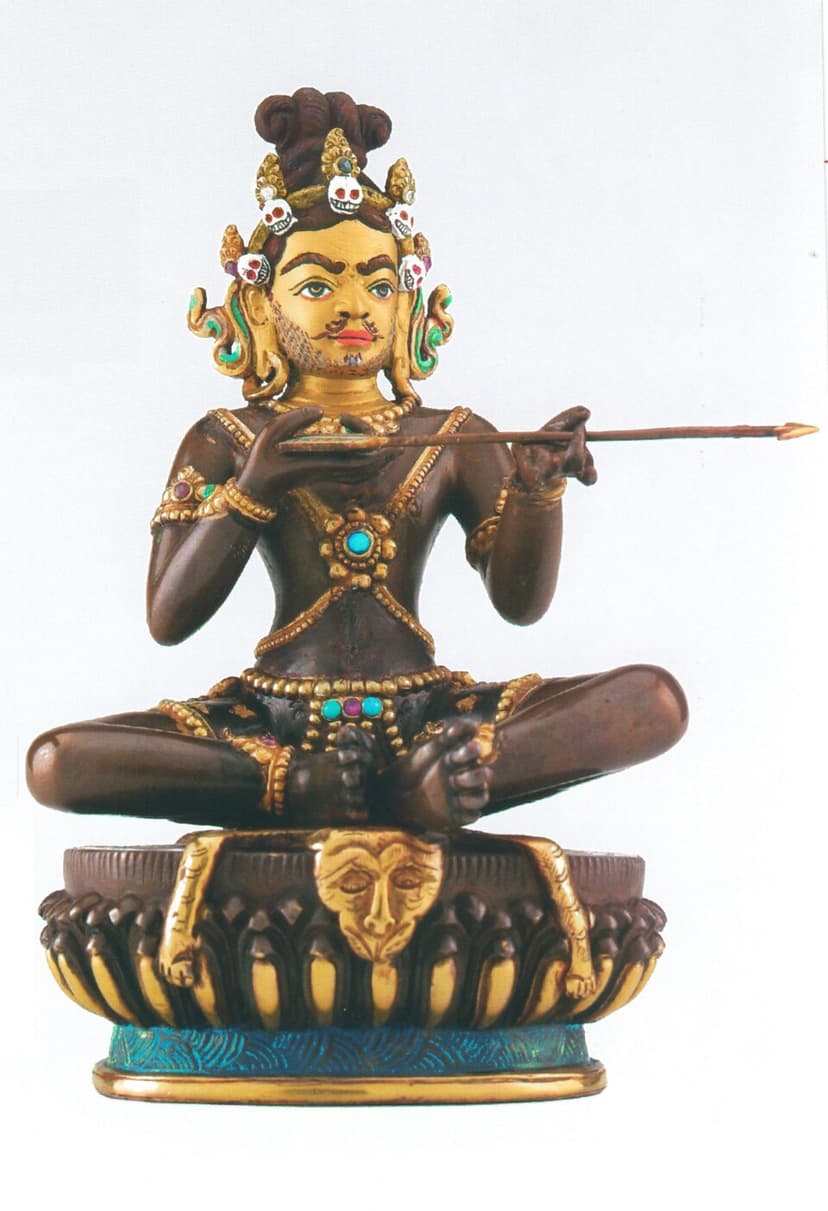
Saraha was an 8th-century Indian Buddhist Mahasiddha and poet, considered a founder of Vajrayana Buddhism and the Mahāmudrā tradition. Known as "the one who has shot the arrow," his teachings often used symbolic language, particularly in his doha poetic couplets, caryagiti songs, and vajragiti. He is renowned for his profound realization of Mahamudra, attained through the guidance of two wise female teachers, and his significant literary contributions to Buddhist thought.

Kūkai
Kūkai was a pivotal Japanese Buddhist monk, calligrapher, and poet who founded the esoteric Shingon school of Buddhism. He traveled to Tang China, where he studied under Huiguo and became a master of Chinese Vajrayana Buddhism. Upon his return to Japan, Kūkai established Shingon, deeply influencing Japanese religious and cultural life, and is revered as a bodhisattva.