
Sakya Trizin
Sakya Trizin is the traditional title for the head of the Sakya school of Tibetan Buddhism. The Sakya school, founded in 1073 CE by Khön Könchog Gyalpo, became a major lineage with its leadership passed down within the noble Khön family. The current Sakya Trizin is Gyana Vajra Rinpoche, the 43rd to hold this position, following a new succession system implemented in 2014.
Key Facts
- ›Sakya Trizin is the hereditary title for the spiritual leader of the Sakya school of Tibetan Buddhism.
- ›The Sakya school was established in 1073 CE with the founding of a monastery in Sakya, Tibet.
- ›Leadership of the Sakya school has traditionally remained within the noble Khön family.
- ›The 41st Sakya Trizin held the longest reign, serving for over fifty years.
- ›A new succession system was introduced in 2014, where members of the Dolma Phodrang and Phuntsok Phodrang serve in three-year terms.
- ›The current Sakya Trizin is Gyana Vajra Rinpoche, the 43rd to hold the title.

Important Relationships
- Khön Könchog Gyalpo
Parting From the Four Attachments
Sakya, Tibet
Hereditary Title Holder
About Sakya Trizin
The Sakya Trizin is the traditional title held by the spiritual leader of the Sakya school, one of the four major schools of Tibetan Buddhism. The title literally translates to "Sakya Throne-Holder," signifying the authority and lineage associated with the position. The Sakya school itself was founded in 1073 CE by Khön Könchog Gyalpo, a member of the noble Khön family, who established a monastery in the region of Sakya, Tibet. This monastery became the central headquarters for the order, and its leadership has since been passed down through generations within the Khön family.
Succession and Current Holder
The leadership of the Sakya Trizin has historically been hereditary. The 41st Sakya Trizin is noted for having the longest reign, serving for over fifty years. In a significant shift, a new succession system was announced on December 11, 2014. Under this updated system, members of two prominent branches of the Khön family, the Dolma Phodrang and Phuntsok Phodrang, are to serve as Sakya Trizin in three-year terms, based on their seniority and qualifications. The current Sakya Trizin is Gyana Vajra Rinpoche, also known as Kyabgon Gongma Trizin Rinpoche. He is the 43rd Sakya Trizin and was enthroned on March 16, 2022, with his enthronement being delayed due to the COVID-19 pandemic.
Source: Wikipedia ↗
Frequently Asked Questions
What is the Sakya Trizin?
Sakya Trizin is the traditional title bestowed upon the spiritual head of the Sakya school of Tibetan Buddhism. This lineage is one of the four major schools of Tibetan Buddhism.
When was the Sakya school founded?
The Sakya school was founded in 1073 CE by Khön Könchog Gyalpo, who established a monastery in the Sakya region of Tibet.
Who traditionally holds the title of Sakya Trizin?
The leadership of the Sakya school and the title of Sakya Trizin have historically been passed down within the noble Khön family.
Has the succession system for Sakya Trizin always been the same?
No, a new succession system was announced on December 11, 2014. Under this system, members of the Dolma Phodrang and Phuntsok Phodrang serve as Sakya Trizin for three-year terms based on seniority and qualification.
Who is the current Sakya Trizin?
The current Sakya Trizin is Gyana Vajra Rinpoche, officially known as Kyabgon Gongma Trizin Rinpoche. He is the 43rd Sakya Trizin and was enthroned on March 16, 2022.
Related Buddhists
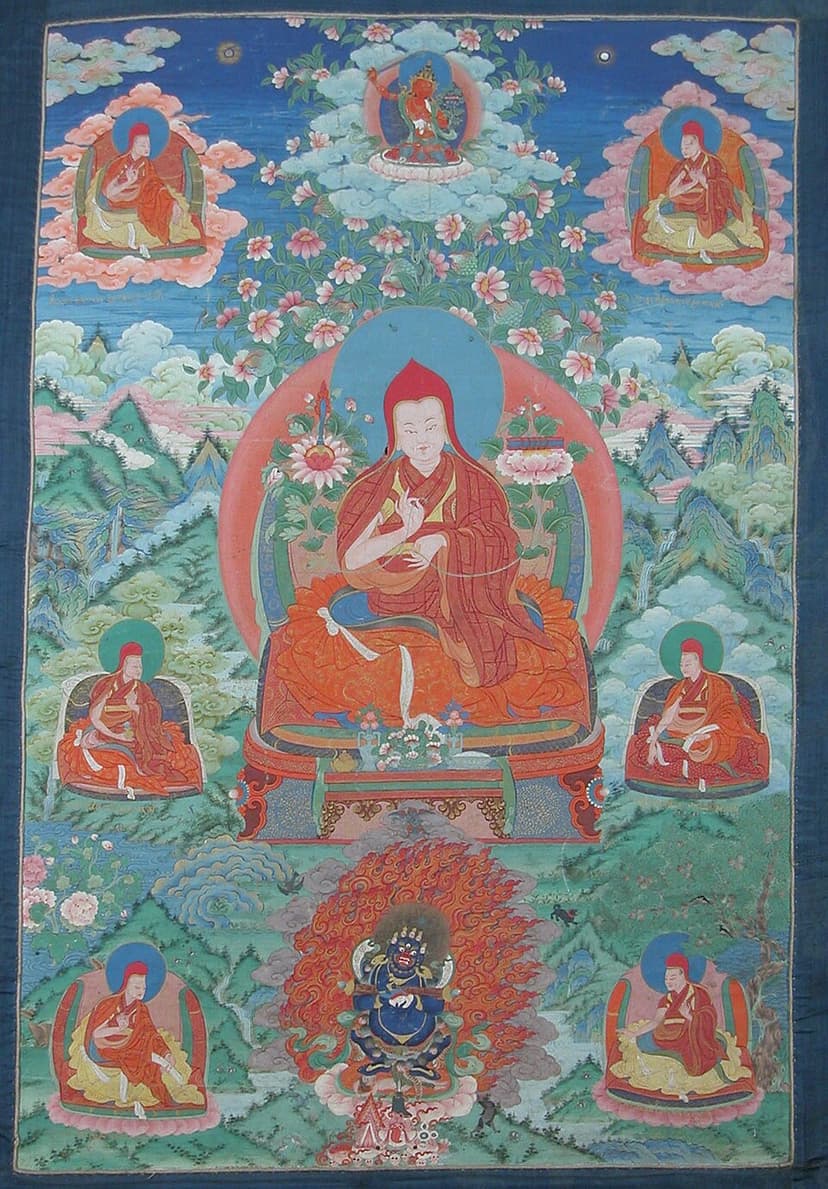
Sakya Pandita
Sakya Pandita Kunga Gyeltsen was a prominent Tibetan spiritual leader, Buddhist scholar, and the fourth of the Five Sakya Forefathers. Renowned for his vast knowledge of Buddhist philosophy, medicine, grammar, dialectics, and Sanskrit literature, he is considered an emanation of Manjusri, the embodiment of wisdom. His significant contributions include scholarly works and his diplomatic role in engaging with the Mongol Empire, which helped protect Tibet from further invasions.
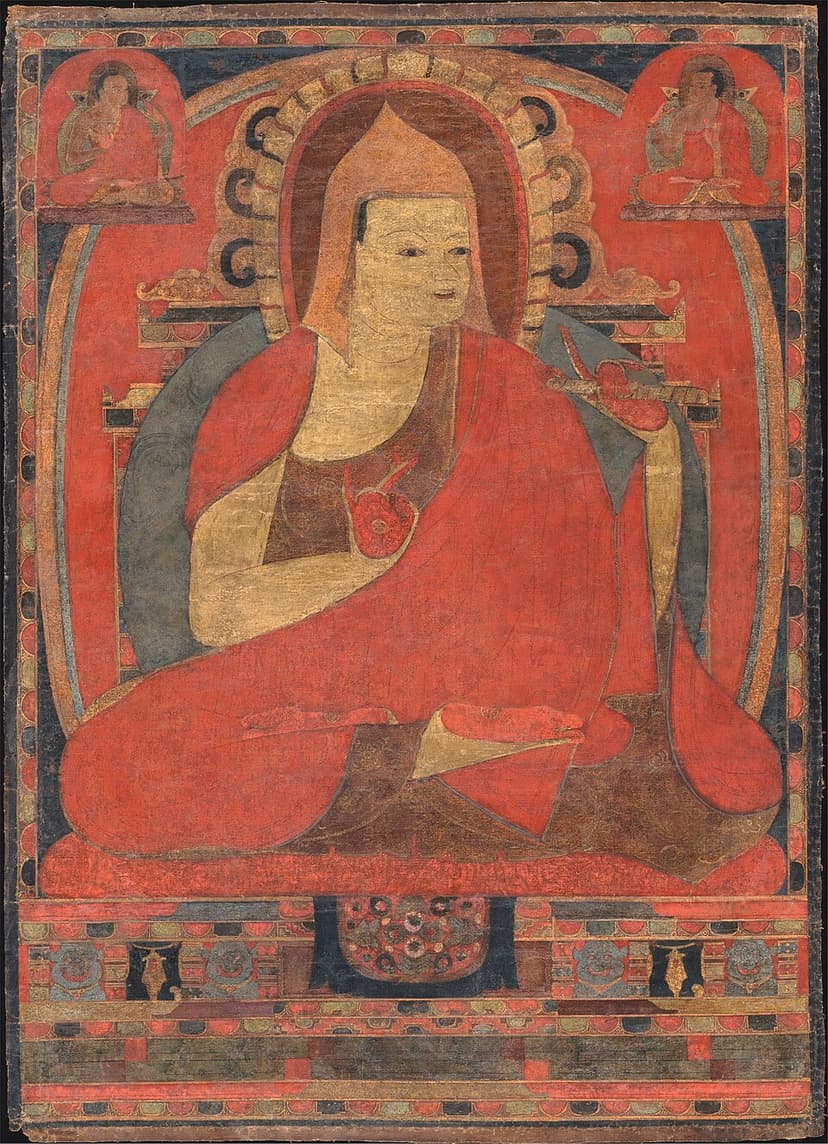
Atiśa
Atiśa Dīpaṃkara Śrījñāna was a prominent Buddhist religious leader and scholar from Bengal in the 11th century CE. He is renowned for his significant role in spreading Mahayana and Vajrayana Buddhism across Asia, particularly in Tibet, and is considered a founder of the Kadam school. His teachings, compiled in works like "Bodhipathapradīpa," laid the groundwork for subsequent Tibetan Buddhist traditions.
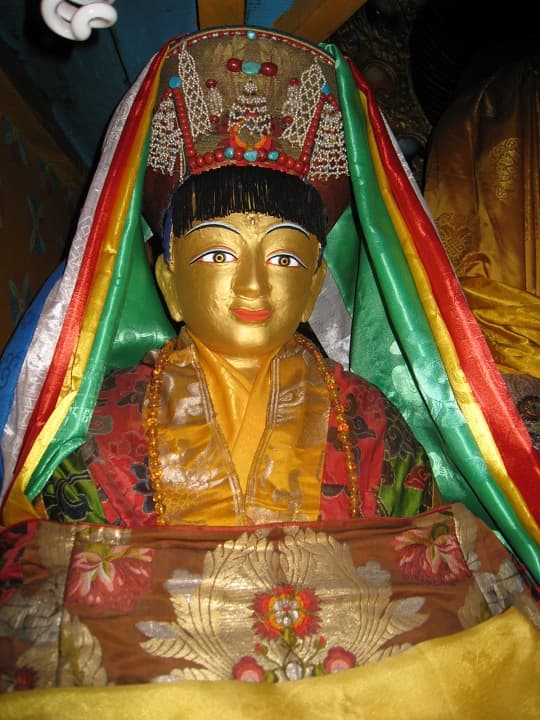
Milarepa
Milarepa was a renowned Tibetan siddha, yogi, and spiritual poet, celebrated for his profound teachings within various schools of Tibetan Buddhism. Initially known for sorcery and murder in his youth, he later dedicated himself to spiritual practice under his teacher Marpa the Translator, ultimately achieving realization and becoming an exemplar of religious dedication and mastery. His life story and collection of spiritual songs are foundational to the Kagyu lineage and Tibetan culture.