
Sakya Pandita
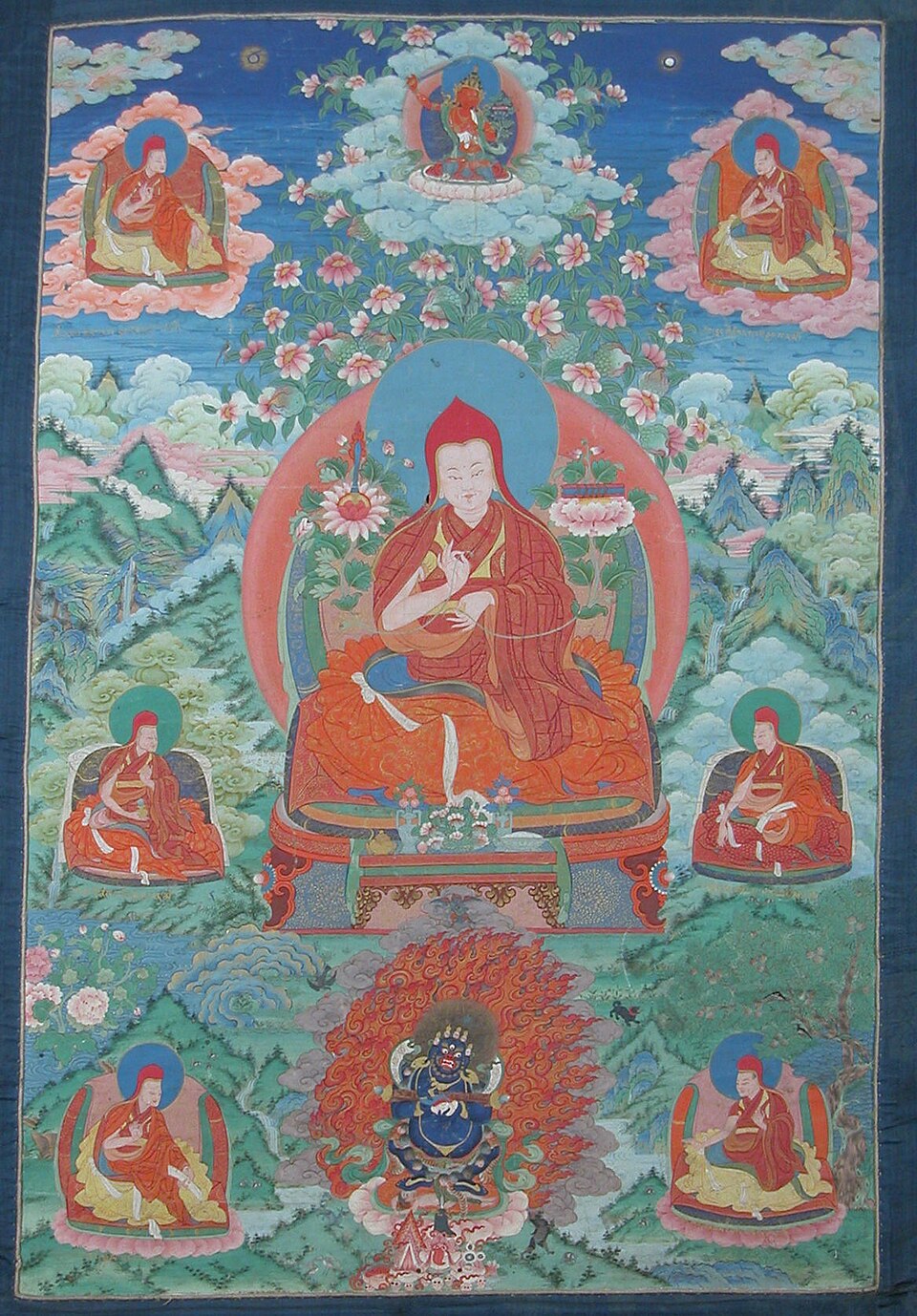
Sakya Pandita Kunga Gyeltsen was a prominent Tibetan spiritual leader, Buddhist scholar, and the fourth of the Five Sakya Forefathers. Renowned for his vast knowledge of Buddhist philosophy, medicine, grammar, dialectics, and Sanskrit literature, he is considered an emanation of Manjusri, the embodiment of wisdom. His significant contributions include scholarly works and his diplomatic role in engaging with the Mongol Empire, which helped protect Tibet from further invasions.
Key Facts
- ›Lived from April 1, 1182, to December 28, 1251.
- ›Held the title Sakya Pandita, signifying his scholarly achievements and knowledge of Sanskrit.
- ›Proficient in the five great sciences of Buddhist philosophy, medicine, grammar, dialectics, and sacred Sanskrit literature, as well as minor sciences.
- ›Became the principal disciple of his uncle, Jetsun Dragpa Gyaltsen.
- ›Ordained as a bhikshu in 1208 by Kashmiri scholar Śākyaśribhadra.
- ›Traveled to the Mongol court in 1246 and engaged with Prince Godan, influencing Tibetan affairs with the Mongol Empire.
Important Relationships
- Jetsun Dragpa Gyaltsen
- Godan Khan
- Chogyal Phagpa
Treasury of Logic On Valid Cognition, Discrimination of the Three Vows, the Entrance Gate For the Wise, Clarifying the Sage's Intention, the Elegant Sayings of Sakya Pandita, Treatise On Music
Sakya, Liangzhou
Dharmakirti, śāKyaśRibhadra
Tibetan, Sanskrit
Bhikkhu, śRāMaṇEra
Spiritual Leader, Scholar, Abbot-Ruler, Teacher
Forefather, Emanation
About Sakya Pandita
Sakya Pandita Kunga Gyeltsen
Sakya Pandita Kunga Gyeltsen (1182–1251), commonly known as Sakya Pandita or Sapan, was a preeminent Tibetan spiritual leader, Buddhist scholar, and a key figure in the Sakya tradition. He is recognized as the fourth of the Five Sakya Forefathers and is traditionally considered an emanation of Manjusri, the bodhisattva of wisdom.
Life and Historical Context
Born into the noble Khön family at Sakya, Sakya Pandita received extensive training in both sutras and tantras from his uncle, Jetsun Dragpa Gyaltsen. He mastered Sanskrit and several other languages, demonstrating a profound understanding of Buddhist philosophy, medicine, grammar, dialectics, and sacred literature. His ordination as a bhikshu in 1208 by the Kashmiri scholar Śākyaśribhadra further solidified his connection to Indian Buddhist traditions. His scholarly reputation extended across Tibet, India, Mongolia, and China.
Sakya Pandita's life coincided with the rise of the Mongol Empire. In 1246, he was summoned to the court of Prince Godan, grandson of Genghis Khan. This engagement was pivotal, as Sakya Pandita's teachings and diplomatic skills are credited with influencing Tibetan affairs and helping to mitigate Mongol incursions into Tibet. He used his position to advocate for Tibetan unity under Mongol overlordship, aiming to spare the region from further devastation.
Major Contributions
Sakya Pandita was a prolific author whose works significantly shaped Tibetan Buddhist scholasticism. His most renowned texts include the "Treasury of Logic on Valid Cognition" and the "Discrimination of the Three Vows." These works, along with others like "The Entrance Gate for the Wise" and "The Elegant Sayings of Sakya Pandita," are still studied in monastic curricula today. He emphasized a rigorous approach to Buddhist practice and doctrine, often critiquing what he perceived as deviations from established teachings.
Legacy
Sakya Pandita's intellectual rigor and diplomatic acumen left a lasting impact on Tibetan Buddhism and its relationship with external powers. His scholarly contributions are foundational to the Sakya tradition, and his engagement with the Mongol court established a precedent for later Sakya abbots in their political roles. He is remembered as a scholar who not only preserved and advanced Buddhist knowledge but also navigated complex geopolitical landscapes to protect his homeland.
Source: Wikipedia ↗
Frequently Asked Questions
Who was Sakya Pandita?
Sakya Pandita Kunga Gyeltsen was a highly influential Tibetan spiritual leader and Buddhist scholar of the Sakya tradition. He lived from 1182 to 1251 and is considered one of the most important figures in the Sakya lineage.
What was Sakya Pandita known for?
He was known for his profound scholarship in various fields, including Buddhist philosophy, medicine, grammar, and Sanskrit literature. He was also recognized for his diplomatic role in interacting with the Mongol Empire, which played a role in protecting Tibet.
What were some of Sakya Pandita's most notable works?
His most famous works include 'Treasury of Logic on Valid Cognition' and 'Discrimination of the Three Vows'. He also authored 'The Entrance Gate for the Wise', 'Clarifying the Sage's Intention', and 'The Elegant Sayings of Sakya Pandita'.
What was Sakya Pandita's relationship with the Mongol Empire?
Sakya Pandita was summoned to the court of Prince Godan, grandson of Genghis Khan, in 1246. He engaged in religious instruction and discussions, which led to him becoming a key agent for the Mongols in Tibetan affairs and helped to spare Tibet from further destructive invasions.
What is Sakya Pandita's legacy?
Sakya Pandita's scholarly works continue to be studied and are included in monastic curricula today. His engagement with the Mongols also shaped the political relationship between Tibet and the Mongol Empire for a significant period.
Related Buddhists

Sakya Trizin
Sakya Trizin is the traditional title for the head of the Sakya school of Tibetan Buddhism. The Sakya school, founded in 1073 CE by Khön Könchog Gyalpo, became a major lineage with its leadership passed down within the noble Khön family. The current Sakya Trizin is Gyana Vajra Rinpoche, the 43rd to hold this position, following a new succession system implemented in 2014.
Chögyam Trungpa Rinpoche
Chögyam Trungpa Rinpoche was a Tibetan Buddhist master and a significant figure in introducing Tibetan Buddhism, particularly the Vajrayana teachings, to the West. He founded institutions like Vajradhatu and Naropa University and developed the Shambhala Training method, aiming to integrate Buddhist principles into everyday life. Despite his influential teachings and role in establishing Buddhist communities in North America, his methods and personal conduct, including heavy drinking and sexual misconduct allegations, generated considerable controversy.
Gampopa
Gampopa Sönam Rinchen, known as the main student of Milarepa, was a pivotal Tibetan Buddhist master who established the foundation of the Kagyu educational tradition. He integrated the Kadampa teachings with Milarepa's Mahamudra practices, authoring the influential "Jewel Ornament of Liberation" and founding the Dagpo Kagyu school.